Beginner's Guide to eFoiling - Gear, Safety, and First Flights
Electric hydrofoil surfing, commonly called eFoiling, combined electric propulsion with a surf-style board and a hydrofoil wing to lift riders cleanly above the water. Understanding the gear, learning progression, and safety basics mattered because eFoiling created a boat-free powered-foiling option that broadened access for newcomers and expanded play on flat-water days.

Electric hydrofoil surfing blended a surf-style board with a hydrofoil wing and an electric motor, creating a quiet, boat-free way to ride above the water. Riders learned to balance throttle, trim and weight to lift the board on foil and maintain stable flight. The result was a discipline that fit between traditional surfing and kite- or wing-foiling while providing powered access even when waves or wind were light.
Equipment was straightforward and predictable in purpose. A rigid board carried the rider and housed the battery; a mast connected board to foil; front and rear wings provided lift and stability; a motor and prop supplied thrust; and a handheld remote gave throttle control. Knowing each component helped riders and instructors pick mast and wing combinations that matched a rider’s weight and ability: larger wings and shorter masts for stable, early learning; smaller wings and longer masts for maneuverability and carving once basic flight was consistent.
Learning typically progressed in clear stages. Riders practiced standing up on the board and controlling throttle and balance first, then found the timing and trim that allowed the foil to lift. After sustained foil flight came basic carving and speed control. For many, controlled runs on flat water accelerated confidence more quickly than attempting wave-based transitions right away.
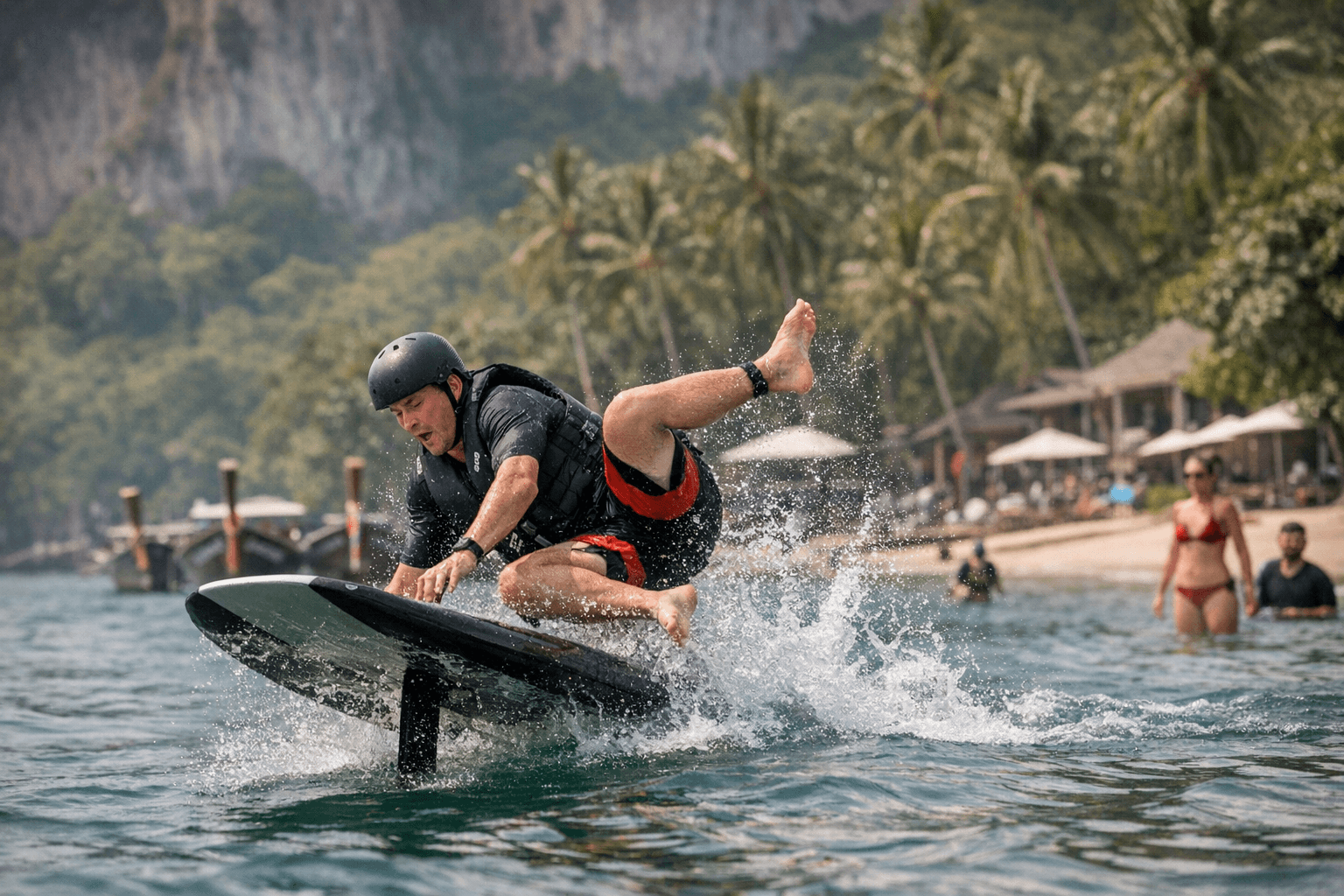
Safety considerations shaped session planning. Propeller guards were recommended for close-contact training and shore launches. The leash versus no-leash debate remained active; you needed to decide based on conditions, skill level, and local rules. Helmets and impact vests reduced risk from falls and high-speed water impacts. For first sessions, choose calm water, arrange tethered instructor demonstrations, and have the instructor dial in wing and mast setup to match the rider’s weight and goals.

eFoiling’s community impact was immediate. Riders gained a powered foiling option without towing or relying on wind, expanding usable days and locations for foiling communities. Clubs and schools could offer demo rides and structured lessons to lower barriers to entry and grow membership.
When you’re ready to try eFoiling, book lessons or demo rides with a reputable school or outfitter and ask to try multiple wing sizes during your session. Request tethered instructor demos, confirm propeller guard use for close coaching, and have mast and wing choices tuned for your weight and ability. Those steps shortened learning curves and kept early sessions efficient and safe, helping more people get airborne and enjoy the unique sensation of foil surfing.
Know something we missed? Have a correction or additional information?
Submit a Tip