BOOT Düsseldorf Pump Foil World Cup Showcases Rapid Progress, Swiss Champions
Foil surfing's indoor world cup in Düsseldorf crowned Swiss winners and highlighted rapid gear and skill gains that will change training and racing year-round.

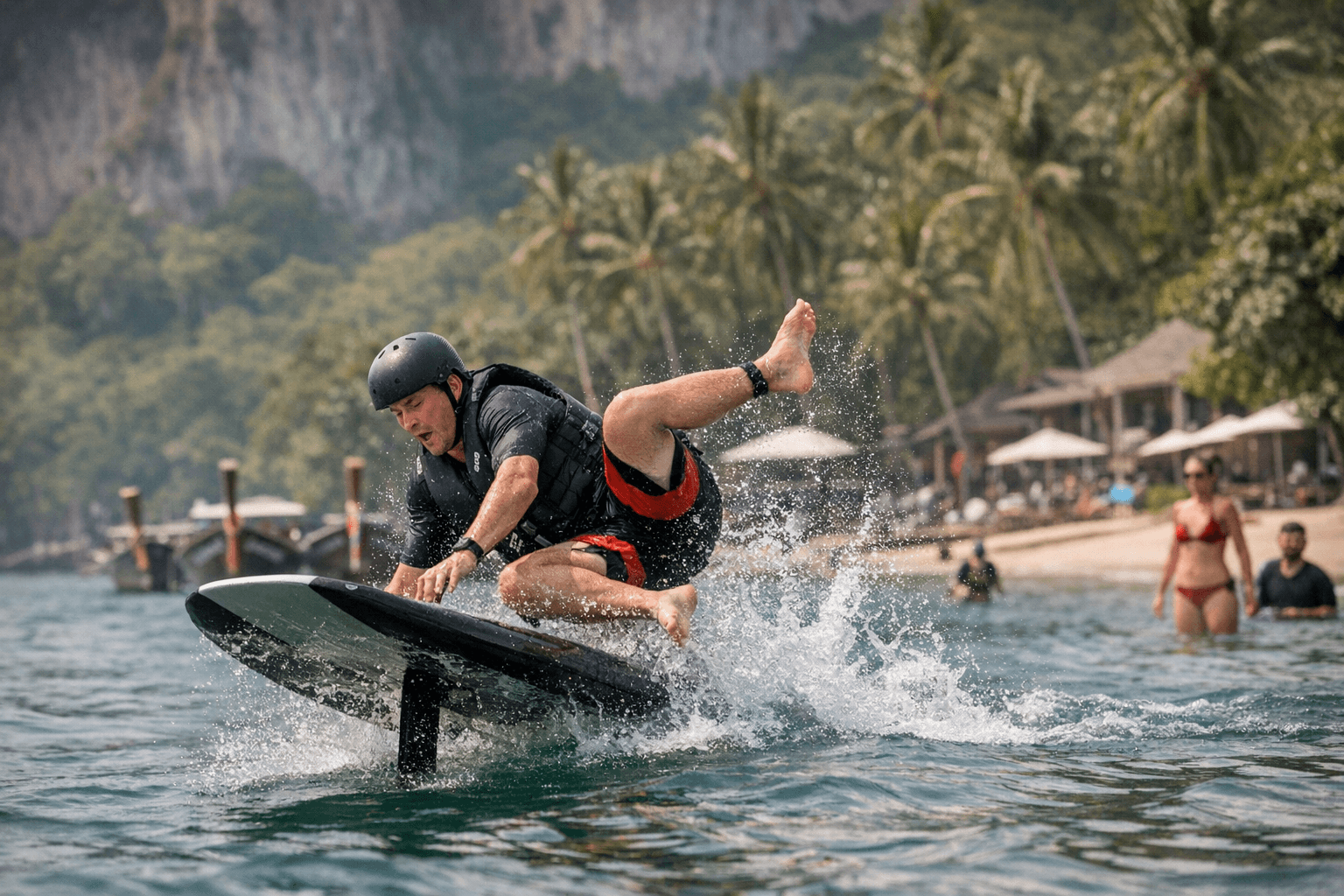
The BOOT Düsseldorf Pump Foil World Cup turned a climate-controlled pool into a packed arena for pump-foiling, producing tight slalom heats, sprint time-trials, and head-to-head racing that underlined how fast the sport is evolving. Edan Fiander (SUI) won the men’s overall and Sarah Spalinger (SUI) took the women’s overall after a three-day program that drew a deeper, more international field: 18 men and 8 women contested the titles.
Racing across the 16–18 January event emphasized cleaner, faster riding and sharper racecraft. Time-trial results set the seeding for knockout rounds, and head-to-head duels exposed small margins between riders. The shallow pool introduced a pronounced ground effect that altered wake and lift, rewarding efficient pumping technique and explosive dock starts more than raw sprint power. That change in dynamics pushed riders to refine cadence, body position, and board setup for the indoor environment.
Equipment shifts were as visible as the racing. Competitors ran thinner masts and higher-efficiency wing profiles, and more riders used straps to maintain control and leverage during aggressive pumping and tight turns. Those choices produced measurable performance gains on short courses and tight slalom gates. For racers and weekend riders, the implication is clear: foil and wing selection for indoor or sheltered-course racing now favors low-drag, high-efficiency components and setups that maximize sustained pumping rather than one-off sprint bursts.
Spectator turnout and the compact, arena-style format demonstrated pump-foiling’s potential as a spectator-friendly discipline. Packed stands and side-by-side heats made the action readable for fans and appealing for organizers considering TV or livestream formats. Event organizers noted growing national team structures and signs of professionalization, pointing toward a calendar that could expand beyond summer beach events into year-round competition and formalized team programs.
Practical takeaways for competitors and community programs include prioritizing pumping drills, mastering dock starts, and testing shorter, stiffer masts alongside high-aspect wings for indoor conditions. Coaches and clubs should consider pool sessions or sheltered-water training blocks to teach cadence and pumping efficiency without the variability of open water. For equipment shoppers, trying strap setups and evaluating wing profiles for continuous lift will matter more at races with ground-effect conditions.
The Düsseldorf event signaled that pump-foiling is accelerating from a grassroots pursuit into a structured, spectator-ready sport. Expect tighter equipment development cycles, more indoor race formats, and expanding national team pathways as the season progresses.
Know something we missed? Have a correction or additional information?
Submit a Tip