Foil Surfing Could Follow Snowboarding’s Rise With Better Infrastructure
Canada’s foiling scene has the talent and the spectacle. What it still needs is the same infrastructure that turned snowboarding from fringe to mainstream.
The snowboard lesson
Foiling Canada’s case is simple and hard to ignore: hydrofoiling in Canada will not scale because it looks cool. It will scale if the country starts treating it like a real waterfront sport, with the same kind of access, rentals, coaching, and dedicated space that helped snowboarding break out of the margins.
That comparison matters because snowboarding did not go mainstream in North America until resorts stopped treating it like an inconvenience. Once ski areas accepted snowboarders, built terrain parks, expanded rental fleets, and created access rules, the sport stopped being a novelty and became part of the winter economy. The Canadian Snowboard Federation was established in 1991, a reminder of how quickly a fringe board sport can become organized once institutions decide it belongs.
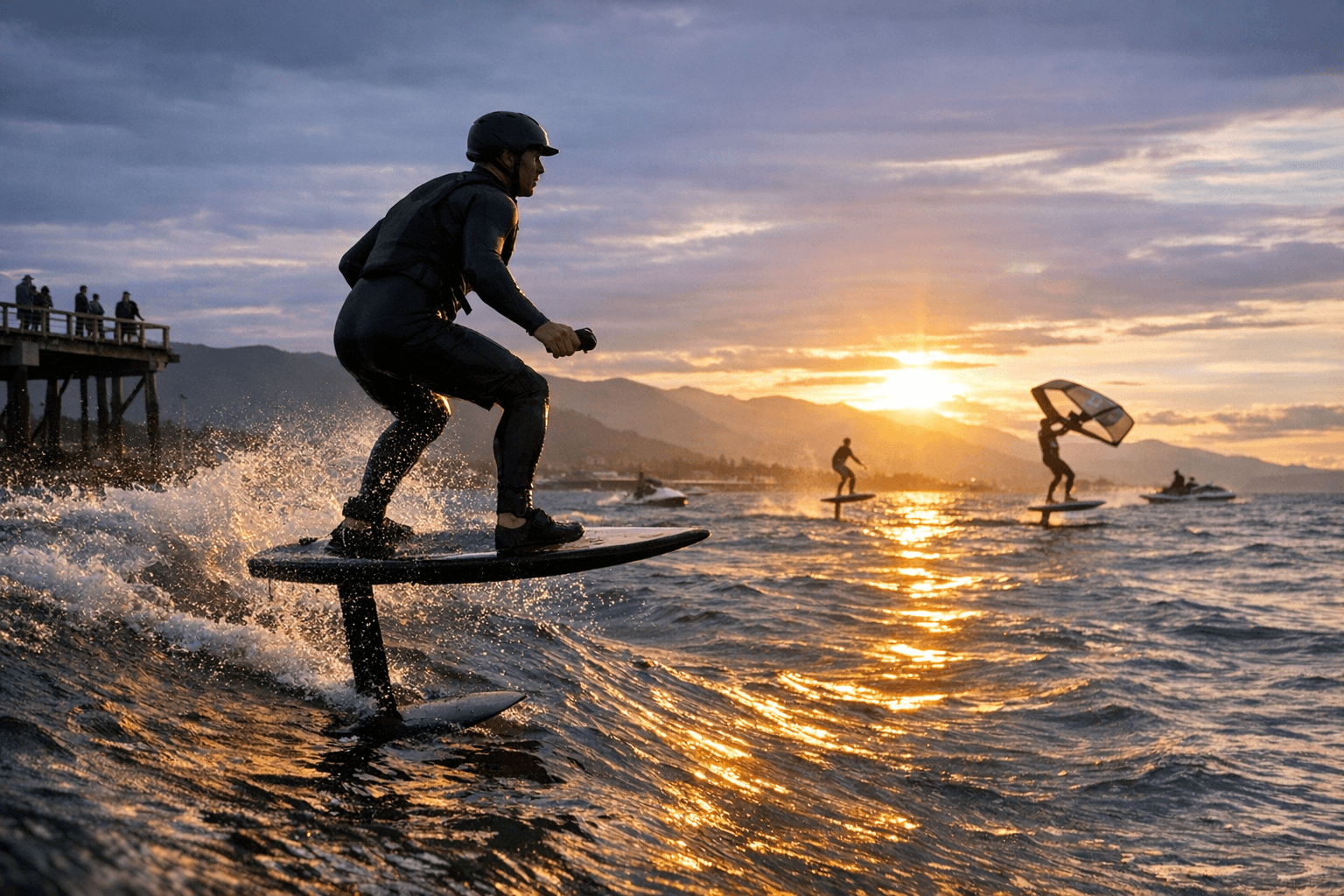
Foiling is at an earlier stage, but the pattern is familiar. It is still treated as specialized in many places, yet it has the same kind of visual pull that can turn heads on a dock, at a marina, or along a waterfront promenade. Foiling Canada’s argument is not that the sport is inevitable. It is that the right infrastructure could make it normal.
What has to happen next
If Canada wants foil surfing and related foiling disciplines to move from niche to habitual, the next step is not more hype. It is a set of practical changes that make the first session easier to book and less intimidating to attempt.
The catalysts are clear:
- cheaper entry-level gear that lowers the cost of trying the sport
- lessons that are structured instead of improvised
- retailer support so riders can rent, buy, and upgrade in one place
- beginner-friendly local access, especially in sheltered water with safe learning zones
That is the same logic ski resorts eventually applied to snowboarders. People do not commit to a sport like this because it is abstractly exciting. They commit because they can find a lesson, rent the right setup, get a few successful runs, and come back without feeling like they need insider luck just to start.
Foiling Canada says it is working with stakeholders across the professional and leisure marine sectors, and it points to SailGP’s hydrofoiling catamaran event in Halifax, Nova Scotia, as a showcase of what the sport can look like when it is given a real stage. That kind of visibility matters, but the everyday version matters more: the local dock, the marina channel, the resort fleet, the place where a curious rider can actually try the sport.
Where Canada already has a foothold
Canada is not starting from zero. The Canadian Foiling Centre was created in 2019 to promote participation through courses and events, and it is based at Kingston Yacht Club in Kingston, Ontario. Kingston’s selling points are practical, not flashy: freshwater sailing, relatively low waves, and reliable thermals. That is exactly the kind of environment a learning sport needs if it wants to move beyond weekend dabbling.
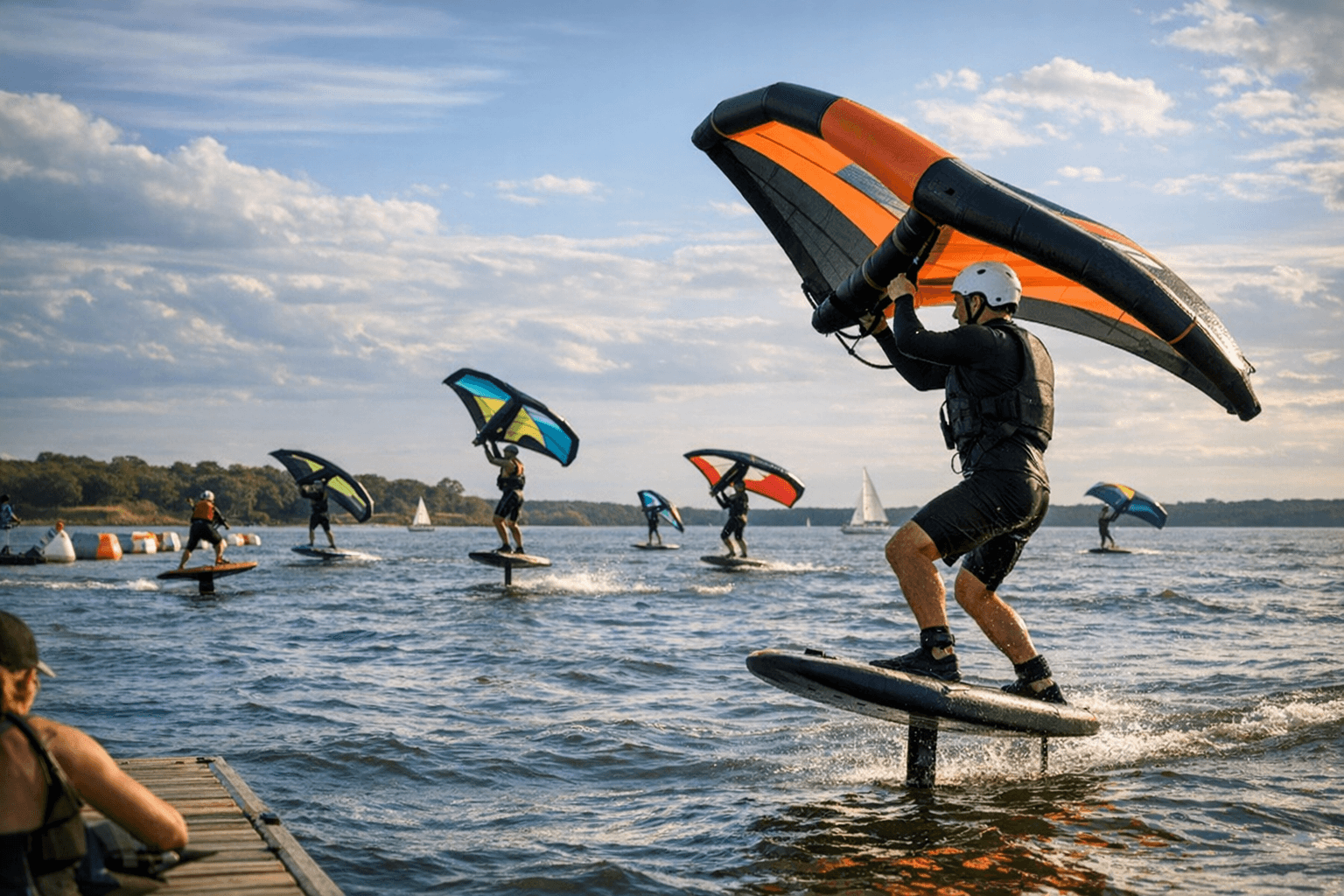
Other pockets of the country already show what this can look like on the ground. Hydrofoiling Canada in Squamish, British Columbia, offers lessons, rentals, and sales for wavefoiling, kitefoiling, and wingfoiling, with Howe Sound’s winds and calm waters doing part of the work for the operator. In Southern Ontario, Surf Culture Canada runs structured foil instruction, including beginner sessions behind a PWC, which gives new riders a controlled way into the sport. In Muskoka, SWS offers private Fliteboard eFoil clinics from a marina on Lake Rosseau, while other Canadian eFoil businesses are leaning into rentals and try-before-you-buy options.
That mix is important because it shows foiling is not one product line. It is a growing recreation economy with several entry points: towed foils, wingfoils, wavefoils, kitefoils, and electric foils. The more those options can be bundled with lessons and demos, the more the sport starts to look like a real category instead of a gear demo.
The commercial signal is getting louder
The strongest proof that foiling is moving beyond pure novelty may be how many different industries are starting to touch it at once. Foiling Canada is trying to grow both the professional and leisure marine sectors, and that broad framing fits the moment. Foiling is no longer just a niche for high-performance riders. It is becoming part of tourism, sailing development, and marine tech.
Sail Canada and the Canada SailGP Team have also announced an official partnership to promote and develop sailing nationwide, including developing foiling talent across Canada. That matters because a national partnership gives marinas, yacht clubs, and training centers a more credible pathway for clinics and youth development. It helps turn foiling from an expensive curiosity into something that can live inside existing institutions.
There is also a technology story here. CBC reported in 2022 that hydrofoils have a history in Canada going back more than a century, and the lift-over-drag principle is now being revisited in marine transport, including energy-efficient ferries. That long history gives the sport a deeper Canadian lineage than many people realize. It also helps explain why a new generation of foiling craft feels less like a stunt and more like a continuation of an old engineering idea.
Why the Toronto debut mattered
The clearest sign that foiling is entering a broader public conversation came when ENVGO introduced its NV1 at the Toronto International Boat Show on January 19, 2026. The company billed it as the first electric foiling boat of its kind in Canada, and it drew an enthusiastic crowd. That kind of debut does more than sell a boat. It connects foiling to consumer electronics, clean propulsion, and the future-facing side of boating culture.
It also gives the sport a shared language with riders who may never want to race but do care about access, battery life, and ease of use. The same waterfront that can support a demo boat can also support lessons, guided sessions, and low-stakes rentals. That is how a scene stops being a specialty and starts becoming a habit.
The real test for Canada
Canada already has pieces of the foiling ecosystem in place: regional lesson providers, a dedicated foiling center, national sailing support, a growing commercial market, and even electric foiling boat innovation. It also has the history and the numbers to show what happens when an outdoor sport gets institutional backing. Nearly 300 ski resorts in Canada serve about 21,000 skiers annually, and 4.3 million Canadians participated in skiing, snowboarding, or both in 2007. Those figures show how quickly participation can grow once a sport is given a home.
The next phase for foiling will not be decided by spectacle alone. It will be decided by whether marinas, resorts, parks, and tourism operators build the ordinary infrastructure that turns curiosity into repeat use. If they do, foiling could become one of the most interesting summer recreation categories in Canada. If they do not, it stays what it is now: a thrilling preview of a sport that still needs a proper place to land.
Know something we missed? Have a correction or additional information?
Submit a Tip