Haifa Sailing Club Runs iQFoil Heats Amid Rain, Choppy 12-knot Winds
Haifa Sailing Club ran iQFoil heats despite overcast skies and occasional rain, using a flexible schedule and safety escorts as choppy 12-knot winds tested racers and organizers.
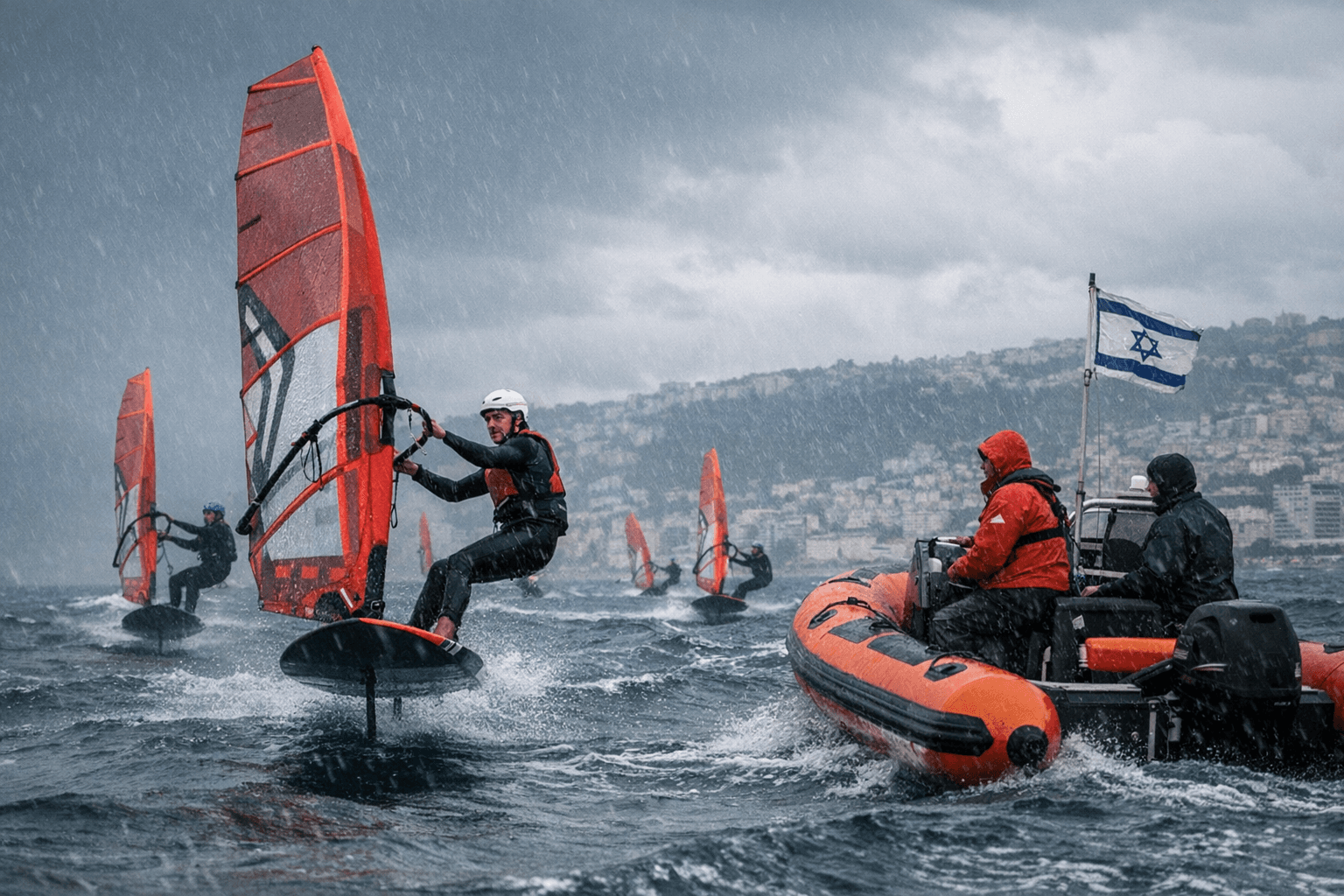
Haifa Sailing Club put a full program on the water January 24, 2026, running iQFoil heats alongside Laser, 29er and other class races despite overcast skies, occasional rain and unstable winds. Organizers kept the schedule flexible and deployed safety escorts on the water to manage choppy seas and cooler temperatures along the shoreline.
The day’s winds hovered around 12 knots, producing short, choppy chop that made foiling and planing work harder than on a glassy day. Those conditions forced race committees to adapt start sequences and course timings to protect competitors and preserve fair racing. The iQFoil fleet, the Olympic foil windsurf class, sailed the first heats with on-the-water marshals monitoring boards and sailors for capsizes and gear failure in the mixed conditions.
Participation was broad, with regional clubs sending competitors across an age range and multiple classes racing in rotation. Laser dinghy crews and 29er teams shared the same race area, creating a busy racecourse where timing and situational awareness mattered. Photos from the first iQFoil heat documented riders launching into foil-borne speed, ducking spray on gybes and fighting for clean upwind angles in the chop.
Safety was a clear priority. Organizers emphasized safety escorts and kept competitors close to shore when conditions showed instability. The flexible schedule allowed race officers to pause between races, shift starting sequences and wait for brief lulls in rain or wind shifts instead of forcing a full program into marginal conditions. That pragmatic approach kept more sailors racing through the day while limiting unnecessary risk.
For the broader foil community, the Haifa event is more than a set of race results. Although this was windsurfing and foil-sail competition rather than surf-foiling on waves, tactics learned here translate across disciplines: handling early flight, timing tacks through chop, and managing pack starts under variable pressure are core skills for any foiler. The turnout from nearby clubs also signals strong regional interest in foiling disciplines and builds momentum for future regattas.
Organizers promised later updates on race winners and full results, and competitors can expect official standings to be posted on the club’s channels. For sailors planning upcoming events, the takeaways are practical: prepare for choppy 10-15 knot conditions, double-check safety kit and communication plans, and be ready for flexible scheduling from race officers prioritizing safety over a rigid program. The Haifa event kept fleets moving and offered a useful training ground for foil sailors sharpening tactics in unsettled conditions.
Know something we missed? Have a correction or additional information?
Submit a Tip