Inflatable Boards and E-Foils Make 2026 the Year to Start Foiling
Last season’s models and used foil gear are flooding the market, and Gong’s Lance WOOD 2X starts at 699€, making 2026 a genuinely affordable moment to get into foiling.

Foiling is suddenly within reach for newcomers as retailers report a flood of last season’s models and used equipment at reduced prices, and brands are shipping beginner-focused boards like Gong’s Lance WOOD 2X priced at 699€ in sizes 5'6, 5'7, 5'8 and 5'9. Banx Watersports frames 2026 as the year gear is both cheaper and easier to use, saying “Foiling gear was once a premium investment, but that’s no longer the case.” That shift is already showing up on shop racks and classifieds.
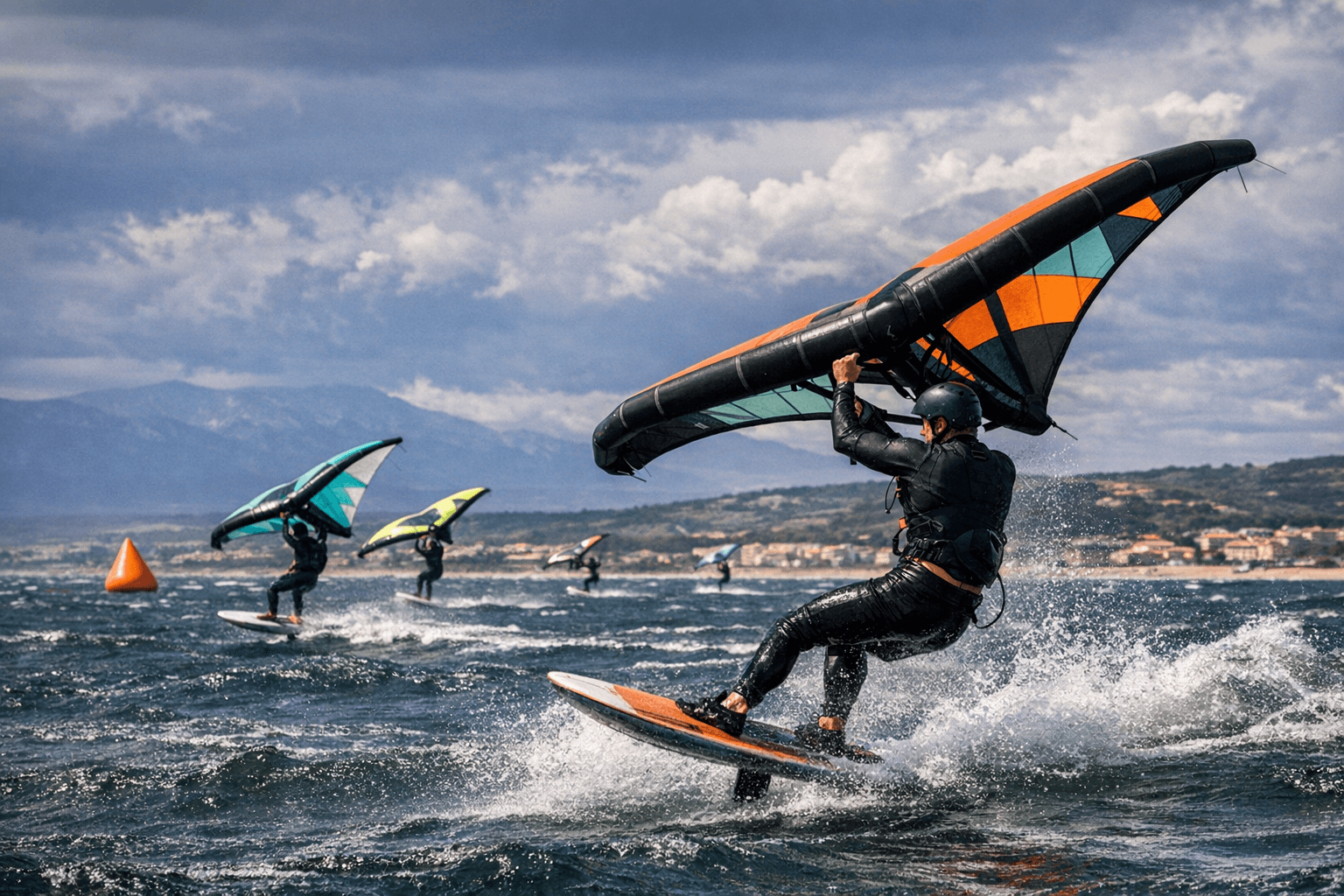
The gear itself has changed. Banx notes that “Design improvements have been exponential, making foils more stable, efficient, and accessible to beginners,” and industry previews point to technical moves that back that up: high aspect front wings to enable glide and speed, optimized foil wings to reduce drag, and Gaastra’s new Move front wing with a higher aspect ratio for all-round performance. Bruno Sroka puts it bluntly: “The trend is increased wingspans, the goal is to be able to glide all the time, even in very light wind conditions”, a design direction aimed squarely at making early flights easier.
Hardware is catching up to the ambition. Boardsportsource highlights modular systems that “allow precision fit, faster set up, and swapping wings, stabilisers, and fuselages to match conditions,” and says “Tool-free connection systems are highly valued, for their ease and accessibility.” Gong counters with construction claims on its 2026 line, advertising “Full Sandwich Constructions” and declaring that their production boards faithfully transpose workshop prototypes. Other Gong SKUs show entry points across budgets - Lance FSP 2X listed at 849€, Zuma FSP 2X at 899€ in sizes from 6'0 up to 7'3, and the Mint FSP 2X in sizes from 4'10 to 5'10 for riders chasing performance-accessible shapes.
If you’re wondering how to learn, Locosurfing’s “Wing Foiling Guide for Beginners in 2026” gives concrete starting steps: “Choose calm, flat water with steady winds (10-20 knots) and open space. Begin on your knees, then stand while balancing the wing.” The guide walks through basics - “Start with jibes, as they are easier,” how to set up a jumping attempt with speed and leg pop, and wave riding tactics that emphasize positioning and foil angle. Locosurfing also points to local competition culture, naming the Scottish Fin & Foil Championships and the BKSA Wing Race series as ways to connect.

Market mechanics are equally specific. Boardsportsource reports that “in-house manufacturing helps balance availability for retailers with avoiding overproduction” and that “stock management is becoming a key competitive advantage,” even as it notes “While industry sales are down from past peaks, especially the post-pandemic one, there is overall stability and growth in the foil category.” Those industry signals sit alongside Banx’s observation that surplus inventory is making older models a bargain, creating a two-track market of discounted entry gear and high-end, technically advanced new products.
Practical motivations pile up: Locosurfing lists benefits including a “full-body workout” and a “low environmental impact compared to motorized sports,” while Boardsportsource flags that pump foiling is drawing younger users. Brand language from Gong captures the appeal for many riders: “We want glide that lifts us off the water in just two pumps.” Given discounted equipment, clearer learning steps - choose calm water and 10-20 knots, start on your knees - and new user-friendly wings and connections, 2026 lines up as a year when inflatable learning boards, e-foils, and conventional foil rigs genuinely lower the barrier to start foiling.
Know something we missed? Have a correction or additional information?
Submit a Tip