Step-by-Step Surf Foil Progression Guide for Riders and Coaches
Surf foiling has a real learning curve, but a structured progression turns confusing wipeouts into clean, sustained flights.

Getting up on a surf hydrofoil for the first time is one of the most disorienting experiences in modern wave riding. The board feels alive beneath your feet, the mast wants to pitch you forward or launch you skyward, and the wave itself barely matters in the way it once did. But that chaos has a map. A deliberate, step-by-step progression transforms the learning process from a bruising guessing game into something genuinely methodical, and that matters whether you're a rider working through the early stages alone or a coach guiding someone else through theirs.
Who this progression is for
This guide is built for two distinct people: the surf foil student and the coach standing on the beach watching them. Both need the same foundational knowledge, but they use it differently. The rider needs internalized technique cues they can access in real time, mid-wave. The coach needs the vocabulary and visual checkpoints to identify exactly where a student is breaking down. Surf foiling and pump foiling are treated as connected but distinct disciplines here, each with its own specific demands on body position, timing, and board feel.
You don't need to be an elite surfer to begin, but a baseline of ocean comfort is non-negotiable. Reading swell, managing impact zones, and understanding how a wave moves beneath you are prerequisites, not bonuses. The foil adds a vertical dimension to surfing that rewards patience and penalizes aggression, so riders who are used to muscling through situations on a regular surfboard will need to actively unlearn some instincts.
What you're actually learning
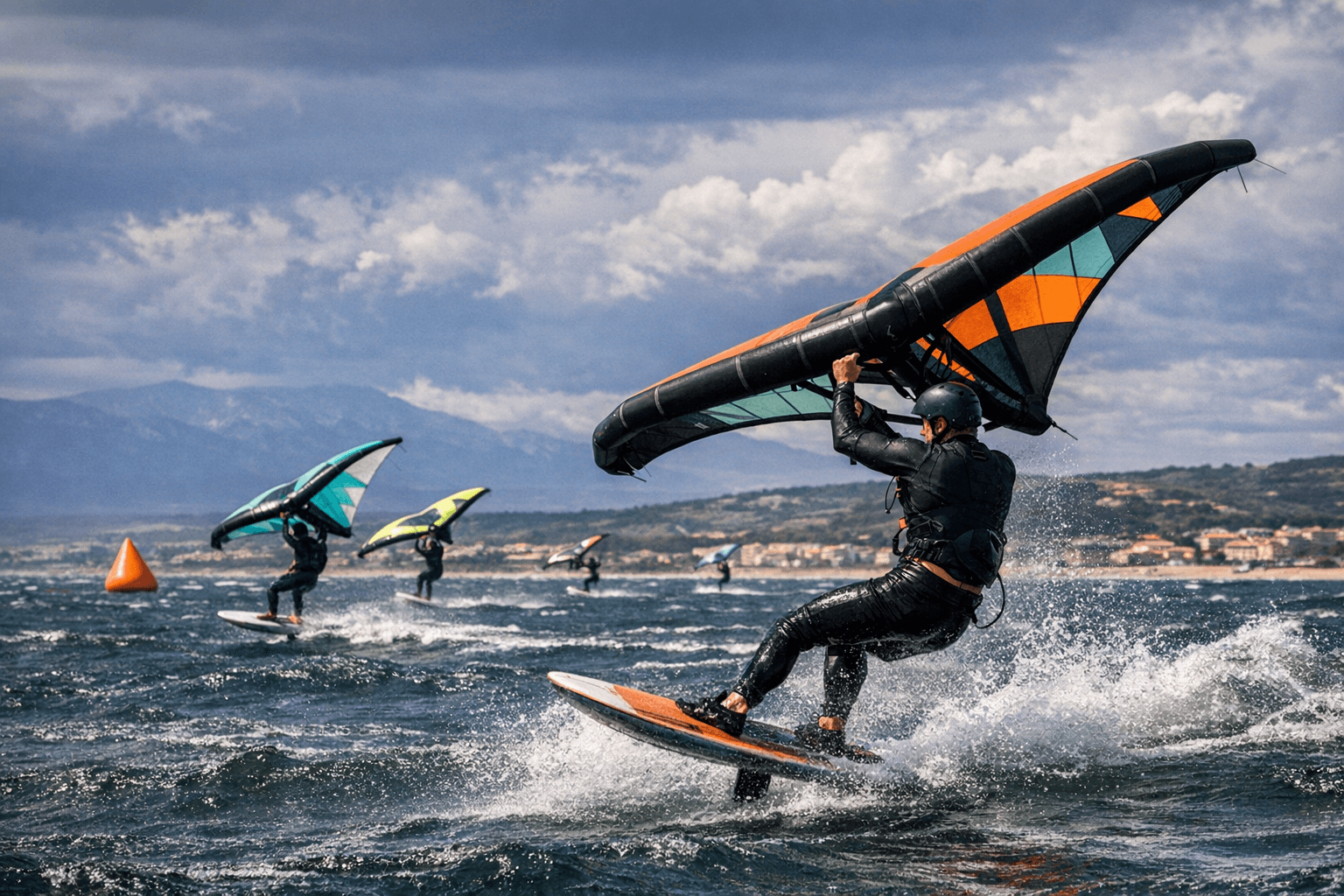
Surf foiling is the practice of riding a surfboard fitted with a hydrofoil, a mast-and-wing assembly mounted to the bottom of the board that generates lift as water flows over it. When you reach sufficient speed, the board rises out of the water and you're riding on the foil alone, elevated above the surface. The sensation is unlike anything else in wave sports.
Pump foiling extends this by allowing riders to sustain and even generate that flight through rhythmic body pumping, similar in feel to how a dolphin moves through water. Where surf foiling depends on wave energy to initiate and maintain flight, pump foiling teaches you to keep the foil flying through your own kinetic input. Learning both in sequence builds a more complete skill set and gives you options when the waves are small, weak, or unpredictable.
The progression, step by step
The structure of learning surf foiling follows a logical sequence that builds each skill on the last. Skipping stages is the single most common reason riders plateau.
1. Prone paddling and board familiarity. Before you ever stand up, spend time lying on the board in flat water.
Understand where the foil sits beneath you, how the board responds to weight shifts, and where your hands naturally fall. The foil is unforgiving of sudden weight transfers, and this stage builds the subtle proprioception you'll need later.
2. Kneeling and low riding. Progress to kneeling on the board and experiencing how the foil begins to respond as you paddle into small, slow waves.
You're not trying to fly yet. You're learning the tactile feedback that comes just before liftoff so you can recognize and control it.
3. Standing with foil on the water. Your first standing rides should keep the foil pressed against the surface.
This means slightly more rear foot pressure than feels natural, deliberately resisting the urge to let the board fly. Stance width, foot positioning, and your center of gravity all get dialed in here.
4. First flights and height control. When the foil does lift, your job is not to ride it out but to manage altitude.
Short, controlled lifts where you immediately bring the board back down train the micro-adjustments that prevent breach and freefall. Front foot pressure is your primary tool: more front foot brings the nose down and the foil drops; too much and you'll nose-dive.
5. Sustained flight and direction control. Once altitude management becomes instinctive, you start holding flight longer and introducing rail-to-rail turns.
This is where pump foiling technique begins to integrate, as small rhythmic pumps through the rear foot can extend a ride well past where the wave's energy alone would take you.
6. Pump foiling in open water. Dedicated pump foiling practice, separate from surf sessions, accelerates full-body coordination.
You learn to generate speed from nothing, which in turn makes you far more confident managing the foil in the surf because you understand what it needs to stay flying.
Technique cues that actually translate
Coaching language matters enormously in foiling because riders can't see what they're doing and the feedback from the foil is subtle. A few cues consistently cut through the noise:
- "Quiet hands" reminds riders not to use arm movement as a balance mechanism, which creates instability rather than resolving it.
- "Hips over heels" corrects the seated, hunched posture that kills front-to-back balance.
- "Press, don't stomp" addresses the over-aggressive rear foot input that causes sudden, violent breaches.
- "Look where you're going, not at your feet" is the oldest cue in board sports and remains the most ignored.
For coaches, the most useful visual checkpoint in early stages is the rider's shoulder position. Shoulders that are rotating ahead of the hips signal a surfer trying to turn like they would on a shortboard, and that twisting motion translates directly into foil instability.
Safety considerations and common mistakes
The foil is the most dangerous piece of equipment in this sport. The carbon wings are sharp, the mast is rigid, and a wipeout at speed puts both in motion near your body. Impact vests and helmets are not optional for beginners, and many experienced riders continue to wear them. Water shoes protect feet during pop-ups and falls in shallow water.
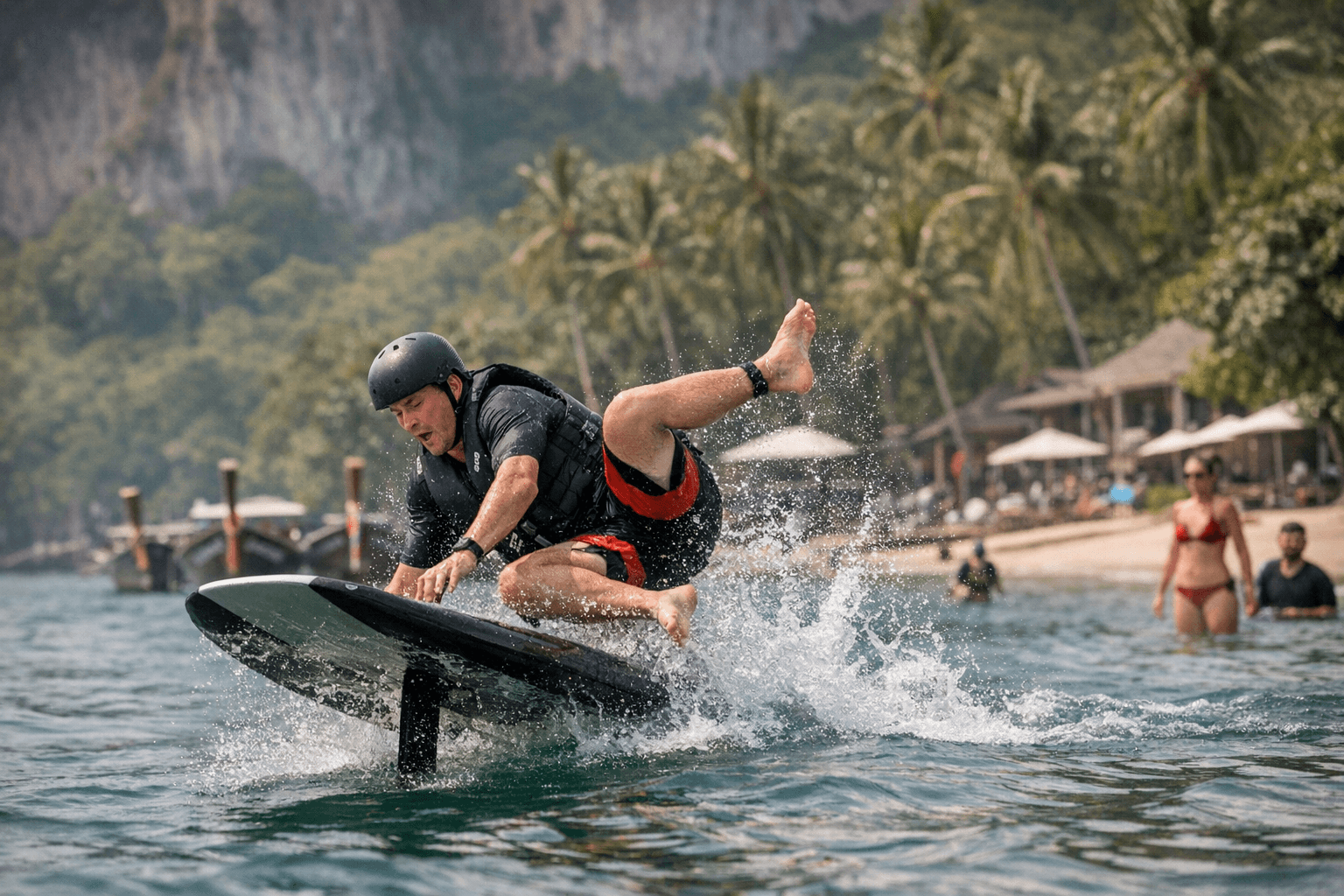
The most common beginner mistake is looking down at the board during the pop-up, which shifts weight forward and causes an immediate nose-dive. The second is standing too far back on the board as a fear response to that nose-dive, which overcorrects and sends the foil breaching skyward. These two errors cycle against each other and can trap a rider for sessions at a time without a coach to interrupt the pattern.
Leash configuration deserves specific attention. A standard surfboard leash attached at the ankle creates serious entanglement risk around the foil. Coiled calf leashes or specific foil leash setups that break away on impact are strongly preferred, and many experienced coaches require them before a student enters the water.
Where and when to learn
Small, slow, mellow waves with a sandy bottom are the ideal learning environment. Reef breaks and crowded lineups are genuinely dangerous for new foilers, both for the rider and for everyone around them. Dawn patrol sessions at uncrowded beach breaks reduce interference and give you the space to make the wide, arcing mistakes that are part of the learning process. Flat-water pump foiling sessions in a bay or harbor, separate from surf sessions entirely, are one of the fastest ways to build flight time and confidence between swells.
The progression from complete beginner to competent surf foiler is measured in months, not weekends, and that timeline is something both riders and coaches need to communicate clearly from the start. The riders who progress fastest are almost never the most naturally athletic; they're the ones who stay methodical, embrace the repetition of each stage, and resist the urge to skip ahead before a skill is genuinely embedded.
Know something we missed? Have a correction or additional information?
Submit a Tip