Grand Canyon eases water restrictions as Transcanyon Waterline repairs advance
Water is returning to the South Rim in stages, but Mather Campground, Desert View spigots and outdoor wood and charcoal fires stayed off as repairs advanced.
Water pressure began returning to the South Rim in stages Friday at noon, giving Grand Canyon hikers, campers and rim-to-rim planners their clearest sign yet that the Transcanyon Waterline crisis was easing. Grand Canyon National Park said it had started gradually reducing water conservation measures after recent progress repairing the pipeline and restoring pumping to the South Rim, but it also told visitors to keep conserving water on trails and roads.
The park had been under tighter restrictions since April 11, when significant breaks in the 12½-mile Transcanyon Waterline cut off pumping to the South Rim. Those restrictions followed earlier conservation measures that began March 30 after a break along the North Kaibab Trail, then tightened again April 1 with Stage 3 Water Restrictions. By April 8, the park said no water was being pumped to the South Rim at all.
For visitors, the practical picture stayed mixed. Grand Canyon National Park remained open, but Camper Services was still closed, water spigots at Mather Campground and Desert View were shut off, and outdoor wood and charcoal fires were prohibited. That matters immediately for anyone building an itinerary around Grand Canyon Village, a South Rim campsite, or a longer inner-canyon push where every liter counts before the descent and on the climb out.
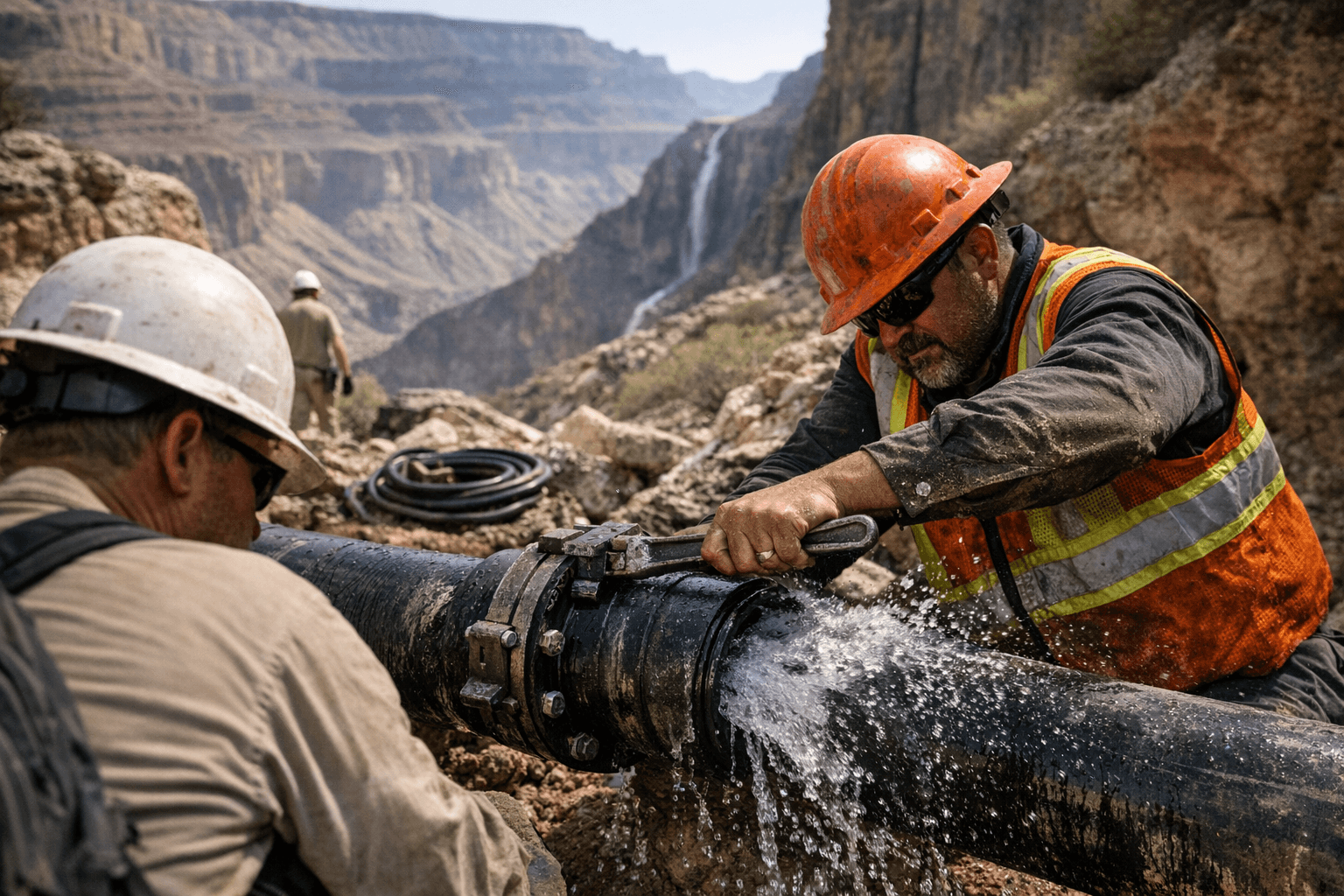
The waterline itself explains why the park has had to move so carefully. Built in the 1960s, the Transcanyon Waterline supplies potable water and fire suppression to South Rim facilities and some inner-canyon sites, including more than 800 historic buildings in the Cross Canyon Corridor. The National Park Service said the line has suffered more than 85 major breaks since 2010, and a single break often costs more than $25,000 to repair. Many fixes require trail or helicopter access, which is one reason the system has remained so vulnerable.
The current repair effort is part of a much larger overhaul. The National Park Service is preparing a multi-year $208 million rehabilitation of the Transcanyon Waterline and related water-delivery upgrades, a project that will shape how the South Rim handles future high-season demand, campground service, and backcountry logistics. For now, the message for anyone heading into the canyon is simple: treat the easing as welcome breathing room, but plan as if water remains limited, especially for rim hikes, overnight campground stops, and long inner-canyon routes where conditions can change fast.
This article was produced by Prism’s automated news system from verified source data, official records, and press releases, then run through automated quality and moderation checks before publishing. The system is built and supervised by the people who set the standards it runs under. Read our full AI policy.
Know something we missed? Have a correction or additional information?
Submit a Tip