Mastering Linework and Dotwork Techniques for Precise Geometric Tattoos
Geometric tattoos demand zero tolerance for error: wobbly lines and uneven spacing are instantly visible, making linework and dotwork mastery the defining skill separating good work from great.
Linework and dotwork are the technical foundations of most geometric tattoos, and everything else in the process, from the first digital sketch to the final healed result, exists in service of those two disciplines. Getting them right consistently requires understanding not just how to hold a machine, but how to plan, pace, and execute a piece across multiple sessions without losing precision. This guide pulls together the core workflow principles that help artists produce clean, crisp geometric work.
The Two Technical Pillars
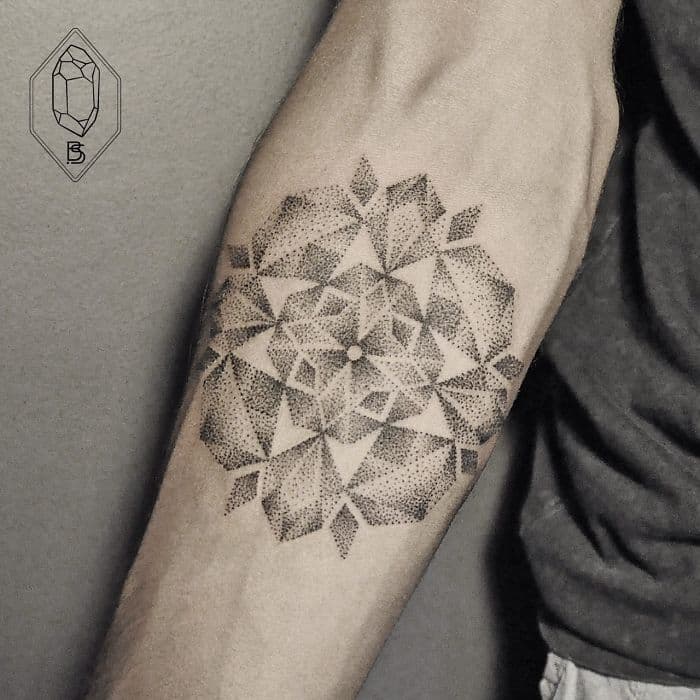
Linework defines the structure of any geometric piece. Every triangle, hexagon, radial line, and interlocking pattern lives or dies by the clarity of its edges. Dotwork, the other foundational technique, builds dimension and shadow through the accumulation of individual placed marks, creating gradients and depth that solid fills often cannot achieve. Together they power the style's most ambitious work: consider the full-back symmetrical mandala documented out of Lubbock, Texas, where black ink dotwork creates depth and shading throughout the design, and precise linework anchors geometric shapes and interconnected patterns across a canvas that covers most of the person's back. That piece illustrates what both techniques, deployed at the highest level, actually look like in finished form.
As Jacob wrote in "The Art and Craft of Geometric Tattoos: History, Technique, and Personal Meaning," the demands are unforgiving: "Geometric tattoos leave no room for error. Wobbly lines, uneven spacing, or asymmetrical elements are immediately noticeable, requiring artists to maintain perfect control throughout the entire process." That standard applies equally to a small wrist mandala and a 40-hour backpiece.
Planning and Stenciling: Where Precision Starts
The work that determines whether a geometric tattoo succeeds begins long before the needle touches skin. Unlike freehand tattoos, geometric pieces require extensive planning. Artists typically create detailed digital designs, ensuring perfect symmetry and proportion before a single line of stencil goes on the body. The software stage is where proportions get refined, radial symmetry gets verified, and the overall composition gets stress-tested across different scales.
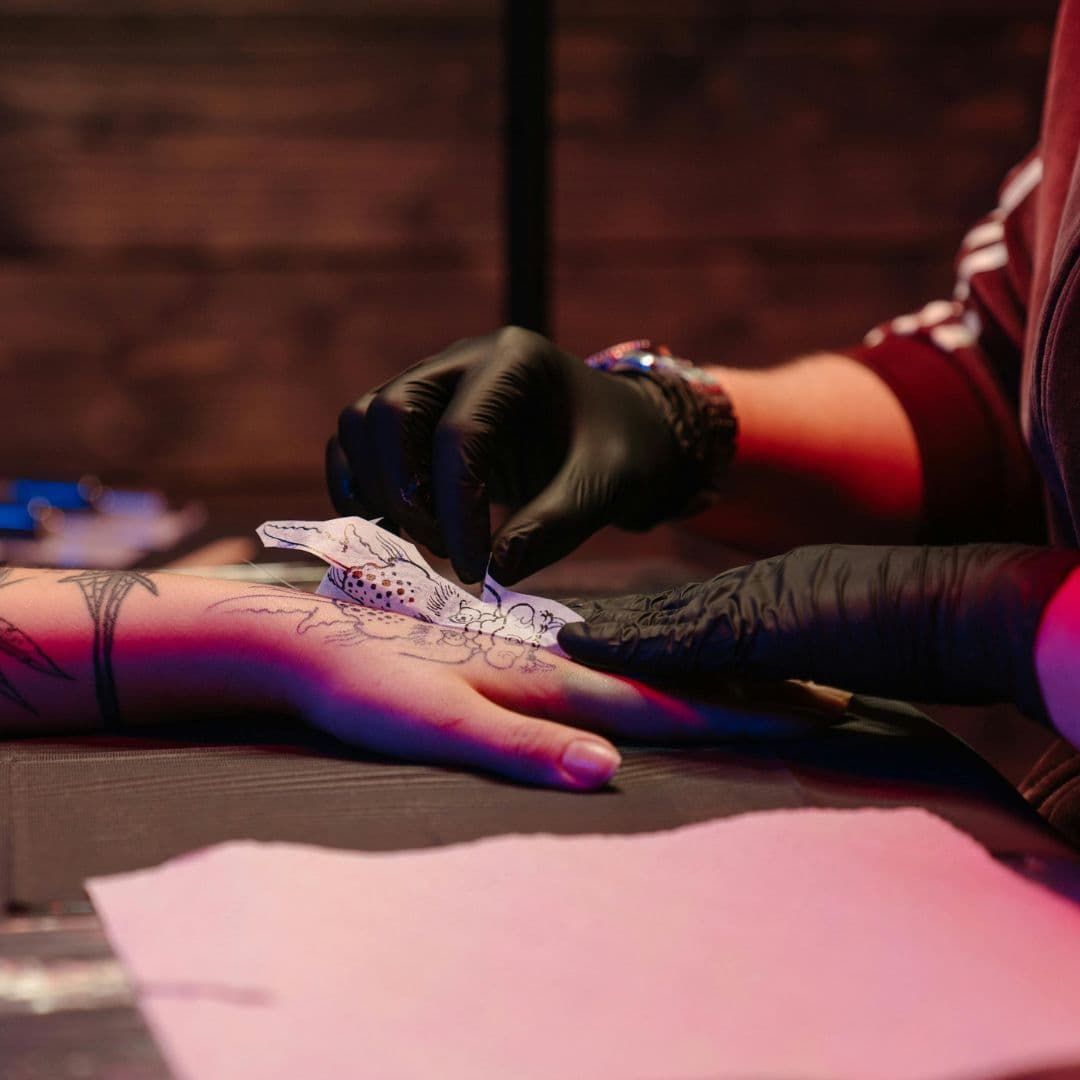
Stencil application then translates that digital precision into physical placement, and it is not a quick step. The stencil application alone can take hours, as it must be perfectly centered and aligned on the body. Body contours, natural posture variations, and skin tension all affect how a flat stencil reads once applied, which means artists need to account for those distortions during the design phase and again during placement. Rushing stencil work to save time is one of the most reliable ways to compromise the finished piece.
Session Pacing and the Reality of Large-Scale Work
The Lubbock backpiece, with its intricate mandala at the center and symmetrical patterns radiating outward across most of the person's back, represents the scale of project that defines geometric tattooing's upper tier. Work like that cannot be completed in a single sitting. Large back pieces usually require 20-40+ hours of work, spread across multiple sessions. The rationale is dual: the sessions allow both the skin to heal and the artist to maintain the precision required for such detailed work.
That second reason is worth dwelling on. Precision is not a static resource. Fine linework and accurate dotwork placement both degrade as fatigue accumulates, and attempting to push through extended sessions risks compounding small errors into structural problems that span large sections of the design. Breaking a full-back geometric piece into planned sessions is not a concession; it is the workflow that makes the finished quality possible. Artists should build session maps during the design phase, identifying logical stopping points that correspond to discrete compositional zones, such as completing one quadrant of a mandala's radiating arms before moving to the next.
Dotwork: Depth, Shading, and the Value of Restraint
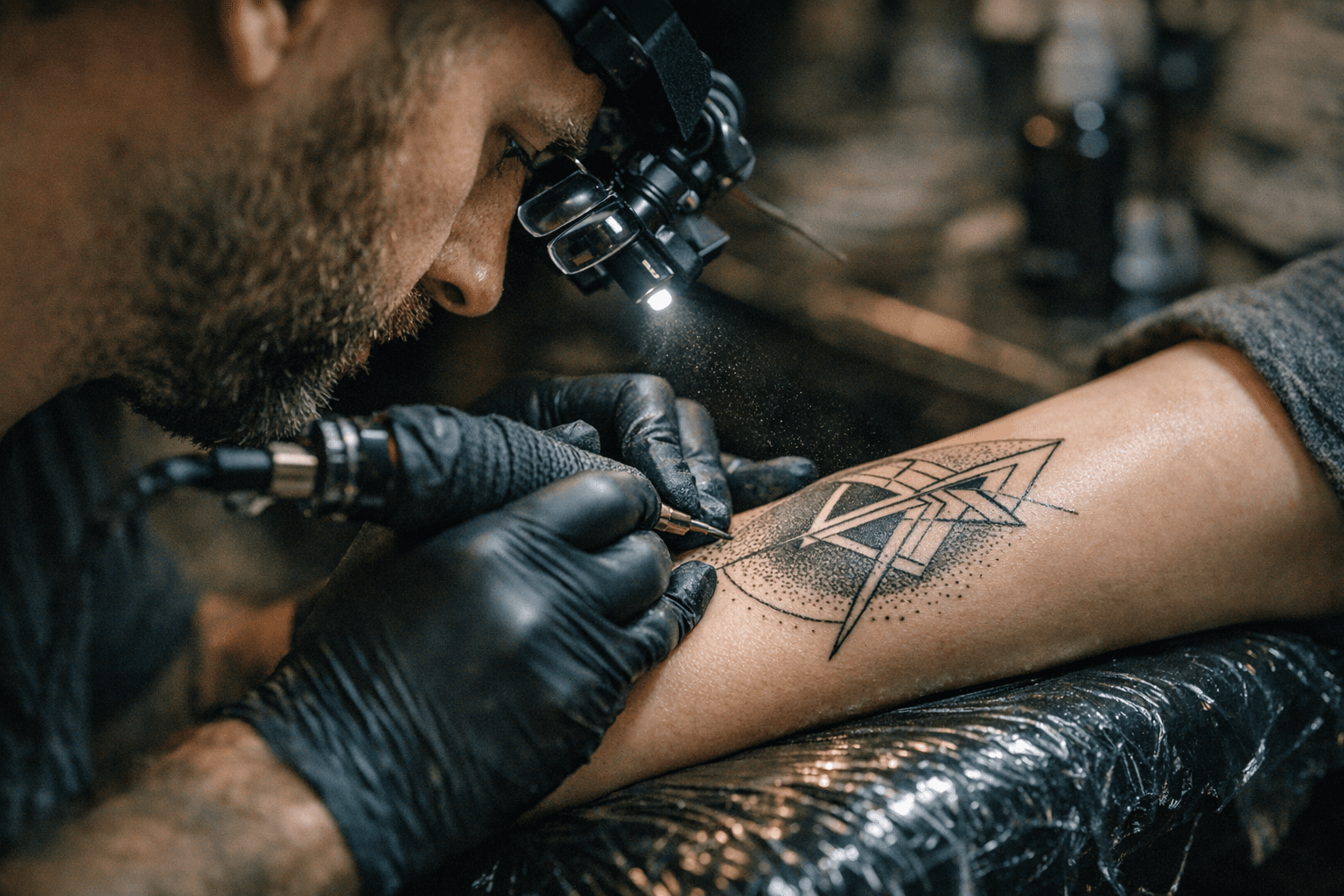
Dotwork in a geometric context functions differently than in organic or illustrative styles. Rather than following muscle or floral contours, geometric dotwork operates on mathematical grids and radial gradients. In the Lubbock backpiece, the dotwork technique creates depth and shading throughout the design, giving a black-ink piece the visual weight and dimensionality that prevents it from reading as flat. The density of dots, their spacing, and their distribution relative to linework all contribute to how the shading reads at different viewing distances.
Consistency is the operative challenge. A shading gradient built from dotwork only looks smooth if the dot intervals remain controlled across the entire zone being worked. Inconsistent spacing, even in areas the artist considers transitional or secondary, becomes visible once the tattoo heals and the ink settles. The same principle that governs linework precision applies here: control must be maintained throughout the entire process, not just in the areas the artist considers the focal point.
Equipment Choices and Studio Practice
Equipment selection is a documented area of consideration for geometric work: choosing the right machines, needle configurations, and ink formulations all feed into whether linework stays crisp and dotwork reads cleanly after healing. The specific choices an artist makes should align with the techniques being executed. Tight linework often calls for different needle groupings than broad shading, and dotwork precision can be affected by machine speed and give. Artists working in this style benefit from building a dedicated setup for geometric sessions rather than defaulting to all-purpose configurations.
Why Clients Invest in Geometric Pieces
The decision to get a large geometric tattoo is not taken lightly. Clients who commission work at this scale are committing to multiple sessions, extended healing periods, and a design that will occupy significant visual real estate. That commitment level shapes how artists should approach consultations: understanding a client's motivations and expectations helps inform design choices, scale decisions, and session scheduling. A client who understands that a full-back mandala composition requires 20-40+ hours of work and careful aftercare between sessions will be a more prepared collaborator throughout the process.
Bringing It Together
Every element of the geometric tattooing workflow connects back to the same requirement: control maintained across time, scale, and technical complexity. Digital design work establishes the symmetry. Careful stenciling transfers it accurately to the body. Paced sessions preserve the artist's ability to execute at full precision. Consistent linework and dotwork technique build the final image mark by mark. The pieces that demonstrate what this style is genuinely capable of, including full-back compositions where an intricate mandala anchors symmetrical patterns radiating outward across an entire canvas, are the product of every one of those stages being taken seriously.
Know something we missed? Have a correction or additional information?
Submit a Tip