Bus Job script turns GTA bus driving into full career roleplay
Bus Job gives RP servers a civilian shift loop with fares, passenger chaos, and progression that can keep bus routes busy between major scenes.
Why Bus Job matters for server retention
Bus Job answers a practical admin problem: how do you keep non-criminal players busy in Los Santos when the big scenes are done? Instead of another bare-bones driving script, this release turns bus work into a repeatable career loop with route selection, fares, challenges, ratings, and progression. That makes it useful as both a money-maker and a routine that can hold a server’s civilian side together.
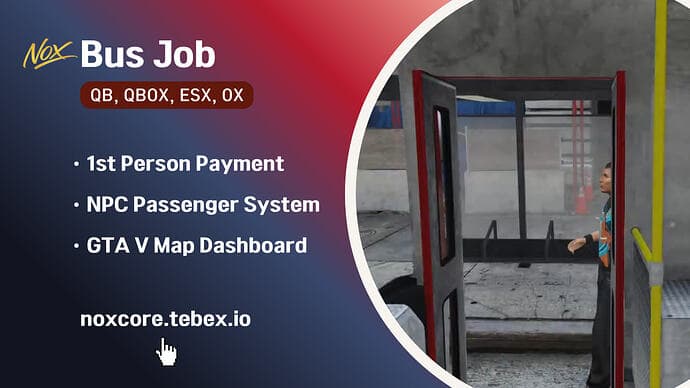
The hook is not just that players drive a bus. It is that they work a shift. The script gives them an interactive dashboard, a built-in map of bus stops, daily challenges, route selection, and a stats and leaderboard tab, so the job feels organized rather than improvised. For roleplay communities trying to build a living city instead of a constant shootout, that structure is the real selling point.
A shift system, not a one-off drive
The core loop is easy to understand and easy to repeat. Players pick a route, follow the stop map, collect fares, and deal with passengers whose behavior can change depending on the time of day and the type of rider boarding. The job also supports first-person fare collection, which adds a more hands-on feel than simply pressing a button at the curb.
That shift design matters because it gives players something to return to. Daily challenges, driving ratings, and route choice give the job a rhythm, while the five driver levels create a clear sense of advancement. Bonus pay climbs by as much as +20%, so the script does not just reward time spent, it rewards sticking with the route and building a bus-driving identity.
The fare system gives admins real economy hooks
Bus Job is stronger than a lot of generic transport scripts because the money side has actual texture. The fare system supports cash and card payments, including change-making, overpay and underpay handling, and card-payment failure animations. That turns a simple transaction into a small RP moment, which is exactly the kind of detail that helps civilian jobs feel alive.
The earnings model also has more moving parts than a flat fare payout. There are six time periods that affect passenger count, tip chance, and fare multipliers, plus weekend modifiers that change the pace again. VIP pickups can boost income, and random events like fare evaders, drunk passengers, and sick passengers add friction that keeps the route from feeling automated. For admins, that means one script can support both economy balancing and passenger interaction without needing a separate system for every detail.
Built for smaller servers and easier deployment
One of the most practical details in this release is the save system. The author says progress is stored in JSON, not a database, which lowers the setup burden for smaller servers and for admins who do not want to build heavier infrastructure just to run a bus job. That alone makes the resource easier to test, tweak, and keep online.
The script also supports ox_lib and major frameworks, including QBCore, QBox, ESX, and OX Core. That kind of compatibility matters in the FiveM ecosystem, where frameworks are the foundation that helps server owners build resources without starting from scratch. FiveM, the source-available GTA V multiplayer modification with years of development behind it and a huge server-owner community, is exactly the kind of environment where a self-contained job script can spread quickly if it solves a real gameplay need.
The route builder command is another piece that speaks directly to server operators. It lets owners tailor stop layouts without constructing a custom framework from the ground up, which is a big deal for communities that want their bus line to match their map, traffic patterns, or lore. That flexibility makes the script more than a preset activity, because it can be adapted to different cities and roleplay styles.
The community context shows a busy niche
Bus Job is landing in a subgenre that has already been moving for months. A June 2025 Cfx.re Community bus-job release focused on an open-source level system with configurable stops, while a May 2025 paid release advertised 15 stops, route unlocking by level, route history, and penalties for reckless driving. Taken together, those earlier projects show that bus scripts are no longer a novelty; they are becoming a small but active lane inside GTA roleplay.
This April release pushes that lane further by layering in passenger behavior, time-based demand, card and cash handling, and more explicit progression. That is why it stands out for server owners who want more than a route from point A to point B. The competition in this space is increasingly about realism, customization, and whether a job can support a regular routine instead of a one-off session.
Why the response from admins is already telling
Early thread interest suggests the script is already being treated like infrastructure, not just a toy. One commenter called it “absolutely amazing” and asked about support-ticket and bug-reporting access, which is the kind of question administrators ask when they are thinking about actual deployment and maintenance. That reaction matters because it shows the script is being judged on uptime, support, and fit for a live community.
For RP servers that want a civilian branch with its own cadence, Bus Job has the ingredients that matter: route planning, fare drama, progression, and economy hooks that change with the clock. It does what the best utility scripts do in FiveM, it gives players a reason to return tomorrow and gives the server a reason to feel busy even when the sirens are quiet.
This article was produced by Prism’s automated news system from verified source data, official records, and press releases, then run through automated quality and moderation checks before publishing. The system is built and supervised by the people who set the standards it runs under. Read our full AI policy.
Did this article answer your question?