Former Rockstar Dev Reveals GTA 6 Rebuilt RAGE Engine
The audio engineer who built GTA 5's soundscape says Rockstar "probably rebuilt the entirety of the Rage Engine" for GTA 6, and the modding community faces the biggest consequence.
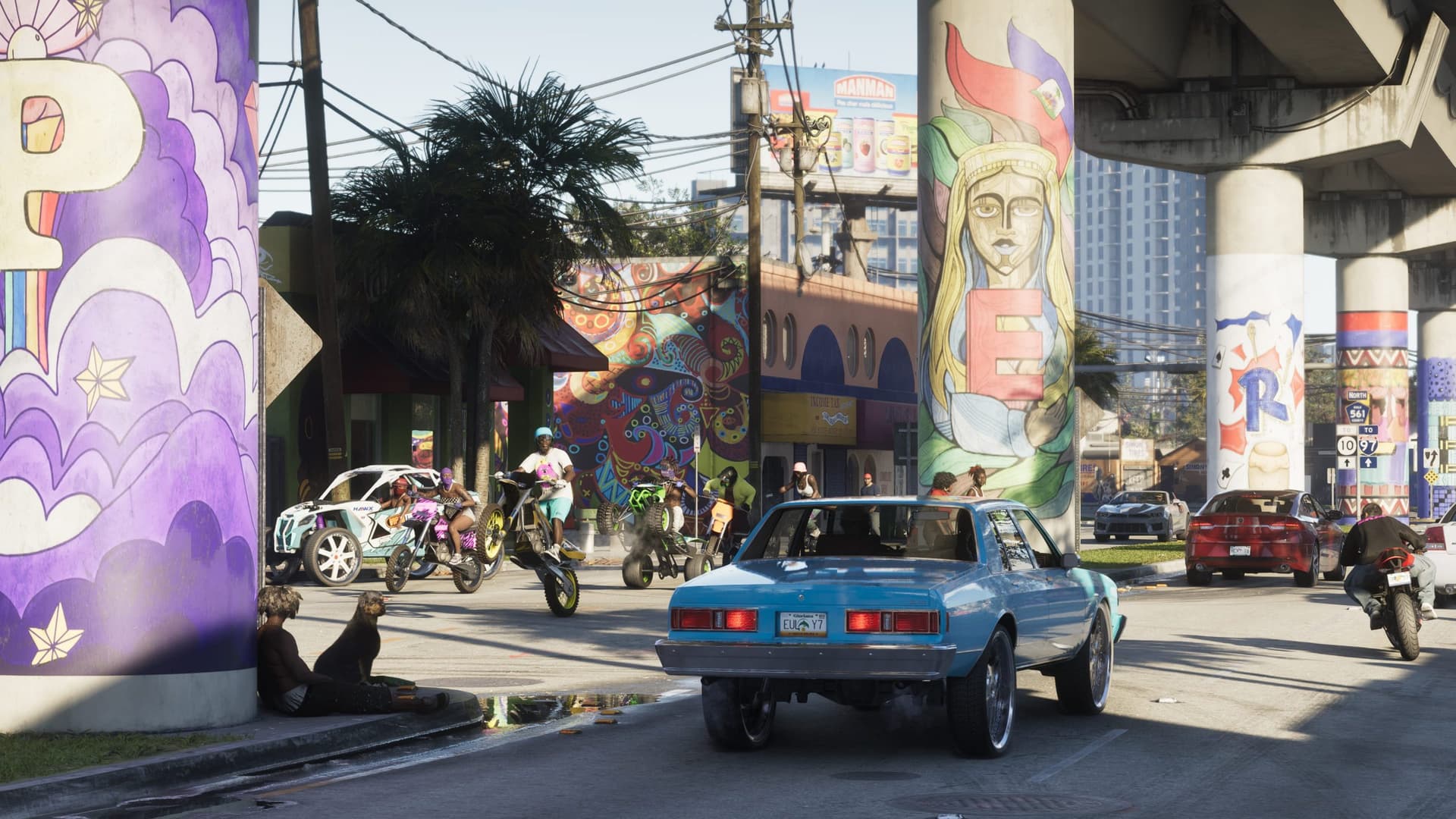
The man who built the soundscape of Los Santos is now offering one of the most credible outside theories about why GTA 6 has taken 13 years.
Rob Carr, audio engineer on GTA 5 and LA Noire, appeared on the Kiwi Talkz podcast alongside host Reece Reilly and made a claim that has since ricocheted across gaming forums: Rockstar likely rebuilt its RAGE engine from the ground up for GTA 6. "I know nothing about it," Carr said upfront, "other than the fact that they probably will have, given the time frame of how long it's taken them to get to this stage, they've probably rebuilt the entirety of the Rage Engine." He didn't hedge much after that: "That's the only thing I can say with real genuine confidence."
RAGE, short for Rockstar Advanced Game Engine, has powered the studio's open-world games since GTA IV. What Carr is speculating amounts to a significant leap, not an iteration on what shipped with GTA 5 and Red Dead Redemption 2, but a foundational overhaul. His reasoning is direct. "I'll be amazed if they didn't because the architecture of technology has advanced significantly since GTA 5, which again, easy to forget, that was three generations ago. That was the last one to be released on 360 and PS3."
It's worth being precise about what Carr's comments confirm and what they don't. He has no current access to Rockstar's development pipeline; this is an informed read of the timeline, not insider disclosure. One source with knowledge of Rockstar, when contacted for comment, explained that Rockstar likes to mix tech and that GTA 6's version of RAGE builds on work done not just for GTA 5 but also Red Dead Redemption 2. The reality is more layered than a clean-room rebuild. But even an evolutionary overhaul of that scope carries real-world consequences worth watching.
For players, a heavily rearchitected engine points toward meaningful day-one gains: higher NPC density across Vice City's map, more granular vehicle and environmental physics, and AI complexity that GTA 5's aging foundation couldn't sustain. Watch GTA 6's upcoming trailers for indicators. If crowds move with individual behavioral logic rather than scripted loops, or if weather and destruction interact with persistent environmental detail, that's the signature of an engine with substantially more processing headroom.
Carr also offered a separate but connected point about Rockstar's design philosophy: smaller features from earlier games resurface as full mechanics in later ones. He cited the Dead Eye system from Red Dead Redemption appearing in GTA 5 as character-specific abilities: "You've got the Dead Eye thing that Michael used. I think you've got the slow-mo driving thing for Franklin and the Berserker mode for Trevor. They're all key things that they've been used in previous titles that they wanted to sort of expand upon." If that pattern holds, GTA 6 is quietly seeded inside GTA Online's most experimental mechanics.
For the modding community, a rebuilt RAGE presents the sharpest uncertainty. Script Hook V and the toolchain supporting GTA 5's mod ecosystem are built around that engine's specific internals. A significant architectural change means that toolkit starts from zero on GTA 6, and the gap between GTA 6's slated console launch on November 19 for PS5 and Xbox Series X/S and any unannounced PC release determines how quickly the community can even begin.
Carr worked on L.A. Noire, Red Dead Redemption, Grand Theft Auto 5, and Red Dead Redemption 2 before leaving Rockstar. He doesn't have the GTA 6 build on his desk, and he's said as much plainly. But thirteen years of development, read through the lens of someone who understands what a studio actually spends its time doing, is a signal the community is right to take seriously.
This article was produced by Prism’s automated news system from verified source data, official records, and press releases, then run through automated quality and moderation checks before publishing. The system is built and supervised by the people who set the standards it runs under. Read our full AI policy.
Did this article answer your question?