Big Rock Brewery Posts 35% Volume Growth, $5.8 Million EBITDA Turnaround in Fiscal 2025
Calgary's Big Rock swung to $3.6M adjusted EBITDA after a prior-year loss, with contract brewing volumes doubling and pushing total output up 35%.
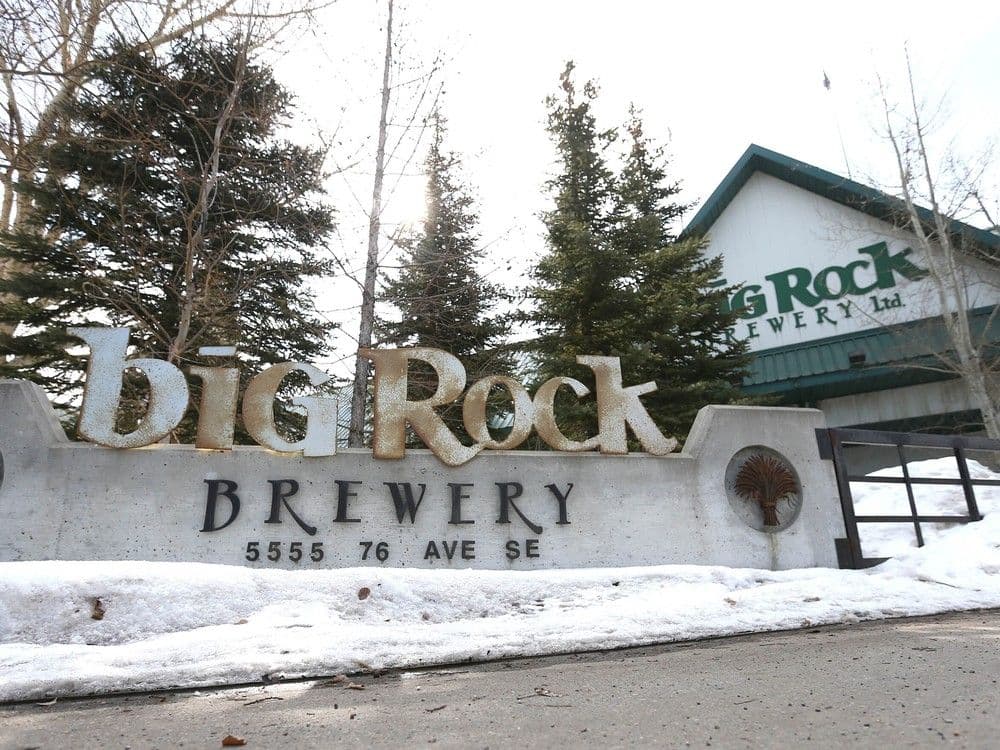
Calgary's Big Rock Brewery pulled off something most regional craft brands only dreamed about in the current market: it grew volume and improved its per-unit economics at the same time.
The company's fiscal 2025 results showed full-year sales volumes climbing 34.9% to 311,594 hectolitres from 230,982 the prior year, while adjusted EBITDA swung positive by $5.8 million to land at $3.6 million after the prior year's operating loss. In the fourth quarter alone, the three months ended December 30, 2025, net revenue rose 23.1% to $11.1 million on just 11.1% volume growth. That spread between revenue and volume is the number worth sitting with.
When a brewery's revenue per hectolitre climbs, in this case from roughly $143.80 to $159.57 in a single quarter, it means the liquid moving through the supply chain is carrying a higher average price tag. That happens through outright price increases, a shift toward higher-margin products such as seasonal releases or premium SKUs, or smarter deployment of contract capacity where the revenue terms are favorable. For Big Rock, the pattern across the full fiscal year points heavily toward the latter. Contract sales volumes more than doubled in the first two quarters of fiscal 2025 and kept adding incremental hectolitres through the back half, with Q4 contract volumes still running 7.5% above the prior-year quarter and wholesale volumes up 14.3%.
The contract brewing flywheel is one of the cleaner paths to positive EBITDA in craft right now, and Big Rock's numbers demonstrate exactly why. Once fixed overhead covering tanks, cold storage, packaging lines, and facility costs is absorbed by core-brand production, every additional hectolitre brewed on contract carries almost no incremental fixed-cost burden. That operational leverage is what flipped Big Rock from a loss position to $3.6 million in positive adjusted EBITDA. The 80,612 extra hectolitres shipped in fiscal 2025 relative to 2024 did not require building a new facility; they filled capacity that already existed.
The broader craft picture makes that 35% volume gain look sharper still. Craft brewers produced 23.1 million barrels in 2024, a 3.9% decrease from 2023, with market share by volume dropping slightly to 13.3%. With closings continuing to outpace openings, the number of craft breweries operating in June 2025 stood at 9,269, down from 9,352 a year earlier. This is not a rising-tide story; it is a strategy story. Boston Beer, currently one of the stronger margin performers in the sector, reported a gross margin of 49.1% year-to-date through mid-2025, up from 45.0% in the same period of 2024, driven primarily by improved brewery efficiencies, procurement savings, price increases, and product mix. Big Rock took the opposite approach: volume-led, contract-amplified, with margin recovery following throughput rather than preceding it.
For anyone stocking a keezer or watching regional tap handles, what this signals over the next six to twelve months is meaningful. A brewery recovering margin through capacity utilization rather than aggressive retail price increases creates less pressure on what lands at the shelf. The caveat is real: Big Rock still posted a net loss for the year, underscoring how much capital growth consumes through distribution build-out, marketing, and debt service. Input costs including key ingredients like barley and CO2 have faced supply shocks, and the price of packaging materials like aluminum cans and glass bottles has spiked across the industry. But a regional producer stabilizing its EBITDA without a sustained round of sticker-price hikes is a different kind of recovery than the one most drinkers have been living through elsewhere on the shelf.
This article was produced by Prism’s automated news system from verified source data, official records, and press releases, then run through automated quality and moderation checks before publishing. The system is built and supervised by the people who set the standards it runs under. Read our full AI policy.
Did this article answer your question?