Breweries fight for shelf space as retail beer competition intensifies
Shelf space is now a daily fight, and the brands winning it are proving freshness, turn rate, and retailer value before the first case ships.
Shelf space is the real bottleneck now
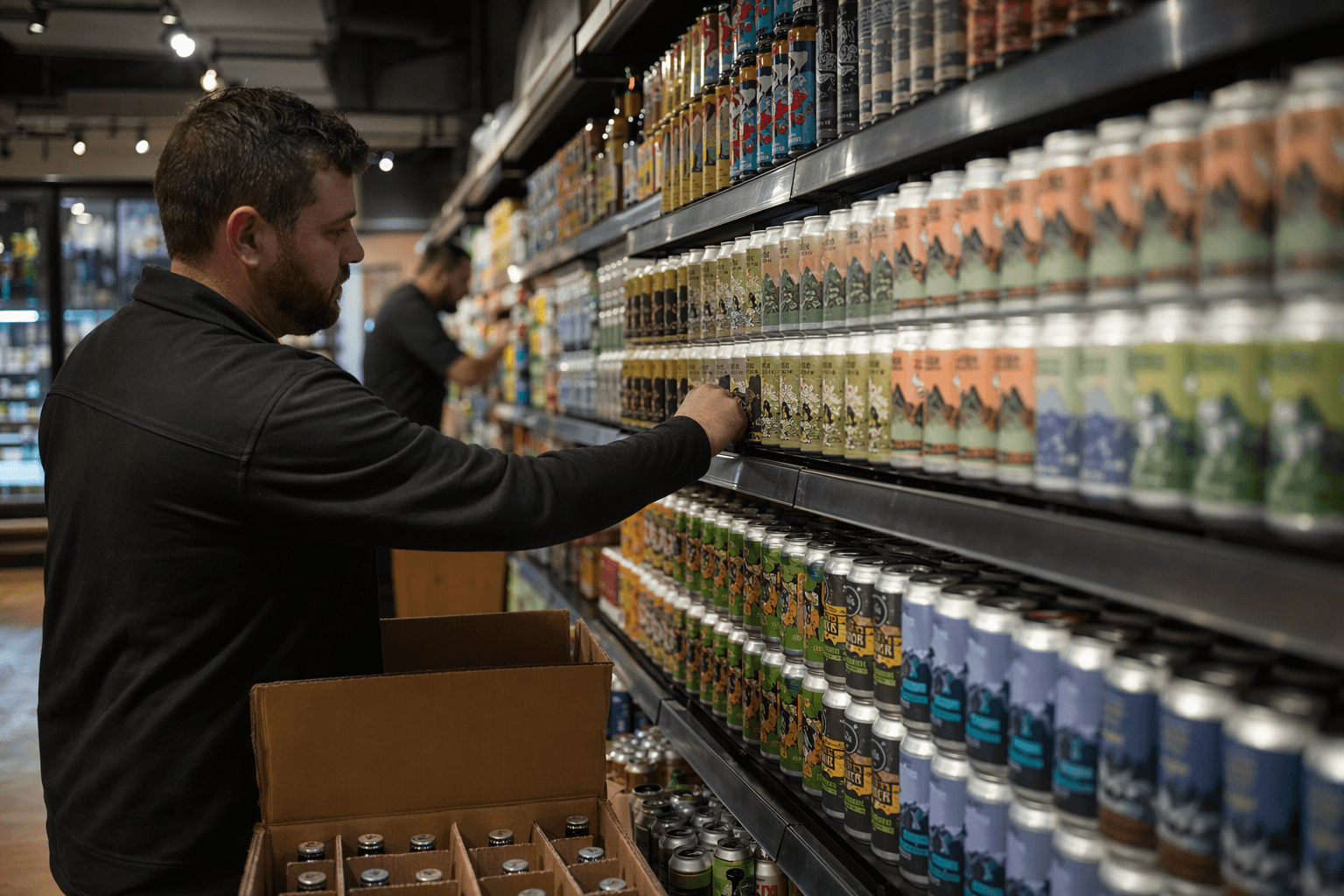
Beer is not losing the fight for attention because people stopped drinking it. It is losing room on the shelf because retailers are managing more beverage choices, tighter sets, and a market where facings have to be earned. That was the blunt operational backdrop around Brewbound’s April 27 discussion with Global Partners’ Mark Buonomo, New Trail Brewing’s Paul Gephart, and Lawson’s Finest Liquids’ Matt Roth and Seth Talmon, a conversation built around one question that matters to every brewery on a retail shelf: how do you stay visible after the first order?
The timing mattered. The conversation landed in the middle of the 2026 Craft Brewers Conference in Philadelphia, where the Pennsylvania Convention Center hosted brewers, innovators, and industry leaders from April 20-22. The Brewers Association has called CBC America’s largest gathering for beverage-alcohol producers, and the setting underscored why shelf strategy belongs in the same room as industry forecasts, packaging talks, and distribution strategy. Pennsylvania alone is home to 533 breweries, ranking third among U.S. beer-producing states behind California and New York, so the city was a fitting place to talk about how independent and regional brands defend their space.
What actually keeps beer on the shelf
The modern shelf fight is not about one trick or one loud sales pitch. It is about a set of habits that help a retailer believe your beer will move, stay fresh, and not create problems in the set. The Brewbound discussion points to four factors that matter most: turn rate, packaging discipline, retailer relationships, and freshness.
Turn rate is the first test. A beer that sells through quickly tells the buyer the SKU deserves its spot, while a slow mover starts looking like dead space in a crowded category. Packaging discipline matters because the shelf is already overworked, and the cleaner the brand reads at a glance, the easier it is for a buyer, a distributor, and a shopper to understand where it belongs in the set. Retailer relationships still matter because access is not automatic in a mature market, and freshness matters because beer has a shorter useful window than most beverage-alcohol choices competing for the same doors and cooler space.
That is why this conversation is useful beyond sales teams. It translates market pressure into a practical standard: if your beer cannot demonstrate movement, clarity, and freshness, the shelf will eventually give that space to someone else.
Freshness is not a slogan, it is the inventory plan
New Trail Brewing’s own positioning makes that point in a way retailers can understand quickly. The Williamsport, Pennsylvania brewery says its Essential Beers are produced every week so drinkers can enjoy them fresh year-round. That weekly production cadence is not just a quality message, it is a shelf-management strategy. A retailer looking at a beer set wants confidence that the product can be replenished without sitting, fading, or turning into a stale anchor.
New Trail also notes that the first beer it ever made was Trail Ale, a reminder that even a growing brewery’s identity often starts with one core beer that proves the brand can make a dependable, repeatable product. That matters in a market where breweries can no longer rely on novelty alone. The brewers that keep shelf space are often the ones that pair a recognizable flagship with a disciplined production rhythm, so the retailer knows what to expect and the drinker knows what to trust.
For brewery owners, the takeaway is simple: freshness has to be built into operations, not left to the last mile. If the beer’s promise depends on it, weekly production, strong inventory management, and tight replenishment timing become part of the sales pitch whether they are spoken aloud or not.
Brand recognition still matters, but only if the shelf can read it fast
Lawson’s Finest Liquids shows how a brand can build recognition around a core lineup while still keeping shelf communication tight. The Waitsfield, Vermont brewery says its year-round beers include Sip of Sunshine, Hop Wired, Little Sip, Scrag Mountain Pils, Nitro Stout, and Epic Sip. That kind of lineup gives retailers a clear family of products to understand, which matters when shelf space is limited and the category is packed with choices.
The lesson here is not that every brewery needs a sprawling portfolio. It is that a good shelf strategy needs recognizable anchors. Buyers want to know which beer will carry velocity, which package fits the set, and which SKUs are easier to reorder because the consumer already knows them. In a crowded market, a brewery that can point to a stable lineup has a much stronger case than one that depends on rotating novelty without a clear purpose.
Global Partners’ Mark Buonomo adds the wider channel view that many smaller breweries miss. Shelf placement is not only a brand story, it is a distribution and retail economics story. If a package does not help a retailer manage category balance, the buyer has no reason to protect it when competing beverage-alcohol options are pressing for the same real estate.
The shelf-space playbook breweries should actually use
The practical playbook is less glamorous than a launch party, but it is what keeps beer in front of drinkers.
- Protect the beer’s freshness with production timing that matches demand, especially on core brands.
- Make sure the package is easy to read, easy to reorder, and easy to place in a crowded set.
- Build distributor support that keeps the retailer confident the brand will stay in stock.
- Use recognizable year-round beers to prove velocity before pushing harder on seasonal or limited releases.
- Treat every placement like something that has to be earned again on the next order.
That discipline matters more now because the market is not expanding the way it once did. Brewbound’s CBC coverage says craft brewing has now recorded three consecutive years of declines, even though the Brewers Association says craft still held 24.6% of total beer retail dollar sales. At the same time, the craft brewing workforce stood at 189,000 jobs, down 4% year over year. Those numbers explain why retailers are choosier: the category remains significant, but the room for error is smaller.
Why this conversation matters beyond the trade floor
CBC’s early-bird registration window opened months earlier and ran until February 6, a reminder that the industry planned this conversation well before the conference floor filled up. That kind of timing fits the current reality. The problem is no longer whether craft beer has a place in retail. The problem is how each brewery proves it deserves the next facings in a market where beverage-alcohol selection is broader, buyers are more selective, and freshness can decide whether a can gets picked up or passed over.
For brewery operators, the message is direct. For informed drinkers, it explains why some brands seem to stay everywhere while others vanish between orders. The shelf has become a test of operations as much as flavor, and the breweries that win it are the ones that can deliver velocity, clarity, and freshness at the same time.
This article was produced by Prism’s automated news system from verified source data, official records, and press releases, then run through automated quality and moderation checks before publishing. The system is built and supervised by the people who set the standards it runs under. Read our full AI policy.
Did this article answer your question?