Buoy Beer Co. Refreshes 19.2-Ounce Stovepipe Cans for Year-Round Shelf Impact
Buoy Beer Co. refreshed its 19.2-oz stovepipe cans for Buoy IPA and debuted a new year-round Imperial IPA, both featuring different historic Astoria ships on the label.
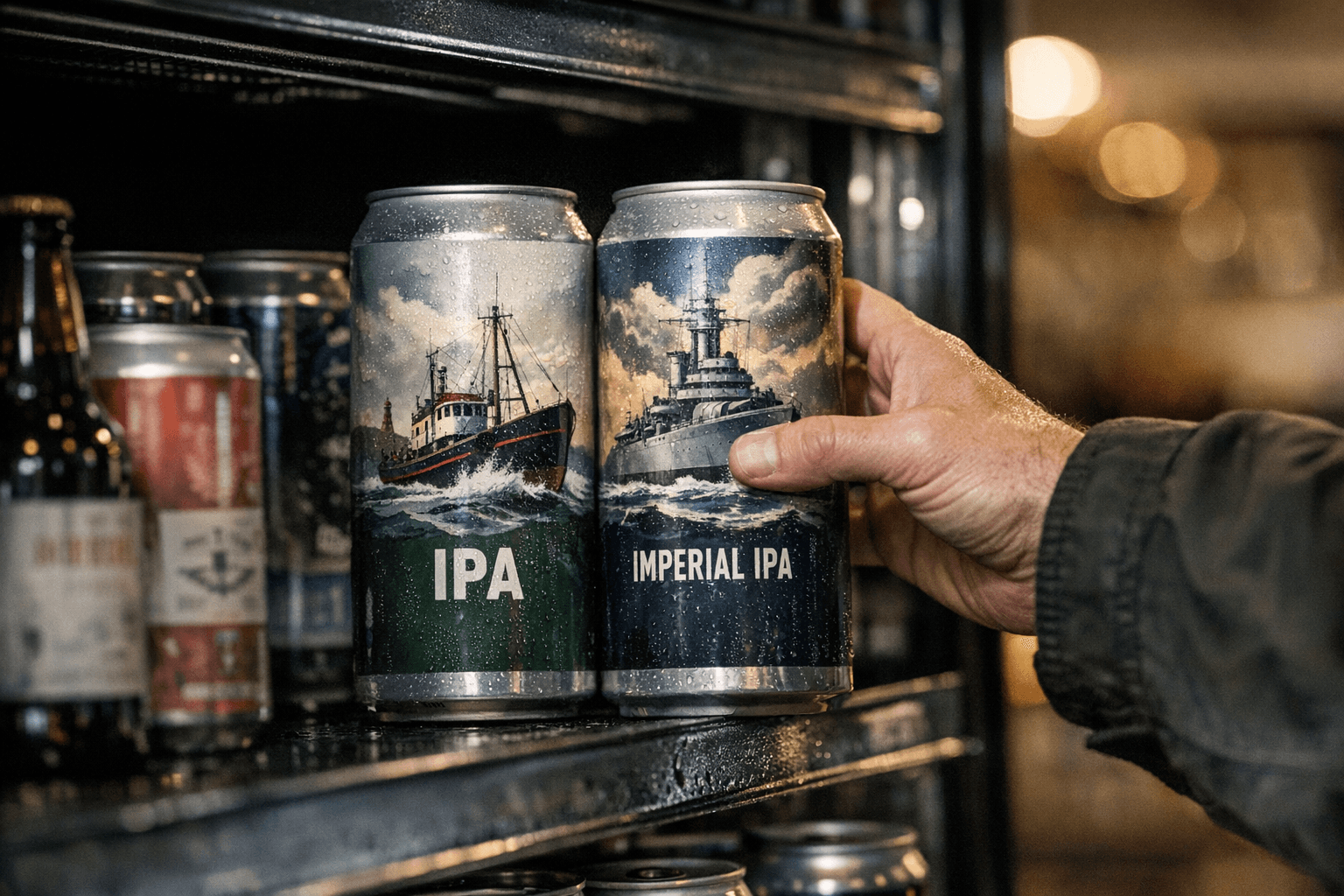
The new cans arriving in Pacific Northwest coolers this spring carry more than fresh artwork. Buoy Beer Co., the Astoria, Oregon-based brewery anchored where the Columbia River meets the coast, refreshed the 19.2-ounce stovepipe packaging for its Buoy IPA and simultaneously launched a new year-round addition: Buoy Imperial IPA. Both cans wear a different historic ship from Astoria's maritime past on the label, a design decision that ties the brewery's identity to geography rather than generic craft convention.
The Imperial IPA is built on Simcoe and Citra hops, delivering grapefruit and lime layered with tropical mango and passionfruit before Simcoe's pine-and-earth backbone settles it into balance. The Buoy IPA, dry-hopped with Meridian and Crystal hops for its characteristically citrusy, well-balanced finish, gets the same refreshed treatment. Together the two SKUs anchor Buoy's stovepipe footprint across Oregon, Washington, and Idaho.
Choosing the 19.2-ounce format for both is not incidental. Recent NielsenIQ scan data puts craft stovepipe sales up 57 percent year-over-year, making it the top dollar-growth driver in the craft segment and outpacing even the ubiquitous 12-pack. The economics explain the momentum. A single 19.2-ounce can typically retails for $3 to $5, while a comparable pull from a craft 16-ounce four-pack often runs $3.50 to $4.50 per unit. At the lower end of that range, the stovepipe delivers more beer at a lower per-ounce cost than a pint-format craft can, and it requires no new capital on the production side: because the 19.2-ounce shares the same base diameter as a 12- or 16-ounce can, breweries fill it on existing canning lines without equipment upgrades.
Where the format wins most decisively is the single-serve occasion: concert grounds, sporting events, and convenience stops where carrying a four-pack is impractical and a 12-ounce feels light. One stovepipe covers a long set, reads cleanly as a premium single-serve at a venue kiosk, and stands taller in a retail cooler than the 12-ounce cans flanking it. That height advantage is not cosmetic; it earns a brewery eye-level real estate that a standard can cannot reach.
For Buoy, the refresh also functions as a distributor reset. Updated packaging gives sales teams a concrete story to retell to retail accounts, a reason to revisit facings and re-engage buyers who had habituated to the old label. The coordination required, new ship artwork, can supplier approvals, and label art matched across two distinct SKUs, is a real production investment for a regional brewery, which is precisely why the refreshed design had to work simultaneously for an established core beer and a brand-new year-round release.
If you're buying stovepipes at retail, look for a canning date rather than just a best-by range, typically printed near the lid seam. The double seam itself should be uniform and tight; any bulging or sharp edge indicates a fill or seaming irregularity. Cold storage matters more in the 19.2-ounce format than many drinkers assume: the extra volume means more surface area and more time for oxidation to develop in a can that has sat warm. Buy cold, store cold, drink sooner rather than later.
For homebrewers weighing small-run can formats, the stovepipe deserves serious consideration. Fewer units to sell per batch means fewer label complications, and framing a crowler or canned release as a premium single-serve shifts the conversation away from price-per-pack entirely. The lesson Buoy's refresh reinforces is one every packaging update teaches: a can is a sales call before it is ever a vessel. Design accordingly.
This article was produced by Prism’s automated news system from verified source data, official records, and press releases, then run through automated quality and moderation checks before publishing. The system is built and supervised by the people who set the standards it runs under. Read our full AI policy.
Did this article answer your question?