Congress revives CHEERS Act to cut draft beer equipment costs
Congress revived the CHEERS Act, a draft-beer tax push that could ease the cost of new lines, taps and keg systems for taprooms and bars.
Congress brought back the CHEERS Act with a clear target: the draft systems that decide whether a taproom can add seats, pour faster, or keep beer moving without a major capital hit. The bipartisan bill is designed to make draft beer infrastructure more affordable for bars, restaurants, entertainment venues and brewery taprooms, putting policy attention on the hardware behind the handle rather than on beer production itself.
The measure returned to the Senate as Senate Bill 4688, and it follows House Resolution 7620 already introduced in the House. Brewers Association guidance said the legislation was reintroduced in the Senate on June 4 and builds on the companion House bill. For small brewers, that matters because draft placement and taproom economics still shape the bottom line even as the broader market keeps shifting.
At its core, the CHEERS Act would expand tax treatment for energy-efficient draft alcohol property. That includes keg and tap systems, draft equipment upgrades, and relief for lost or stolen kegs. In practical terms, the bill could make it easier for operators to replace aging draft lines, install more efficient cooling and dispense equipment, add taps, or justify a larger draft footprint without absorbing the full upfront cost at once.
That is the kind of capital relief that lands directly in the places where independent beer businesses make money. A taproom trying to convert more foot traffic into pint sales, a brewpub weighing whether to expand its draft wall, or a bar deciding whether to overhaul old equipment all face the same question: whether a new system is worth the spend. The CHEERS Act does not rewrite that equation, but it does try to lower the friction around it.
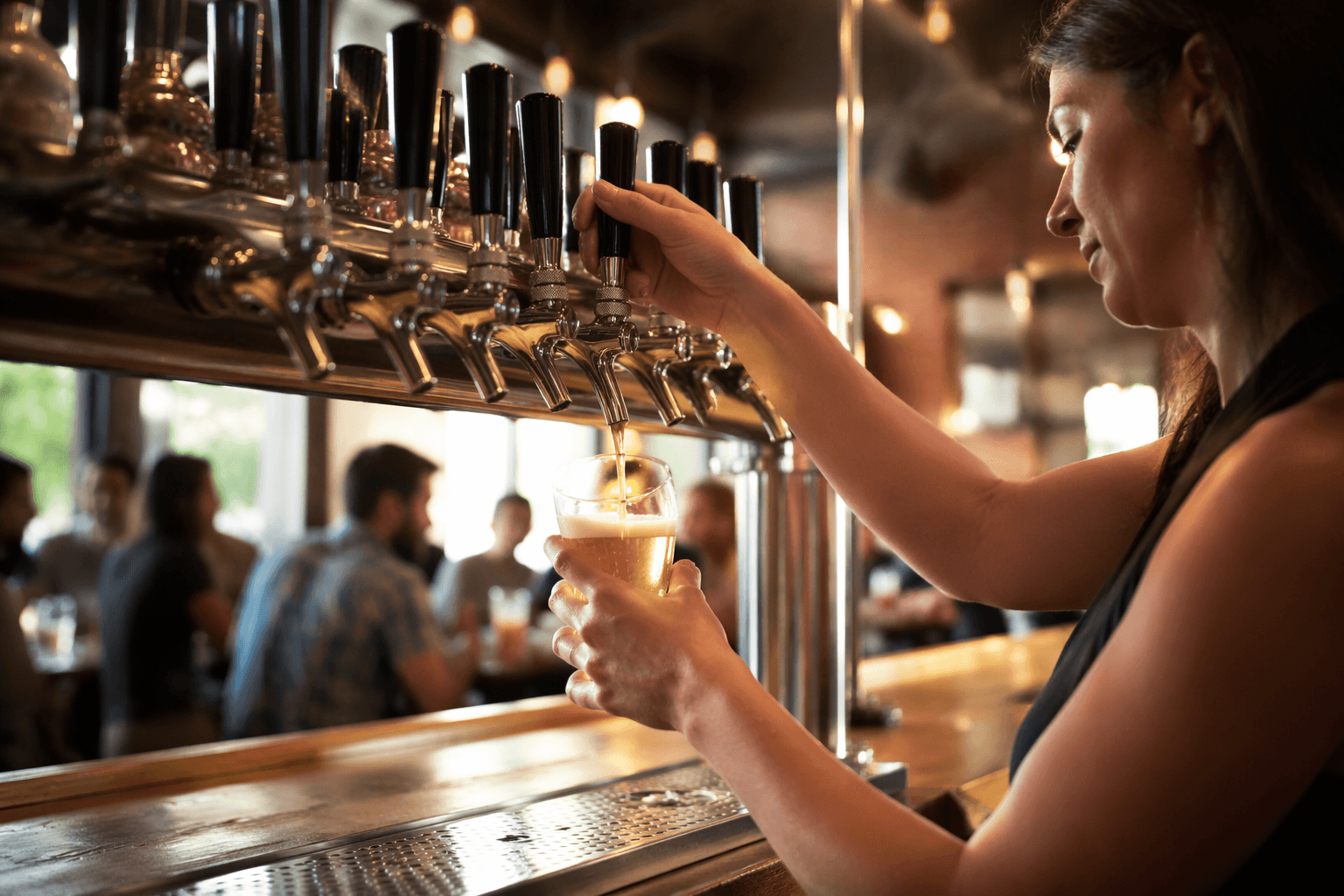
The bill also keeps the environmental argument alive by rewarding reusable keg-and-tap models over more disposable service formats. For breweries that depend on direct-to-consumer sales, that angle is more than policy language. It is a sign that Washington is still looking at hospitality infrastructure, not just the brewhouse, when it talks about how craft beer survives and grows.
For taprooms, brewpubs and bars, the CHEERS Act is aimed squarely at the gear that keeps draft beer flowing. If it moves forward, the most visible result may be simpler than any legislative summary: more lines pouring, better equipment behind the bar, and fewer barriers when an operator decides it is time to upgrade.
This article was produced by Prism’s automated news system from verified source data, official records, and press releases, then run through automated quality and moderation checks before publishing. The system is built and supervised by the people who set the standards it runs under. Read our full AI policy.
Know something we missed? Have a correction or additional information?
Submit a Tip