Expert Brewers Discuss Advanced Lager Techniques in Podcast
Wayfinder, Bierstadt, and New Belgium's lager collab uses cool-pooling with German hops, a technique most homebrewers associate with wild Belgian ales, not cold fermentation.
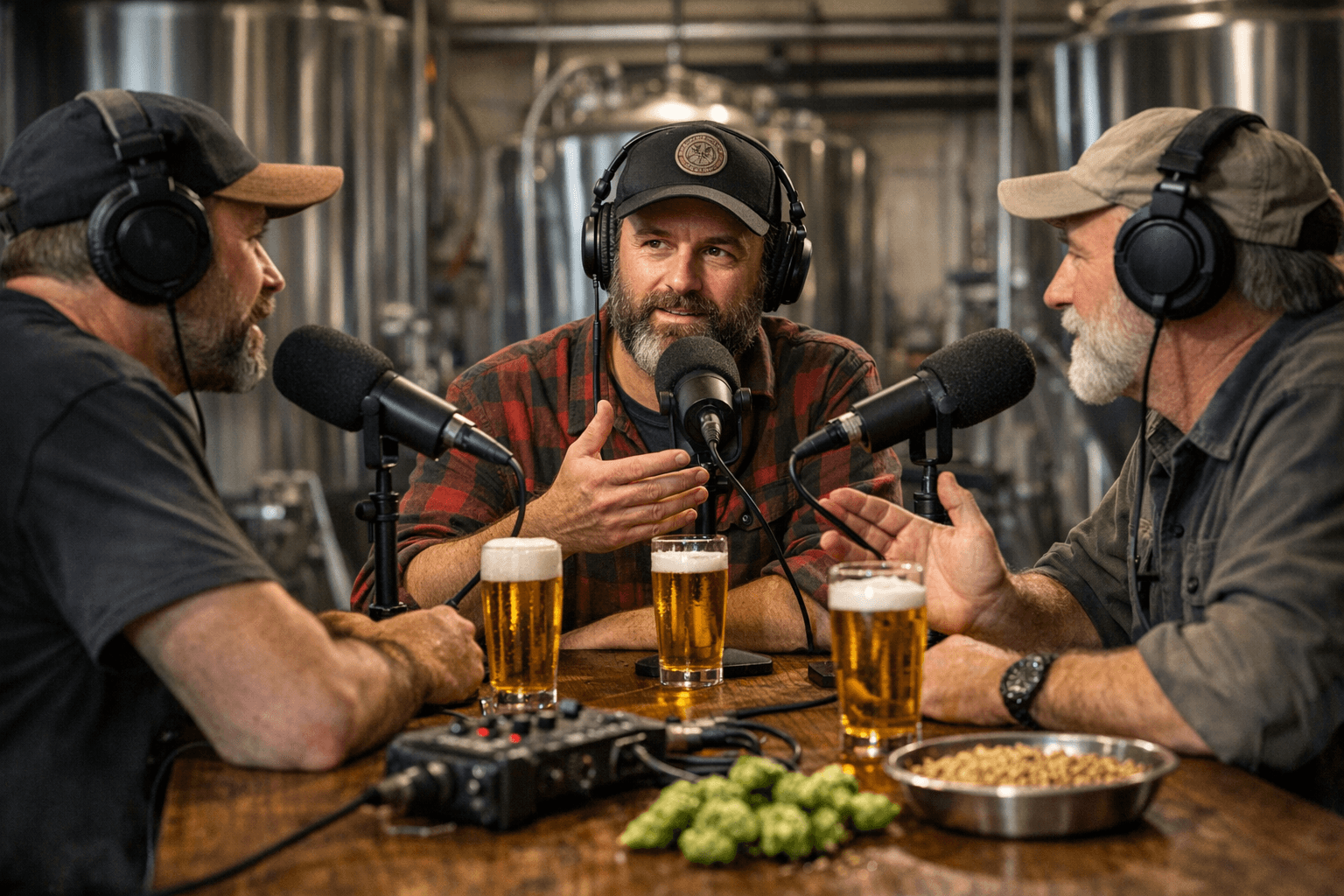
The brew day had barely wrapped at New Belgium's pilot brewery in Fort Collins, Colorado, when Natalie Rose Baldwin, Kelly McKnight, and Ashleigh Carter sat down to unpack what they'd just made together. The result is Episode 462 of the Craft Beer & Brewing Magazine Podcast, a first-hand debrief on a three-brewery lager collaboration that assembles three of the most technically credentialed voices in American craft lager and presses record before the wort has even finished chilling.
Baldwin is brewmaster at Portland's Wayfinder Beer, a lager-focused brewery in the city's Buckman neighborhood that she joined after five years as lead R&D brewer at Breakside Brewery, where she earned a GABF gold medal. She succeeded founding Wayfinder brewmaster Kevin Davey at the four-time Oregon Beer Awards winner for best brewpub. McKnight holds the title of Lead R&D Brewer at New Belgium Brewing, one of the largest craft breweries in the country, with facilities in Fort Collins and Asheville, North Carolina; she previously appeared on the podcast to discuss the R&D behind New Belgium's Voodoo Ranger hazy IPA family. Carter is co-founder and head brewer of Denver's Bierstadt Lagerhaus, built with Bill Eye around a 30-barrel, 1932 all-copper brewhouse imported from Germany. Bierstadt brews exclusively to Reinheitsgebot principles: water, yeast, malt, and hops only, producing flagships like the Slow Pour Pils and the Bierstadt Helles.
The episode traces the process of finding common ground across three very different brewing programs, including diving into each other's brew sheets in real time. The centerpiece technique is cool-pooling: using a coolship, a shallow open vessel, to cool hot wort through ambient air exposure before it moves to fermentation. Most brewers who know the coolship at all associate it with spontaneous Belgian fermentation, where the open vessel invites wild yeast and microflora from the atmosphere. The panel's use of cool-pooling with German hops upends that assumption entirely. Applied in the lager context, the coolship allows trub to settle, drives off DMS precursors, and opens a window for hop aroma expression that closed-vessel cooling forecloses.
That reframing sits at the core of what makes this collaboration technically interesting. Carter's Reinheitsgebot constraint means every decision reduces to the four permitted ingredients. McKnight operates within New Belgium's industrial-scale R&D infrastructure. Baldwin's Wayfinder, which describes its philosophy as combining "old and new school lager techniques to push the envelope of what lager can be," bridges both. Getting those three brewing philosophies onto a single recipe required exactly the kind of granular technical negotiation the episode documents.
The collaboration reflects a broader shift the American Homebrewers Association has tracked: lager is experiencing a full-scale resurgence, with brewers who made their names on ales now directing serious attention toward cold fermentation and the full stylistic range lager allows. What Bierstadt, New Belgium, and Wayfinder model in Episode 462 is that the next phase of that resurgence runs through shared process knowledge across brewery scales, not just in the glass.
This article was produced by Prism’s automated news system from verified source data, official records, and press releases, then run through automated quality and moderation checks before publishing. The system is built and supervised by the people who set the standards it runs under. Read our full AI policy.
Did this article answer your question?