Fremont Brewing Drops Hoppy Kush IPA and Barrel-Aged Orange Cacao Cuvée This Spring
Fremont Brewing's Kush IPA uses a water-soluble terpene blend to push dank resinous aroma without extra bitterness; its 90-day freshness window started this week.

The botanical terpene blend in Fremont Brewing's new Kush Chronic IPA isn't a marketing flourish. It's the reason Director of Brewing Operations Matt Lincoln could chase "that resinous, aromatic space in a way that still feels balanced and intentional" without over-bittering a beer that's supposed to drink clean at 7.0% ABV and 80 IBU.
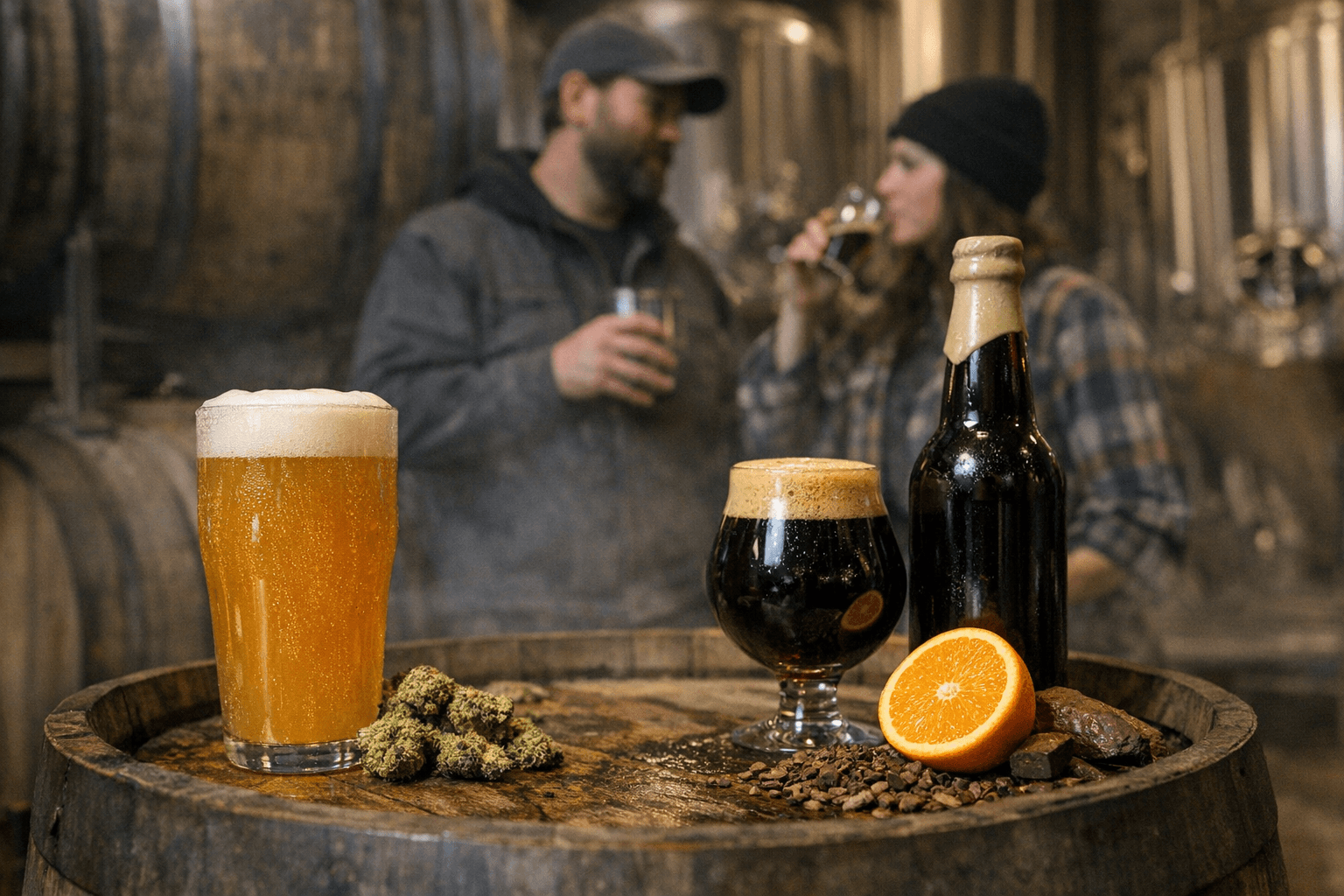
Kush and its companion release, the 11.0% ABV Orange & Cacao barrel-aged cuvée, arrived in limited-run 16oz four-packs across Pacific Northwest distribution points this spring, reprising Fremont's two-track seasonal strategy: a high-velocity hop-forward can designed to move fast, paired with a slower-burning barrel project built for taproom coolers and cellar shelves alike.
Kush is brewed on a 2-Row Pale malt base with Citra, Mosaic, and Citra Cryo hops, plus a water-soluble botanical terpene blend that pushes the aromatic profile into grapefruit, citrus, and dank cannabis-adjacent territory before opening onto pineapple-dominant tropical notes. It pours light amber, and Fremont's 90-day freshness window from the packaged-on date is the only scheduling guideline that matters here. Terpene volatility degrades on the same timeline as hop aromatics; after 90 days the dank resinous character that defines the beer begins to flatten into something considerably less interesting.
Orange & Cacao is a different project in both scale and intention. The cuvée blends an imperial oatmeal stout brewed with licorice and cinnamon bark, aged in 10-year-old bourbon barrels, with a second imperial stout purpose-built for the blend, finishing the whole thing on orange zest and cacao nibs. At 11.0% ABV with barrel-aged structure behind it, the beer is ready to cellar. Opened young, the citrus brightness lifts cleanly over chocolate-forward barrel funk. A year or two in a stable, cool space will integrate those layers further and pull the cinnamon and licorice notes into the background.
The technical question Kush raises for homebrewers is what a water-soluble terpene blend actually accomplishes that a dry hop doesn't. Hops deliver aroma through volatile oils, including myrcene, limonene, linalool, and geraniol, but package those compounds alongside alpha acids and polyphenols that contribute bitterness and can tip into harshness at high dry-hop rates. A terpene addition targets specific aromatic compounds without that botanical overhead: no additional IBUs, no added polyphenol load, and a cleaner finish at equivalent aromatic intensity.
Getting this right at homebrew scale requires a water-soluble formulation. Oil-based terpenes won't integrate into beer and will collapse head retention on contact. Add post-fermentation, cold, starting at 0.5 mL per gallon, taste before scaling up, and calibrate carefully against any dry hops already in the recipe. Both are pulling aromatic compounds in the same direction; stacking them without discipline tips quickly into solvent or soap territory.
The cacao and citrus guidance from Orange & Cacao follows identical cold-side logic. Cacao nibs in secondary for 10 to 14 days draw clean chocolate without the tannin extraction that comes from boiling them. Fresh orange zest added post-fermentation reads brighter and more expressive than commercial dried peel, which turns medicinal at higher doses regardless of beer style. Both releases are available now in limited quantities across the Pacific Northwest; for Kush, the 90-day freshness clock is already running.
This article was produced by Prism’s automated news system from verified source data, official records, and press releases, then run through automated quality and moderation checks before publishing. The system is built and supervised by the people who set the standards it runs under. Read our full AI policy.
Did this article answer your question?