How to build a recirculating pump for cleaner draft lines
Keep the cleaner moving, and draft lines get cleaner faster. A simple recirculating pump build can beat wasted CO2, stale beer, and lazy shortcut cleaning.
Why recirculation beats the shortcut
The fastest way to improve the beer in your glass is not a recipe tweak or a new faucet. It is cleaning the draft path well enough that stale residue never gets a vote. A recirculating pump build earns its place because it keeps cleaner moving through the system instead of just filling the lines and hoping time does the rest.
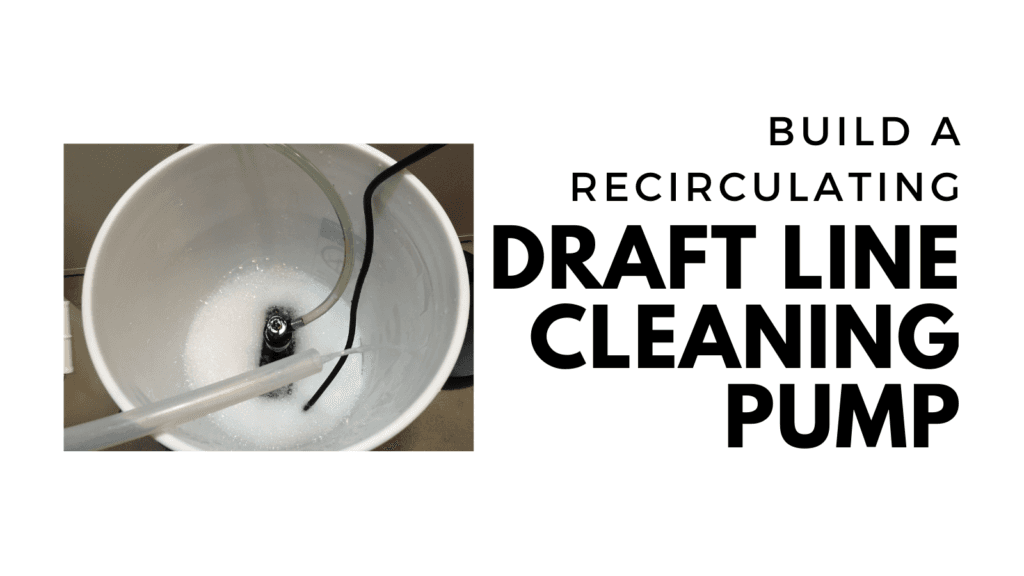
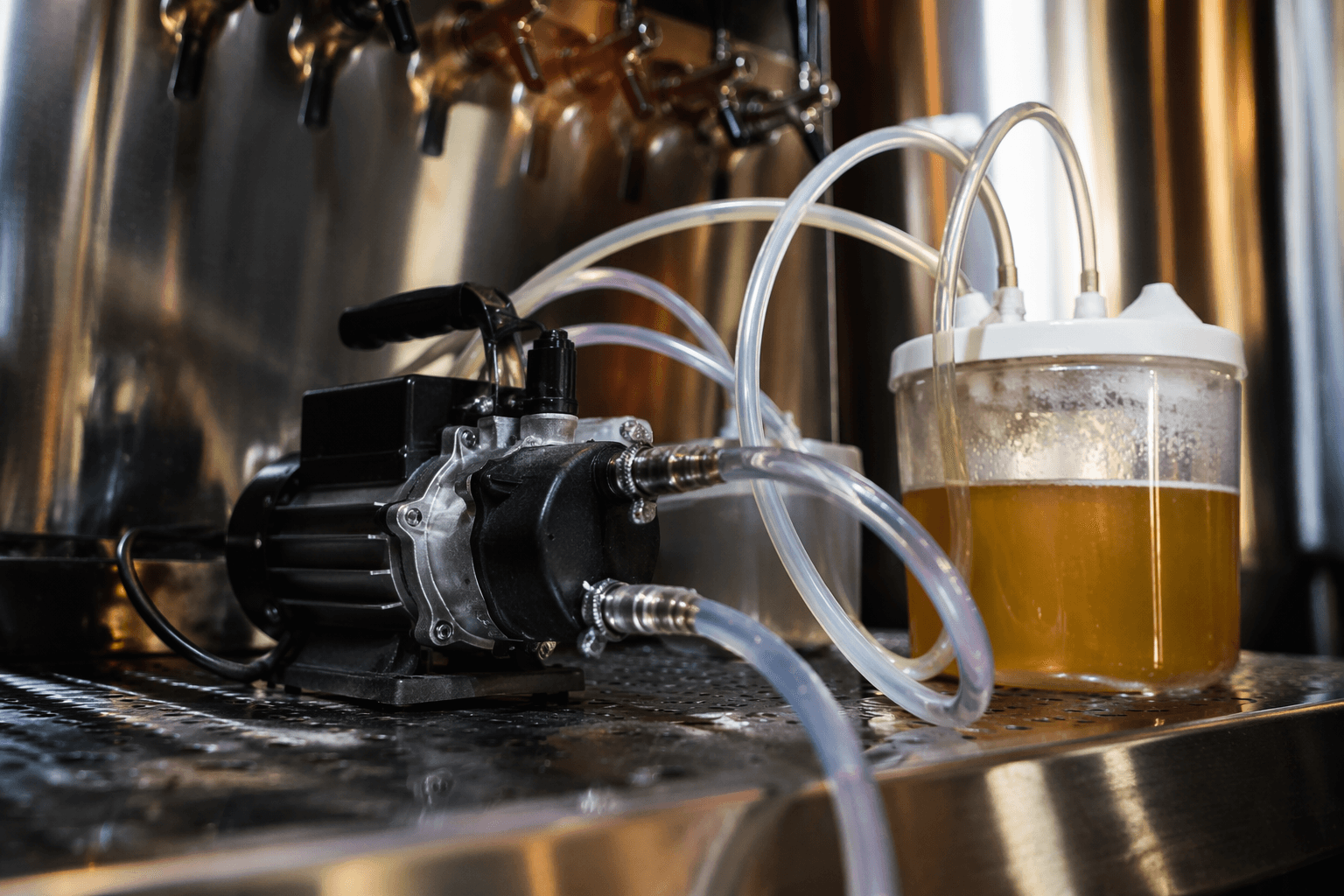
That matters because the common shortcuts all have a tradeoff. Pushing cleaner out of a keg with CO2 can waste gas, and trying to meter solution slowly enough to get real contact time turns a simple maintenance job into a fussy one. Recirculation solves both problems by cycling the cleaner back through the lines, which gives you longer contact time, better use of solution, and a much less annoying cleaning session.
What the build is really doing
A recirculating setup is less about fancy hardware than about control. You are creating a loop that keeps the cleaning solution in motion so it can work on biofilm, residue, and mineral buildup instead of sitting still in one pass. That continuous movement is the whole point, and it is why this kind of DIY upgrade is so useful for home kegerators and small draft systems.
The practical appeal is easy to see if you have more than one faucet or a setup that is tedious to service line by line. A pump-based cleaner makes draft maintenance feel like a manageable part of the routine rather than an all-day chore, and that is exactly the kind of improvement that pays off for homebrewers who serve from kegs regularly. If the beer at the faucet tastes off, the issue may not be the recipe at all, but the cleanliness and consistency of the draft path.
How the cleaning loop works
The basic idea is straightforward: send cleaning solution through the draft lines, keep it moving, and let the pump do the repetitive work. The Brewers Association’s draught beer quality materials say electric recirculation-pump cleaning is the recommended method for all system types, with caustic solution circulated for at least 15 minutes at up to 2 gallons per minute.
That guidance lines up with another Brewers Association best-practices presentation that ties effectiveness to rapid, turbulent flow for at least 10 minutes to remove biological residue as efficiently as possible. The lesson for a home build is simple: the pump is not there just to move liquid, it is there to move it with enough force and for long enough to make a real difference.
A sensible build centers on three goals:
1. Keep the solution circulating instead of stagnant.
2. Maintain enough flow to scrub the line interior.
3. Avoid wasting cleaner, gas, or time doing the job in rounds.
Why this is more than a convenience upgrade
Draft line sanitation is not a niche concern or a commercial-only problem. The Brewers Association’s draught beer quality materials recommend a two-week cleaning cycle and quarterly acid cleaning for de-stoning, and they warn that biofilm in draught tubing is very difficult to remove, especially in older tubing. That is exactly why a recirculating pump is more than a nice-to-have. It is a response to a sanitation problem that gets worse when lines age and residue hardens.
The broader industry has been treating line cleaning as a formal quality issue for years. The Brewers Association’s Draught Beer Quality Working Group was formed in March 2007 under the Technical Committee, and its manual is framed as a core resource for installers, wholesalers, retailers, and brewers. This is not hobby folklore. It is part of the actual infrastructure of beer quality.
The data behind the obsession
A 2014 Cornell University Department of Food Science and MBAA District Western New York survey shows how uneven draft-line care can be. Among brewery respondents, 19 percent cleaned weekly, 28 percent every two weeks, 25 percent monthly, and 22 percent before running a different beer through the line. On the sales-account side, 43 percent cleaned every two weeks and 36 percent cleaned monthly.
That same survey explains why the cleaning schedule matters so much. Draft systems affect flavor through microbial build-up, biofilms, hop and grain protein residue, mineral build-up, foaming, and oxidation. It also cites a normal flow-rate goal of 2 ounces per second, which is a reminder that dispense performance and line cleanliness are linked from the start.
The microbiology work is even starker. A 2021 study in Microbiology Spectrum found over 100 contaminant bacteria and nearly 20 wild yeasts in retail draft beer samples. Its conclusion was blunt: routine line cleaning methods were not sufficient to efficiently suppress beer spoilage. In other words, if the line is dirty, the glass can suffer even when the beer in the keg is sound.
Who gets the most out of building one
This is the kind of project that makes the most sense for people with home kegerators, small draft setups, and multiple faucets. It is especially useful if your system is awkward to service one line at a time, because recirculation keeps the whole process efficient and reduces waste. If you serve beer regularly from kegs, the payoff is not abstract: cleaner lines mean less stale flavor, less microbial buildup, and a better pint at the faucet.
It also helps to remember that the legal and regulatory world already treats line cleaning as a serious business. Connecticut’s liquor control division says beer and wine pipe lines and barrel tubes used to serve alcoholic beverages must be cleaned once every two weeks starting October 1, 2023. Ohio Administrative Code requires beer dispensing apparatus, pipelines, faucets, taps, and barrel tubes to be cleaned not less than every two weeks or as recommended by the beer manufacturer, equipment manufacturer, or chemical cleaner manufacturer.
The small machine that protects the pint
A recirculating pump build is appealing because it turns a tedious job into a reliable one. It keeps cleaner moving, uses solution better, and matches the direction the best draft-beer guidance has pointed for years: fast, turbulent circulation, repeated on a schedule, with an eye on biofilm, mineral buildup, and aging tubing. For homebrewers who care about the last inch between keg and glass, that boring maintenance step is one of the quickest quality upgrades available.
The irony is that draft line cleaning is still the least glamorous part of the setup, even though it can be the part that fixes the beer fastest. Keep the cleaner moving, and the glass gets better.
This article was produced by Prism’s automated news system from verified source data, official records, and press releases, then run through automated quality and moderation checks before publishing. The system is built and supervised by the people who set the standards it runs under. Read our full AI policy.
Know something we missed? Have a correction or additional information?
Submit a Tip