INKBIRD meter helps homebrewers check water quality fast
A cheap TDS meter can expose tap-water swings before they reach the mash, giving brewers a fast baseline without pretending to replace a full water report.
A small meter can save a batch from big water surprises
The fastest way to improve consistency in the brewhouse may be to stop guessing about the water coming out of the faucet. Water is the majority ingredient in beer, yet it is still the thing many homebrewers trust by habit instead of by measurement, which is exactly where a cheap tool like the INKBIRD 3-in-1 Digital Water Quality Meter earns its keep.
Homebrew Finds framed the meter as a practical buy for brewers who want a quick read on starting water before they build a recipe around it. That is the real value here: not glamour, not gadgetry, but a fast check on whether your water is behaving the same way today as it did on the last batch.
What the INKBIRD meter actually tells you
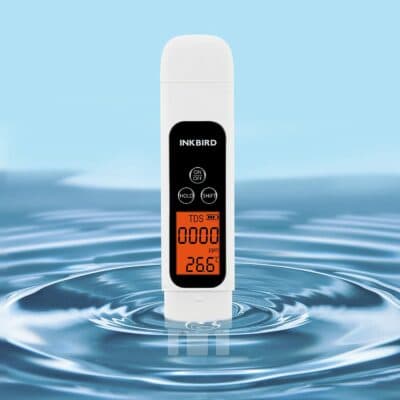
The INKBIRD ITDS-01 is built around three basic readings: total dissolved solids, electrical conductivity, and temperature. It gives a result in about a second, which makes it useful at the sink, in the brewery, or anywhere you want a quick answer without sending a sample out the door.
The published specs put its TDS range at 0 to 4995 ppm and its EC range at 0 to 9990 s/cm. The probe uses food-grade stainless steel, it runs on AAA batteries, and it includes automatic temperature compensation, a backlit display, data hold, and auto shutoff. None of that sounds flashy, but those are exactly the kind of little features that make a meter easy to keep in the brewing toolbox instead of leaving it in a drawer.
For homebrewers, that combination matters because it turns water into something you can check in seconds before you make decisions about salts, dilution, or recipe structure.
Why water deserves this much attention
The brewing community has spent years teaching people to think hard about water for good reason. The American Homebrewers Association says brewing water is shaped by ions such as sodium, chloride, sulfate, calcium, magnesium, carbonates, and bicarbonates, and that those ions affect pH, mash chemistry, and beer flavor. In other words, water is not just a neutral carrier for the mash; it is part of the recipe.
The Brewers Association has been equally blunt about the stakes. Its education material warns that a poor mash can lead to inefficient extraction, loss of yield, off-flavors, and generally lower-quality beer. That is the practical reason a meter like this appeals to brewers who are already paying attention to mash pH, mineral additions, and repeatability. If your starting water changes, the rest of the brew day can drift with it.
That is also why the bigger water-chemistry conversation keeps coming back to the same point: control starts with knowing what you are starting from.
Where a TDS meter helps most
A TDS meter is not a lab report, but it is an efficient way to spot change. Bru’n Water’s Martin Brungard describes it as an indirect reading of the ionic content of water, which makes it useful for noticing how water quality varies. That is the key. You are not using it to identify every ion in the glass; you are using it to tell you whether the water source has shifted enough to matter.
That makes the meter especially handy in a few everyday situations:
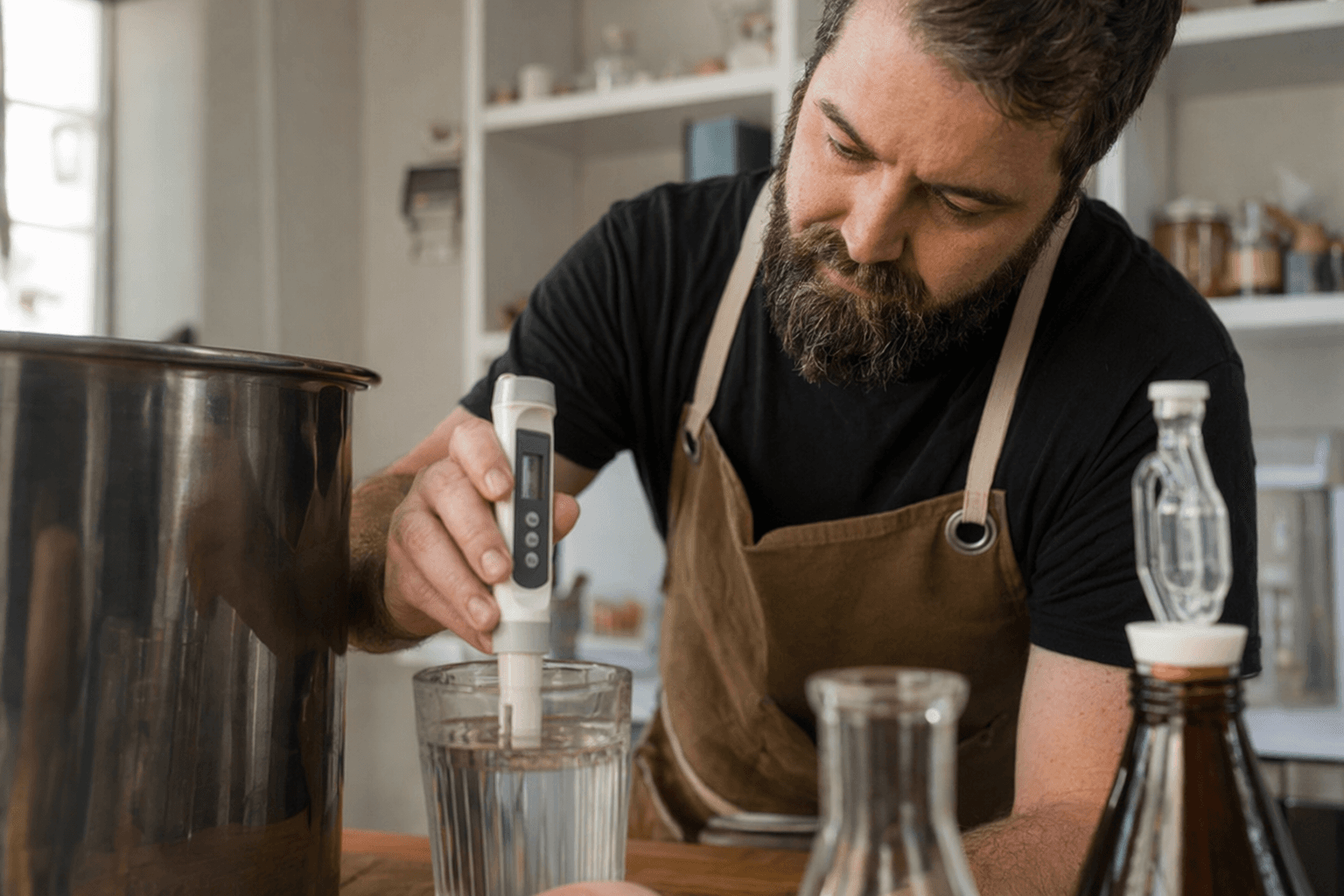
- Checking tap water with unknown mineral content
- Verifying reverse-osmosis water
- Blending RO and distilled water
- Watching for consistency from batch to batch
Those are the moments when a brewer can lose time chasing a problem that started with water, not hops, yeast, or mash temperature. A fast meter reading can point you toward the right question before you dump salts into a kettle and hope for the best.
What it measures well, and what it cannot replace
This is the part that matters most for anyone tempted to treat a TDS meter like a full water-analysis solution. It is not one. It does not tell you sodium, chloride, sulfate, calcium, magnesium, carbonates, or bicarbonates individually, and it does not replace a detailed report or a lab test.
HORIBA notes that municipal water can contain total dissolved solids such as minerals, salts, and organic matter, and says brewers can use water company reports, lab testing, or on-site equipment to understand what is going on. That is the right framework for this tool. The meter is a fast field check, not a chemistry lab. It helps validate your starting water and catch day-to-day variation before you add salts or commit to a style that depends on a specific mineral profile.
Used that way, it can keep recipe adjustments more intentional. If the reading is stable, you can have more confidence in your water baseline. If it jumps, you know to investigate before the mash is already under way.
Why RO water makes this even more useful
Reverse osmosis water changes the game because it strips a lot of the mineral baggage out of the brewing equation. Brew Your Own describes RO water as basically filtered water with greatly reduced mineral content, produced by a semi-permeable membrane process. That is why so many brewers use it as a starting point: it gives them a cleaner slate to build from.
Brewers Publications has taken that idea all the way into book-length guidance with Water: A Comprehensive Guide for Brewers, a resource presented as a way to read water reports, understand flavor contributions, and treat brewing water. That broader shift says a lot about where the hobby has gone. The goal is no longer simply to make do with whatever comes out of the tap. It is to understand the water enough to shape it.
In that context, a TDS meter becomes a useful checkpoint for RO users too. If you are blending RO and distilled water, or using RO as a base for a recipe that depends on repeatable mineral additions, a quick reading helps confirm that the supply side is still behaving the way you expect.
A low-cost tool for a problem brewers keep rediscovering
The appeal of the INKBIRD meter is that it solves an old brewing problem in a very cheap, very fast way. It does not replace knowledge, and it does not replace a proper water report. What it does is expose variation before variation ends up in the glass.
That is why this kind of tool fits so neatly into modern homebrewing. It gives you a repeatable baseline, a quick sanity check, and one more way to stop treating water like background noise. For brewers who are already beyond extract kits and into the details of mash chemistry, that small habit can remove a lot of uncertainty from the brew day and make every adjustment that follows more deliberate.
This article was produced by Prism’s automated news system from verified source data, official records, and press releases, then run through automated quality and moderation checks before publishing. The system is built and supervised by the people who set the standards it runs under. Read our full AI policy.
Did this article answer your question?