Jester King Shares Still Wild Ale Recipe for Homebrewers, Ready in Months
Jeff Stuffings just put Jester King’s wild-beer playbook within reach: a still, lambic-inspired ale that can be ready in months without barrels or a coolship.
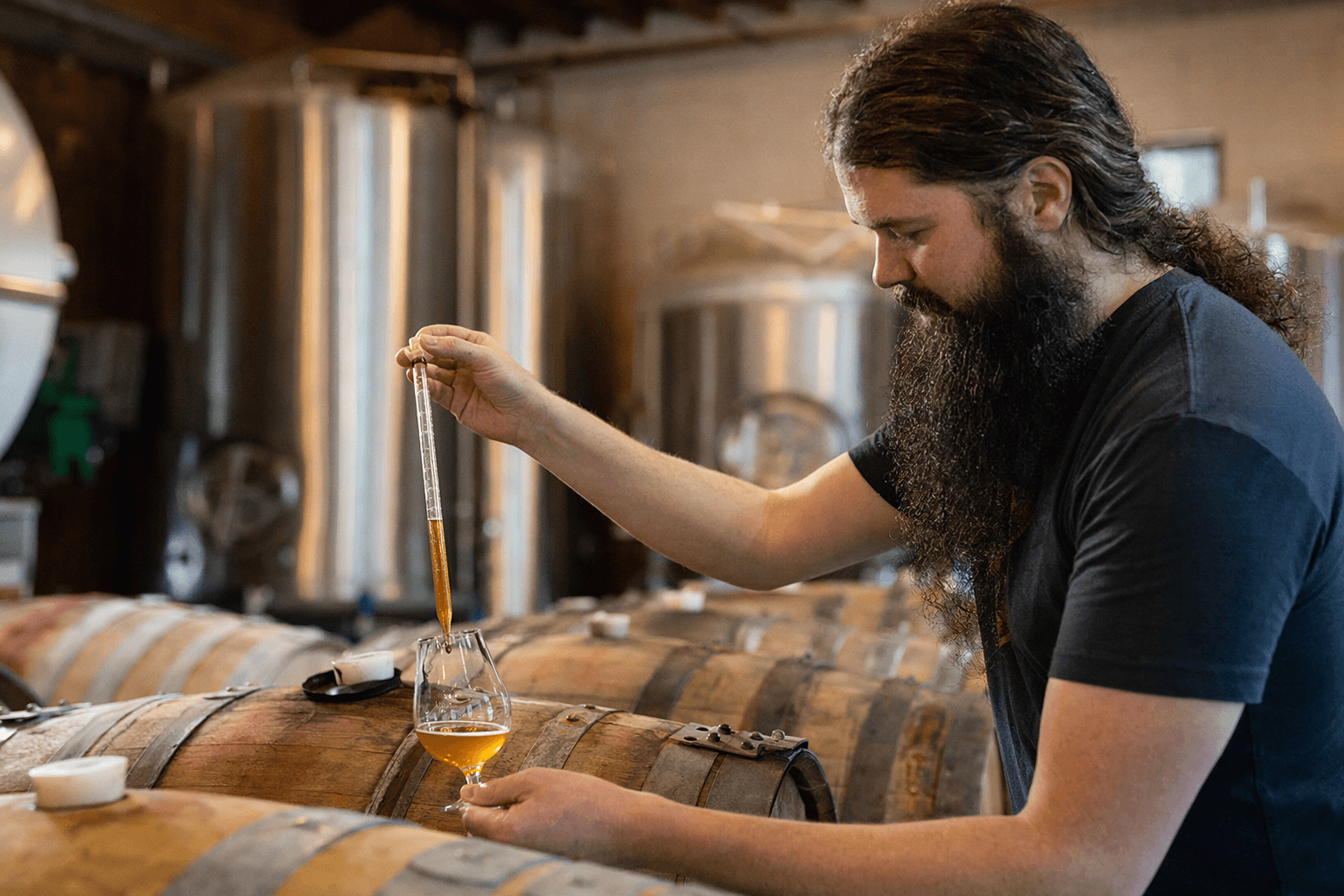
Jeff Stuffings just made one of Jester King’s most intimidating beer styles feel a lot more reachable. Through Craft Beer & Brewing, he shared a still, lambic-inspired wild ale recipe that can be ready in just a few months, without the barrels or coolship that usually define the brewery’s fermentation world.
Why this recipe matters now
For homebrewers, the appeal is immediate: this is a chance to chase lambic-like acidity and mixed-culture complexity without committing to a multi-year cellar project. Jester King’s own farmhouse and wild beers are built around place, house culture, and a slow fermentation philosophy tied to its ranch on the outskirts of Austin, Texas, in the Texas Hill Country. That reputation has always made the brewery feel aspirational; this recipe lowers the barrier without flattening the style.
The timing also lines up with Jester King’s ongoing emphasis on wild beer as a core strength. The brewery has continued to celebrate that side of its lineup with special tours led by co-founder Jeffrey Stuffings, and it backed that reputation up with medals at the 2023 Texas Craft Brewers Cup, including bronze for Atrial Rubicite and bronze for Tulle in Brett & Mixed Culture. In other words, this is not a novelty detour, it is a distillation of a program that still matters to the brewery.
What Jester King is leaving out, and why that matters
The big shortcut is not just speed, it is infrastructure. Craft Beer & Brewing describes the recipe as a still, uncarbonated wild ale that can be brewed at home without barrels or a coolship, which removes two of the largest hurdles in wild brewing. No barrel program means no oak inventory, no long-term storage burden, and no need to dedicate space for year-long maturation. No coolship means you do not need a purpose-built open vessel to chase spontaneous fermentation.
That is a significant shift from how Jester King presents its spontaneous beers. The brewery says its SPON beers are 100% spontaneously fermented and inspired by authentic Belgian lambic and gueuze, with unfermented beer chilled overnight in a coolship and native yeast doing the work. Those methods are central to the brewery’s identity, but they are also a big lift for anyone brewing at home. This recipe keeps the flavor goal intact while trimming away the equipment most people do not have.
The timeline is the real hook
Jester King has always talked about fermentation in patient terms. The brewery says its mixed-culture beers generally primary ferment for 6 to 10 weeks, often finishing at a specific gravity of 1.000, which it calls “bone dry.” Its barrel-aged farmhouse ales are typically aged in oak for 8 to 14 months. Put that next to a recipe that can be ready in a few months, and the difference becomes obvious: this is a wild ale designed to deliver payoff before interest starts to fade.
That shorter path matters because it changes the economics of the beer. A homebrewer deciding whether to try mixed fermentation is not just thinking about flavor, but time, space, and patience. A recipe that reaches sourness and complexity without demanding barrels or a long oak rest is a much more realistic first step for an intermediate brewer who wants to explore wild beer without turning the garage into a barrel room.
What to take away if you want to brew it
The lesson here is not that wild beer is suddenly easy. It is that Jester King has shown a way to make it more approachable without abandoning the character that makes the style compelling. If you have been sitting on the fence about mixed fermentation, this is the kind of project that makes sense because the goal is clear, the process is less capital-heavy, and the timeline is measured in months rather than years.
A few practical takeaways stand out:
- Go in expecting a still beer, not a sparkling finale. The lack of carbonation is part of what makes the beer achievable sooner.
- Judge the beer by dryness and acidity. Jester King’s own mixed-culture beers often finish bone dry at 1.000, so sweetness should not be the target.
- Think like a farmhouse brewer, not a barrel manager. Jester King’s farmhouse ales are rooted in well water, Texas grain, and its unique house culture, which reinforces the idea that fermentation character is doing the heavy lifting.
- Treat the recipe as a scaled-down entry into wild brewing, not a substitute for every Jester King beer. The brewery’s spontaneous beers still depend on the coolship and native microflora that make them distinct.
A broader pattern of openness
This recipe also fits a longer Jester King habit of sharing the playbook. The brewery posted six homebrew recipes in April 2018, and in 2019 it teamed with American Solera on Coolship Roadtrip, a culture swap framed around microbial terroir in Texas and Oklahoma. That makes the new still wild ale feel less like a one-off and more like the latest move in a steady effort to translate the brewery’s fermentation philosophy into something homebrewers can actually use.
For anyone who has wanted the tart snap and layered funk of a lambic-inspired beer without waiting on a barrel-aged marathon, this is the sort of recipe that changes the calculation. Jester King is still proving that wild beer can be ambitious, but now it is also a lot more doable.
This article was produced by Prism’s automated news system from verified source data, official records, and press releases, then run through automated quality and moderation checks before publishing. The system is built and supervised by the people who set the standards it runs under. Read our full AI policy.
Did this article answer your question?