Pure Project's Rewild Pale Ale Funds Mangrove Restoration With Every Pour
Pure Project's Rewild directs 1% of revenue toward planting 35,000 mangrove seedlings in Baja and Oaxaca, backed by a tight 5% ABV Centennial/Citra pale built for everyday drinking.
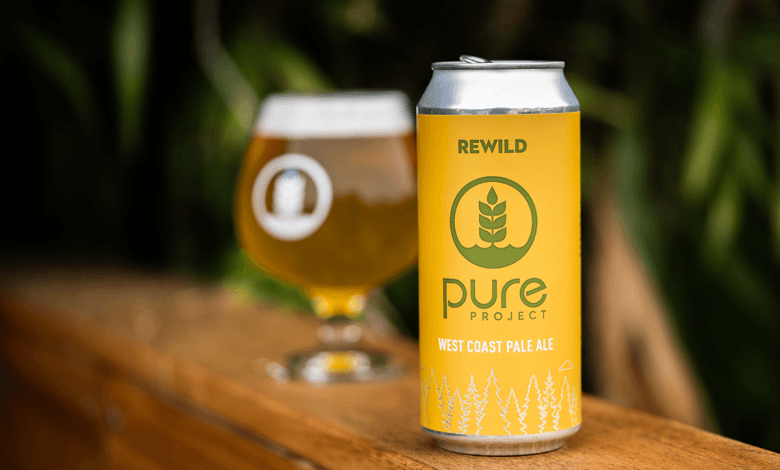
The hop pairing at the center of Rewild is a deliberate throwback: Centennial and Citra, Pacific Northwest standards delivered in a West Coast pale ale at 5% ABV, available year-round. It marks Pure Project Brewing's first expansion of their core lineup since 2023, joining Diamond Dust, Pure West, Tropical Mist, and Rain across five San Diego County taprooms and in 4-packs at select retailers.
Each hop is doing specific structural work. Centennial, released commercially in 1990 and still one of the most reliable bittering hops in the Pacific Northwest catalog, provides the resinous pine backbone and controlled bitterness that anchors the West Coast pale style. Citra arrives later in the process, contributing the tropical lift and grapefruit brightness that keeps the beer from feeling like a history lesson. The result delivers a vibrant, resinous snap layered with notes of ruby red grapefruit over a dry, piney finish, pouring a radiant golden color with refined bitterness from Pacific Northwest hops carrying through to a crisp, dry finish. Reviewers describe it as "incredibly balanced and bone dry, delivering piney, citrusy hop essence in a quick, brilliant burst."
That bone-dry call-out matters in context. "West Coast pale" spent a decade losing its definitional edges as breweries softened bitterness and added residual sweetness to chase broader appeal. Rewild lands in the opposite camp: high attenuation, firm bittering, clear-gold pour, and at 5% ABV, genuinely drinkable across sessions. That's the original template, executed cleanly.
The cause claim holds up to scrutiny better than most brewery mission statements. Through Pure Project's commitment to 1% for the Planet, Rewild supports WILDCOAST and its mangrove forest restoration efforts in Mexico, home to the fourth-largest mangrove area in the world. The 1% for the Planet structure requires directing 1% of gross annual revenue, not profit, to approved environmental nonprofits. That's a materially harder commitment than the vague "portion of proceeds" language common to cause campaigns, though a per-pint dollar breakdown has not been published. Mangrove forests are among the planet's most remarkable carbon-sequestering ecosystems, capturing carbon up to five times more effectively than rainforests while serving as vital breeding habitat for wildlife and marine species and shielding coastal communities from storms.
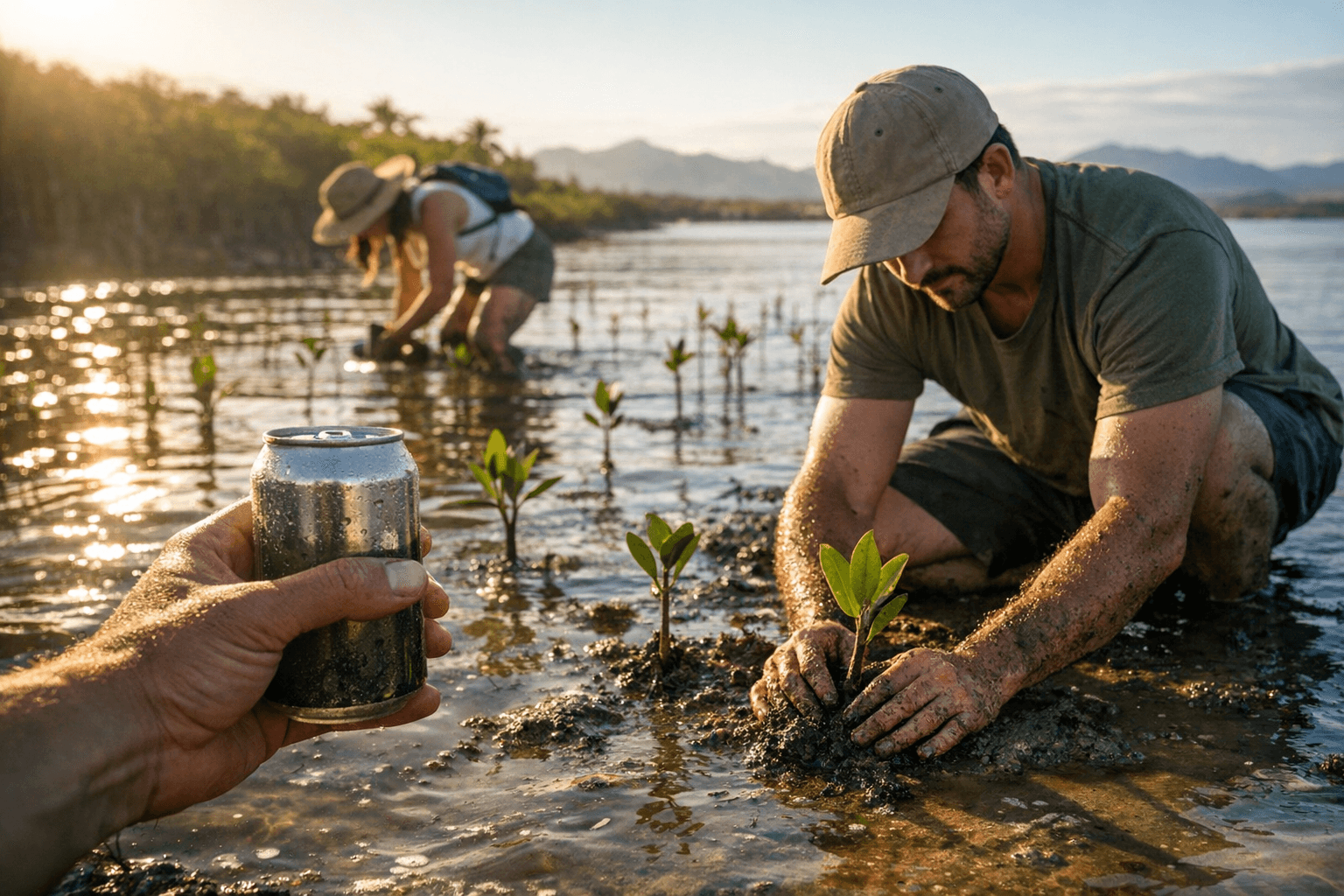
Crucially, concrete restoration targets are attached. WILDCOAST is planning to plant an additional 35,000 seedlings along the coasts of Baja California Sur and Oaxaca in 2026, giving this cause campaign a measurable outcome rather than a vague environmental aspiration. "When it came to finding the right partner for Rewild, the answer was clear," said Pure Project co-founder Mat Robar. "WILDCOAST has been doing critical, on-the-ground conservation work for decades, and their ongoing efforts to actively rewild and restore Mexico's mangrove forests represent the kind of meaningful impact we wanted this beer to stand behind." WILDCOAST co-founder and Executive Director Serge Dedina, Ph.D. framed the stakes directly: "Mangrove forests are one of the most powerful natural climate solutions on the planet."
For homebrewers wanting to build a version of this, the flavor profile maps cleanly to a working clone target. Shoot for 35-38 IBU, with Centennial anchoring the 60-minute addition for bittering structure and a second Centennial charge at 10-15 minutes for oil complexity. Bring Citra in at whirlpool and carry it through the dry-hop at 0.5-0.75 oz per gallon; the West Coast designation means you're not chasing the saturation levels of a hazy, so restraint on dry-hop volume protects the style's signature clarity and resinous bite. The bone-dry, crisp finish points to a sulfate-dominant water profile: target around 175-180 ppm sulfate and 55-65 ppm chloride to sharpen hop dryness without tipping into harshness. Keep the grain bill pale-malt-forward with minimal or zero crystal malt. The radiant golden color and clean attenuation suggest the grain is doing very little structural work beyond providing a neutral canvas for the hops.
This article was produced by Prism’s automated news system from verified source data, official records, and press releases, then run through automated quality and moderation checks before publishing. The system is built and supervised by the people who set the standards it runs under. Read our full AI policy.
Did this article answer your question?