Rollertown Beerworks Blends Craft Beer, Concerts, and Family Fun in Frisco
Dirk Nowitzki's Texas craft brewery just opened a massive Frisco taproom with sumo wrestling, live concerts, and a beer lineup anchored by brewmaster Tommy Miller.
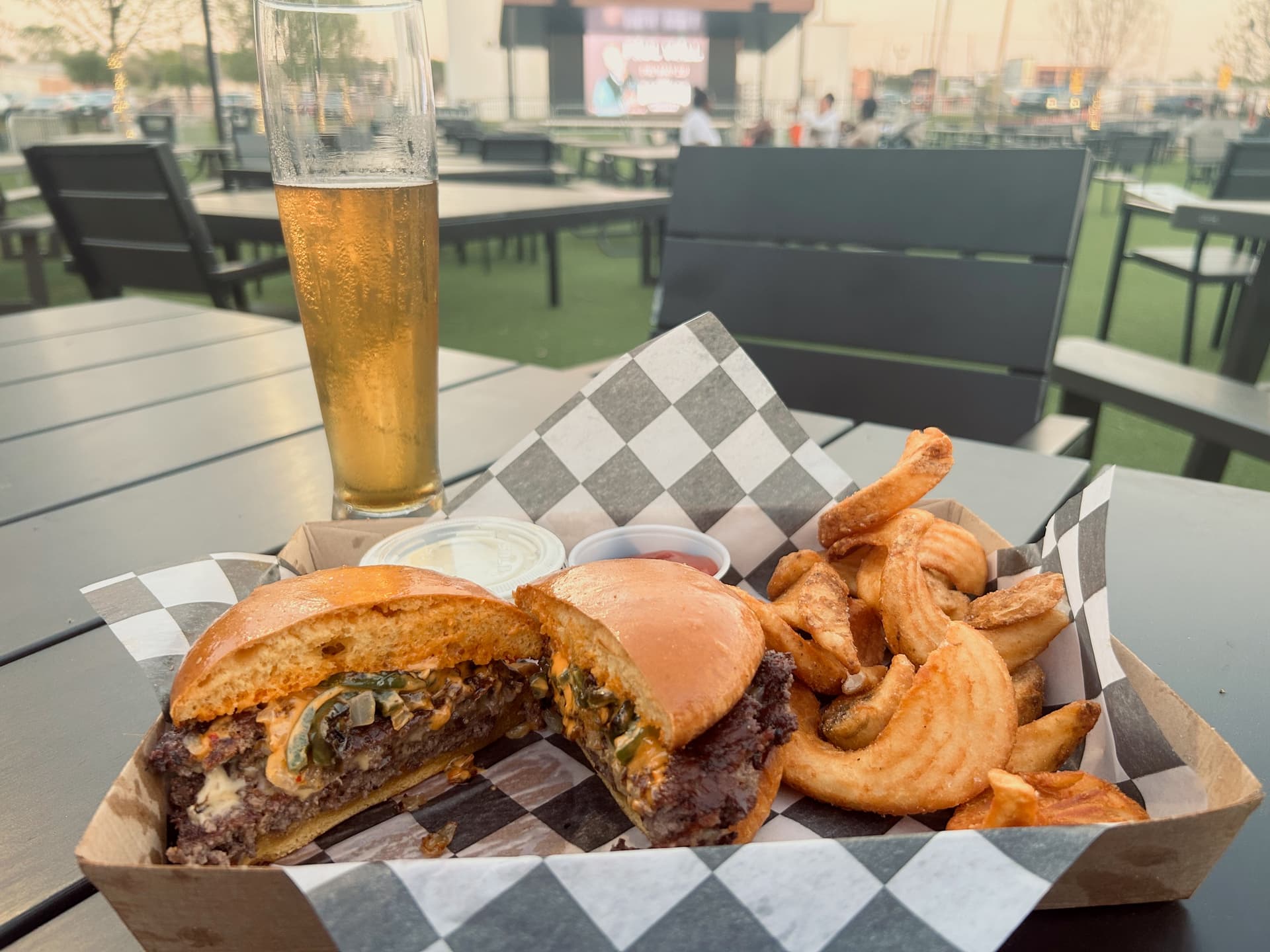
Pull into the stretch of Frisco near Toyota Stadium and Frisco Fresh Market, and Rollertown Beerworks announces itself before you reach the door. The scale alone sets it apart from the cozy taproom template that defined the last decade of craft beer growth: a two-level building, a sprawling concert lawn, and a row of food trucks lined up like a permanent street fair. This is not a pour-and-go destination. It is, by design, a place where you might arrive for a pint and stay through a headlining event.
The Team Behind the Taproom
Rollertown Beerworks was co-founded by Ben Rogers and Skin Wade, with Dirk Nowitzki coming aboard as an investor and, by virtue of his seven-foot shadow over Dallas sports culture, the brewery's most recognizable draw. The Nowitzki connection is not just a marketing footnote. It threads directly into the beer program: the "Big German," a low-hop brew built to reference Nowitzki's persona, is one of the taproom's signature offerings and a natural conversation starter for anyone walking through the door for the first time. It is the kind of beer that earns a second look from non-craft drinkers who recognize the name before they know the style.
A Taproom Built at Concert Scale
The Frisco location's two-level layout does real work. Downstairs pulls you into the energy of the crowd, the food-truck row, and the outdoor lawn. Head upstairs and the pace changes: the upper bar offers a quieter vantage point over the lawn below, useful on a packed event night when you want the view without the full noise. That architectural decision signals intentional programming. Rollertown is not hoping concerts will happen here; the building is engineered around them.
The large concert lawn sits adjacent to the taproom proper and gives the venue the capacity to host events that would overwhelm most craft beer spaces. Food trucks line up in a dedicated row, removing the need to choose between drinking and eating, and creating the kind of self-contained afternoon or evening that competes directly with music venues, sports bars, and family entertainment centers rather than simply other breweries.
The Beer Program: Tommy Miller's Core and Rotating Lineup
Brewmaster Tommy Miller runs a program that balances accessible crowd-pleasers with enough range to keep serious beer drinkers engaged. The core lineup gives the taproom broad appeal: the Rollertown IPA is piney and recognizable, landing in the classic West Coast register that converted a generation of drinkers to craft. The Juice Serum IPA goes the other direction, hazy and fruit-forward, chasing the New England style that now fills grocery store shelves across Texas.
The 133 pilsner rounds out the approachable end of the menu with a clean, baseball-friendly lager that works as well at a sumo match as it does during a slow Tuesday afternoon. Then there is the Big German, the low-hop flagship that functions as an ambassador beer for anyone who walks in more interested in the Nowitzki connection than the IBU count. Together, these four beers sketch the brewery's commercial logic: keep something familiar for every drinker while maintaining room for seasonal innovation beside the stable canned lineup that supports distribution.
Programming: Sumo Wrestling and Beyond
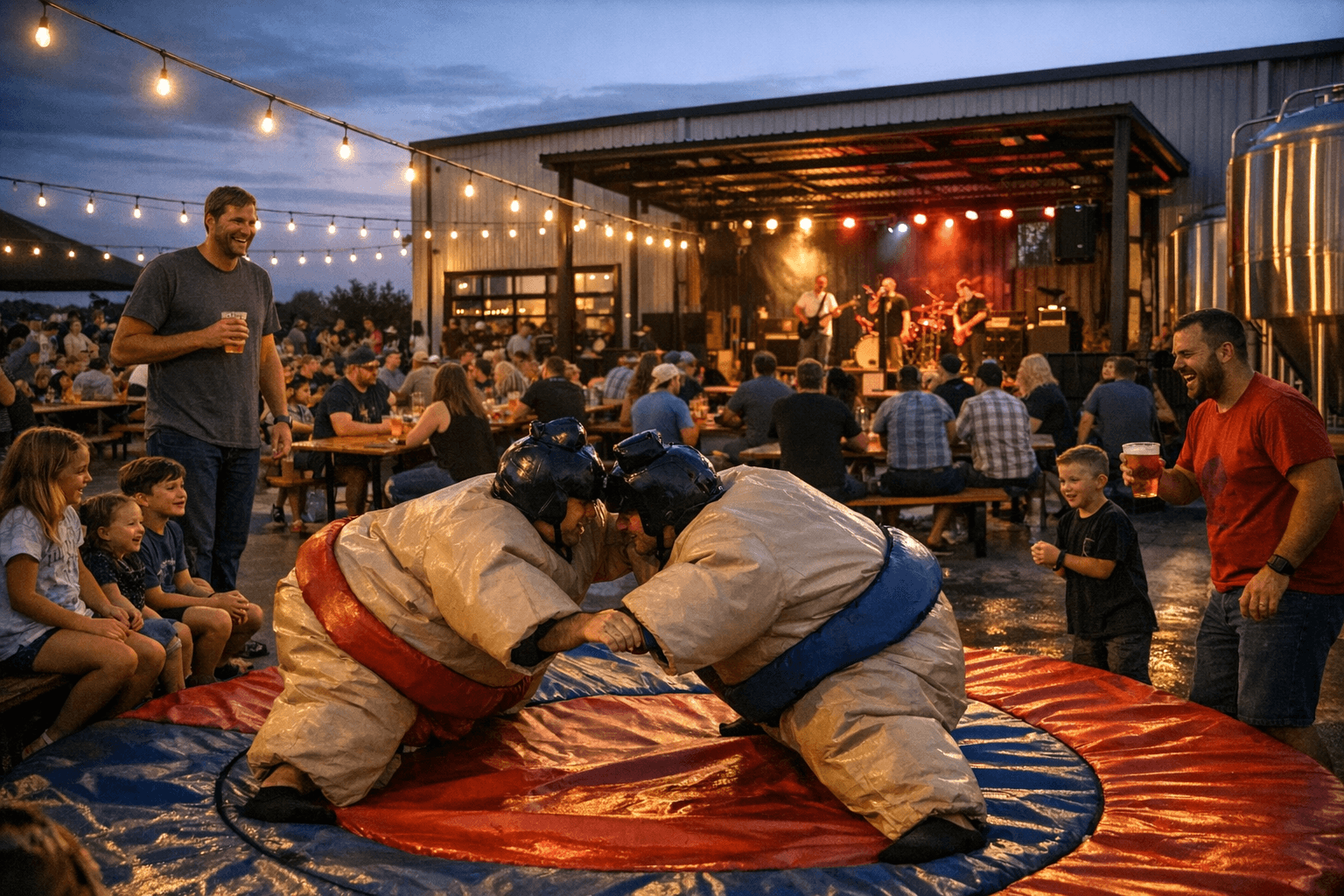
The clearest signal of Rollertown's entertainment ambitions arrives on April 24 and 25, when sumo-wrestling matches are set to take over the venue. It is a deliberately large-scale community event, the kind of programming that generates word-of-mouth across demographics, brings in families who might not otherwise set foot in a brewery, and creates a shareable moment well outside the usual tap-list conversation. That choice of event is telling: it is not trivia night or a beer-pairing dinner. It is a spectacle.
This approach to programming reflects a broader strategy. Regular live concerts on the lawn, rotating activations, and food-truck partnerships keep the calendar dense enough that the taproom functions less like a bar with hours and more like a venue that happens to brew on-site. For craft beer readers who have watched the taproom model evolve since the tasting-room boom of the early 2010s, Rollertown's Frisco location represents a next-stage iteration: less pint-glass-and-barstool, more destination leisure complex.
Family-Friendly by Architecture
The outdoor lawn and food-truck setup make the space genuinely family-accessible in a way that many taprooms are not. A large grass area adjacent to food options means children are not wedged into a bar footprint, and parents can keep sight lines clear while enjoying a Juice Serum IPA. That is not accidental. The design positions Rollertown to capture weekend afternoon traffic that a traditional taproom layout would lose entirely. It also broadens the social circle that walks through the door, pulling in groups that include people with no particular interest in craft beer but a strong interest in a good outdoor afternoon.
What the Frisco Model Signals for Craft Beer
Mid-sized regional breweries across the country are grappling with the same question: how do you grow volume and revenue without simply opening more taps or chasing distribution contracts you cannot yet support? Rollertown's Frisco answer leans hard into the venue. A polished production brewery paired with a concert lawn, a curated food-truck row, and a rotating event calendar monetizes square footage in ways a standard taproom never could. Each concert, each sumo match, each weekend afternoon on the lawn represents a revenue stream that the beer alone cannot generate.
For homebrewers thinking about what scaled-up craft looks like at the taproom level, Rollertown offers a readable case study. The beer program stays coherent: a piney IPA, a hazy IPA, a pilsner, a novelty flagship. The events stay ambitious. The space is built to absorb both the quiet Tuesday crowd and the Saturday night headliner without either feeling like an afterthought. Sitting upstairs with a view of the lawn, it is easy to see why a spot near Toyota Stadium in Frisco became the site worth betting on.
This article was produced by Prism’s automated news system from verified source data, official records, and press releases, then run through automated quality and moderation checks before publishing. The system is built and supervised by the people who set the standards it runs under. Read our full AI policy.
Did this article answer your question?