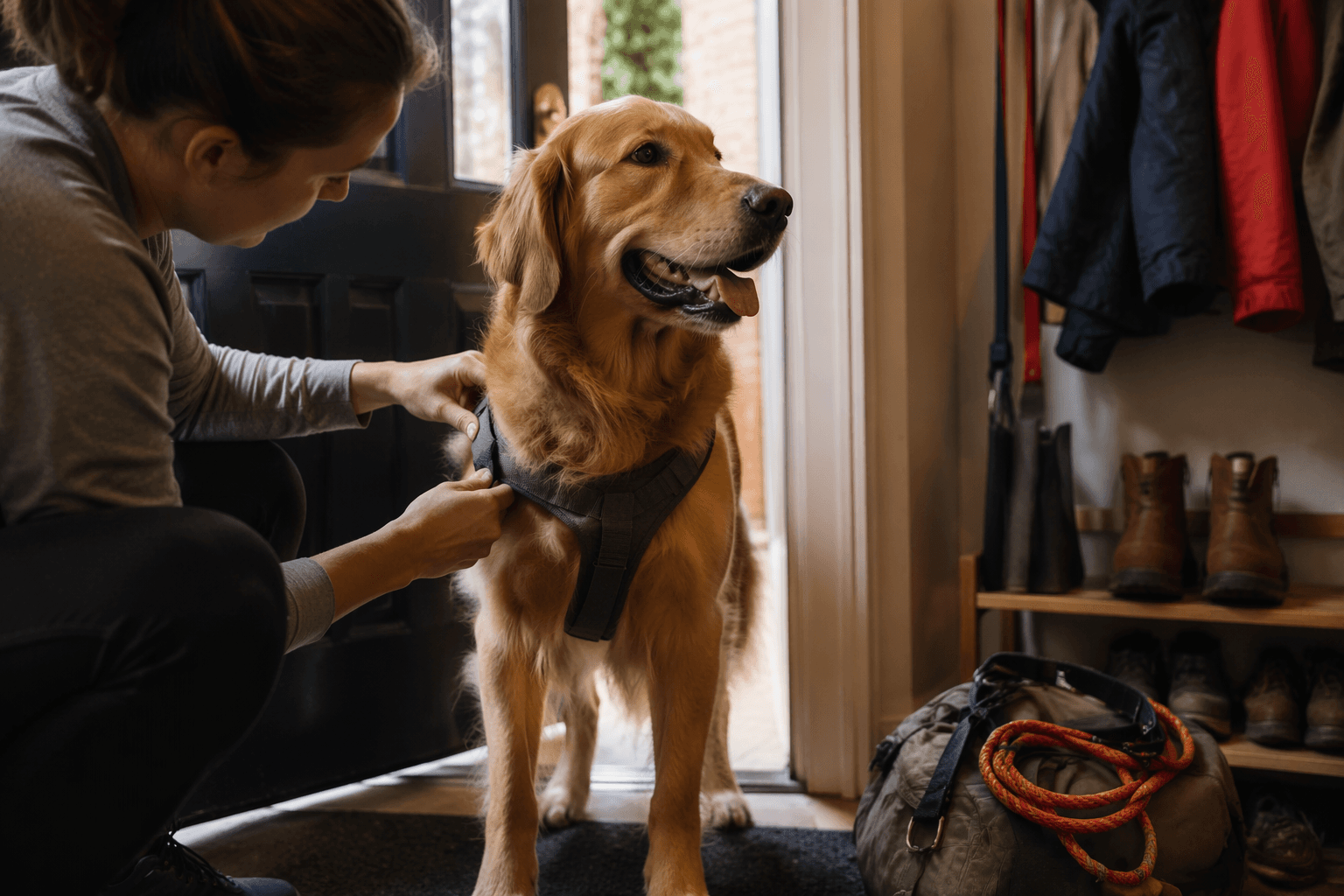
AKC says routines help hyperenergetic dogs, reduce stress and bad habits
A steadier day can turn a whirlwind dog into a calmer one, and AKC says the fix starts with routines that match each life stage.

When a hyperenergetic dog is tearing through the house, the first fix may not be more adrenaline. The American Kennel Club’s latest routine guidance frames structure as a behavior tool: when your dog knows what comes next, stress drops, confidence rises, and everyday care gets easier. That matters most for the dogs that run hot, whether they are bouncing off the walls, shredding corners, barking nonstop, or falling apart when the house feels unpredictable.
Routine is more than a calendar trick
AKC says dogs thrive on consistency because predictability helps them understand the day, and that understanding can support wellbeing, house training, grooming, confidence, and behavior. For a busy dog, that means routine is not about making life boring. It is about giving energy a job, giving rest a place in the day, and making sure meals, potty breaks, training, and enrichment happen in a rhythm the dog can learn.
That same logic shows up in other AKC training guidance: consistency works only when the rules, cues, and methods stay steady. Randomly changing what a dog is supposed to do, or how you ask for it, creates confusion instead of learning. For a dog that already struggles with overstimulation, confusion is often what turns excitement into chaos.
Puppies need structure that is easy to repeat
Puppies do best when the day is built around sleep, meals, potty breaks, bonding, and very short training sessions. AKC’s puppy schedule guidance says most puppies need puppy food three times a day, and it recommends lining those meals up with your own breakfast, lunch, and dinner rhythm so the plan is easier to remember and keep.
That advice is practical for owners of busy, mouthy, overstimulated pups because it turns your whole day into a training aid. A predictable morning potty break, breakfast, nap, and short training session can prevent the scramble that often leads to accidents, nipping, and frantic zoomies. When the puppy learns that food, rest, and attention arrive in a pattern, the dog spends less energy guessing and more energy settling.
A puppy schedule should feel structured, but not packed. Build in enough sleep to let the dog recover, then use short sessions for leash introduction, name recognition, and simple cues. The point is not to exhaust a young dog. The point is to teach the dog that calm and activity both have a place.
Prime-age athletic dogs need a work-rest rhythm
For adult dogs, especially the ones with endless drive, routine becomes a way to keep learned behavior in place. AKC says consistent routines reinforce skills a dog already knows and can make it easier to absorb major life changes such as travel, moving, or a new family member. That is where many destructive habits start: the dog is still energetic, but the shape of the day has disappeared.
This is also where AKC’s warning about stress behaviors matters. Consistent routines can help prevent destructive chewing, excessive barking, and other stress-related behaviors because the dog is no longer guessing when exercise, food, or attention will happen. If your dog is running laps in the house by midmorning, it may not be a discipline problem so much as a schedule problem.
- a predictable wake-up and potty routine
- a walk, run, or play block matched to the dog’s energy level
- a training or puzzle session that makes the brain work
- a rest period after activity
- consistent meal timing, followed by more quiet time
A solid daily pattern for an adult high-drive dog usually includes:
That structure does not just burn energy. It teaches your dog that excitement does not control the day. You do.
Senior dogs still need a plan, just a softer one
AKC says dogs are often considered seniors at around 7 years old, while larger dogs may be considered senior at 5 to 6 years old. Another AKC cognition guide says canine cognitive dysfunction syndrome often begins showing signs around 9 years of age. That makes routine especially important later in life, when confusion can sneak in even if a dog still wants to stay active.
A stable routine can reduce confusion and help prevent regression in potty training, while still leaving room for age-appropriate learning and enrichment. For an older dog, the structure may look like shorter walks, easier training games, and more predictable rest windows. The goal is not to overprotect the dog from movement or thinking. It is to keep the day understandable.
That matters because a senior dog who suddenly starts having accidents, pacing, or seeming disoriented may be telling you the schedule has become harder to follow. A steadier pattern often helps older dogs conserve energy for the things they still enjoy, instead of wasting it on uncertainty.
Consistency helps, but rigidity can backfire
One of the most useful parts of AKC’s guidance is the warning not to turn routine into a trap. Dogs can become anxious if breakfast or a walk has to happen at the exact same minute every day. AKC’s message is to build consistency around the structure of the day, not around perfection to the minute.
That nuance matters for working households and for dogs that get wound up when food or exercise is delayed. Life happens. Meetings run long, traffic happens, weather changes, and schedules shift. A dog that knows the sequence, wake up, potty, meal, walk, rest, learns to adapt more easily than a dog trained to expect an exact-minute ritual.
AKC’s routine advice lines up with its separate guidance on changing routines gradually. When the day has to shift, keep the big anchors in place and move the pieces slowly. That is often enough to protect a dog from the stress spike that comes with sudden changes.
Why this matters for hyperenergetic dogs
AKC’s hyperactive-dog guidance says hyper or too-active behavior is one of the most commonly reported behavioral concerns among Canine Good Citizen and AKC S.T.A.R. Puppy owners, and that a more suitable daily schedule and exercise plan may be needed. That is the real takeaway for dogs that seem to have no off switch: the answer is often not simply “more exercise,” but better-timed exercise, training, and rest.
Veterinary behavior sources back up that approach. A paper in the Journal of the American Veterinary Medical Association cited older research suggesting 14% to 17% of dogs in the United States show signs of separation anxiety. A more recent American Veterinary Medical Association and Journal of the American Veterinary Medical Association study reviewed 32,468,046 canine medical records from 2010 through 2020 and focused on common behavior labels such as aggression, separation anxiety, and fear or anxiety unrelated to separation anxiety. Those same behavior resources also point to destructive chewing, inappropriate elimination, and vocalization as signs of separation distress or anxiety.
That is why routine works so well for hyperenergetic dogs. It gives movement a container, gives rest a purpose, and gives the dog a way to predict the day instead of reacting to it. For the high-drive dog, structure is not a restriction. It is the thing that makes calm possible.
This article was produced by Prism’s automated news system from verified source data, official records, and press releases, then run through automated quality and moderation checks before publishing. The system is built and supervised by the people who set the standards it runs under. Read our full AI policy.
Did this article answer your question?