Border Collies Lead AKC List of Smart, High-Energy Dogs
Border Collies sit at the top, but the real lesson is sharper: the smartest dogs need jobs for their brains, or their energy turns into trouble fast.
Why “smart” is not one thing
The AKC’s latest look at canine intelligence makes one point very clear: a bright dog is not automatically an easy one. Using Stanley Coren’s framework, the AKC separates dog intelligence into three kinds, instinct, adaptive problem-solving, and school learning, and that distinction matters for anyone living with a high-drive breed. Some dogs are built to herd, guard, or retrieve with almost no formal instruction; others are quick to puzzle out a gate, a barrier, or a treat; and some excel at absorbing repeated human cues in training.
That breakdown is exactly why the smartest-feeling dogs are often the hardest to live with unless the household matches their mental workload. A dog that learns fast can also get bored fast, and boredom in a hyperenergetic body rarely stays quiet for long. The AKC’s own smart-breeds coverage makes the broader point bluntly: most dogs are smart in different ways, and intelligence alone does not automatically make a good pet.
Why Border Collies keep becoming the standard
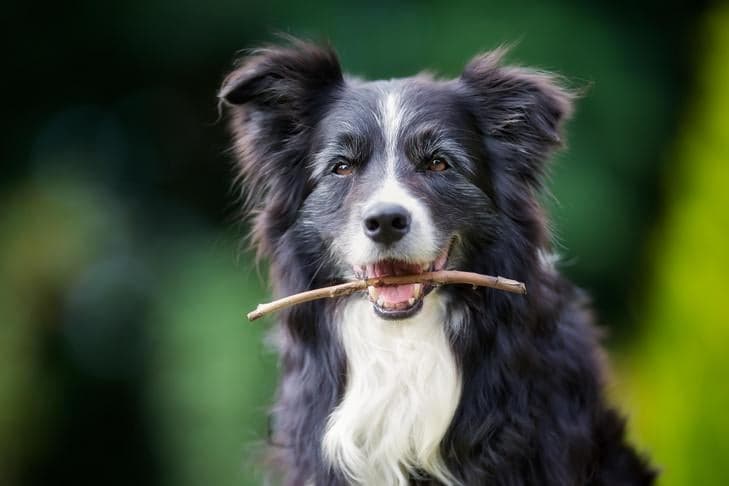
Border Collies are the clearest example of what happens when working drive and intelligence meet at full speed. The AKC places them at the top of its list and describes them as quick, athletic, and an overachieving herding breed that thrives on having work to do. In the breed profile, the club goes even further, calling the Border Collie “a remarkably bright workaholic” and warning that the dog may be too much for owners without the time, energy, or means to keep it occupied.
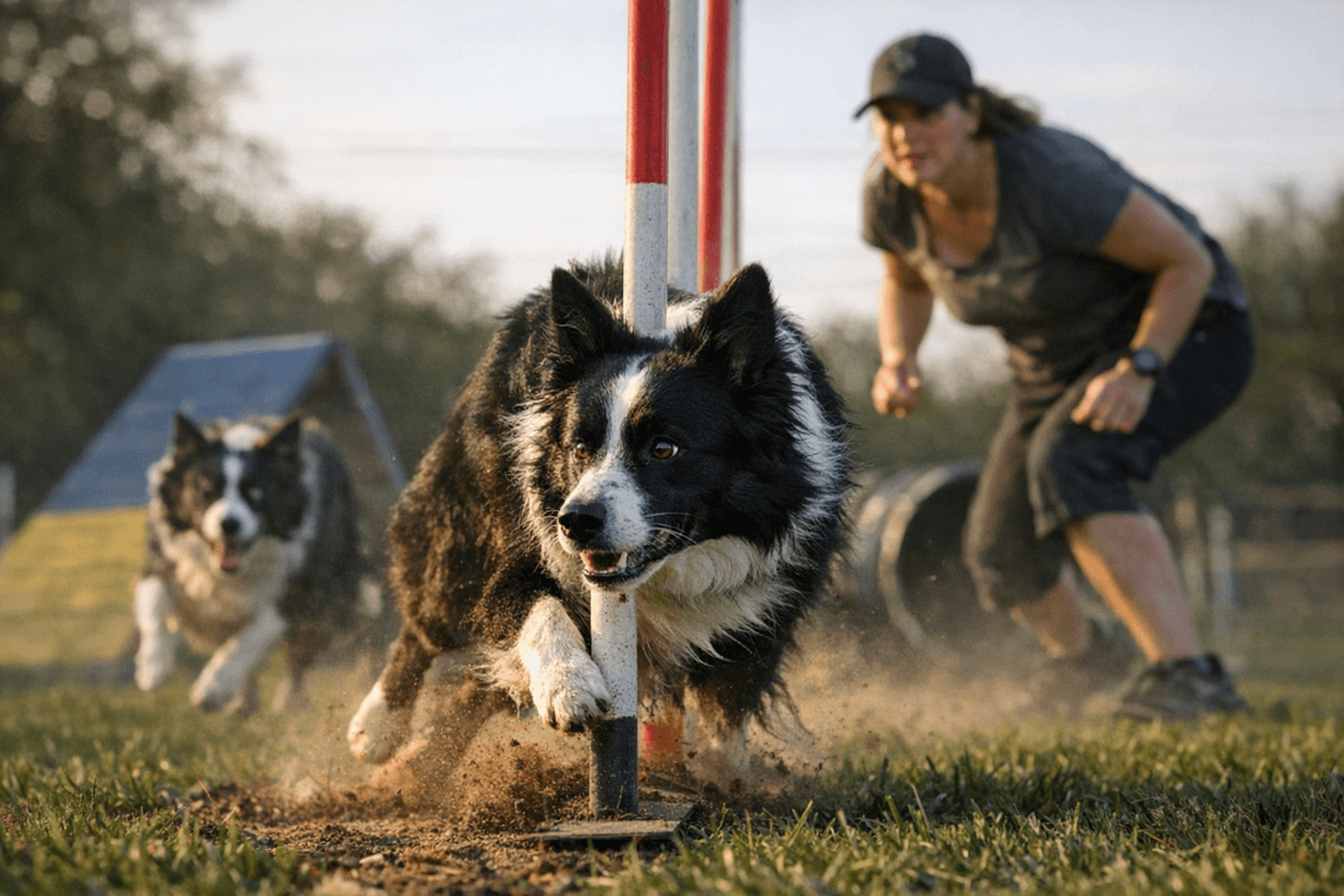
That reputation is not an accident of modern pet culture. Britannica notes that Border Collies have been outstanding sheepdogs along the English-Scottish border for about 300 years, which explains why the breed is so often used as the measuring stick for canine intelligence. This is not simply a dog that wants exercise. It is a dog shaped for long stretches of focused work with people, and that history shows up every time one bolts through agility, locks onto a handler in obedience, or treats a training session like a full-time job.
The rest of the AKC smart-breed picture
Border Collies may get the spotlight, but the AKC’s list shows a familiar pattern among the breeds near the top. Poodles come next, and Britannica notes that they were developed as water retrievers and are often ranked among the most intelligent breeds. That retriever background matters, because it helps explain why Poodles tend to respond well when instruction is consistent and clear.
German Shepherd Dogs, Golden Retrievers, and Doberman Pinschers round out the next spots in the AKC’s smart-breeds framing. Each is highlighted as a breed that learns quickly and benefits from regular tasks or stimulation. These are not decorative minds in athletic bodies. They are dogs that were built to do things, remember things, and keep working with humans, which is why they so often excel in obedience, protection sports, field work, and other jobs that reward focus.
How the AKC’s intelligence framework changes daily life
The practical takeaway is bigger than a ranking. If a dog has strong instinctive intelligence, it may pick up work patterns quickly because that job is already wired in. If it has strong adaptive problem-solving, it may start inventing its own ways to get what it wants, which can look clever until the dog has opened a gate or outsmarted the treat puzzle for the tenth time. If it shines in school learning, it can absorb cues fast, but only if the repetition is clear and the human stays consistent.
That is why hyperenergetic dogs often need more than a neighborhood walk. They need something for the brain to do, too. The AKC’s mental-fitness coverage says dogs need mental exercise, and that brain games and interactive toys can be both stimulating and energy-burning. For a high-drive breed, a training session, scent work, obedience drill, or problem-solving game can matter as much as a long run because it gives the dog a job, not just motion.
What to give a bright, restless dog
A smart, high-energy dog usually does best when physical work and mental work are planned together. One without the other often leaves a gap, and that gap tends to get filled with chewing, pacing, barking, or self-assigned projects. The most useful routine is the one that asks the dog to think before it gets to move, then asks it to settle after the excitement peaks.
A practical mix often looks like this:
- Short, focused training sessions with clear cues
- Puzzle toys or food-dispensing games that make meals slower
- Scent work, fetch variations, or hide-and-search drills
- Obedience practice that repeats known commands under distraction
- Sports such as agility or herding-style outlets that reward precision as well as speed
That structure fits the intelligence types the AKC describes. Instinct gets directed into the right job, adaptive problem-solving gets channeled into useful puzzles, and school learning gets reinforced through repetition. For dogs like Border Collies, Poodles, German Shepherd Dogs, Golden Retrievers, and Doberman Pinschers, that combination is often the difference between a fulfilled athlete and a bored whirlwind.
The history behind the modern warning label
Stanley Coren’s work still shapes how people talk about breed intelligence. His book, *The Intelligence of Dogs*, was first published in 1994 and later expanded in a 2006 edition. The AKC notes that Coren tested 120 breeds in the early 1990s and again in 2006 for its smartest-breeds ranking, while an earlier AKC article said his original rankings were based on assessments from 200 dog-obedience judges and covered 110 breeds.
Coren, a psychology professor and canine-psychology researcher at the University of British Columbia, helped turn dog intelligence into a public conversation about more than party tricks. His work pushed the idea that a clever breed is not just a bragging right. It is a responsibility. The owner of a bright, energetic dog is not buying extra convenience. The owner is taking on a mind that will notice patterns, remember routines, and test the system if the system gets too soft.
The real lesson for owners of high-drive dogs
The smartest breeds are often the ones bred to work closely with people for long periods, and that is why they are so often energetic, focused, and demanding. Border Collies are the cleanest example, but they are not the only one. Poodles, German Shepherd Dogs, Golden Retrievers, and Doberman Pinschers all show the same truth in different forms: intelligence is useful only when the dog has something worthy to apply it to.
For anyone living with a hyperenergetic dog, the goal is not simply to wear the body out. It is to satisfy the brain. When the work matches the wiring, smart dogs become some of the most rewarding partners in the dog world. When it does not, that same intelligence turns into a very efficient engine for mischief.
This article was produced by Prism’s automated news system from verified source data, official records, and press releases, then run through automated quality and moderation checks before publishing. The system is built and supervised by the people who set the standards it runs under. Read our full AI policy.
Did this article answer your question?