How Dog Daycare Safely Manages Hyperenergetic Dogs All Day
The best daycare for a hyper dog is not a gym. It is a rhythm of screening, matched play, rest, and redirection that keeps arousal from tipping into chaos.
The first test happens at the door
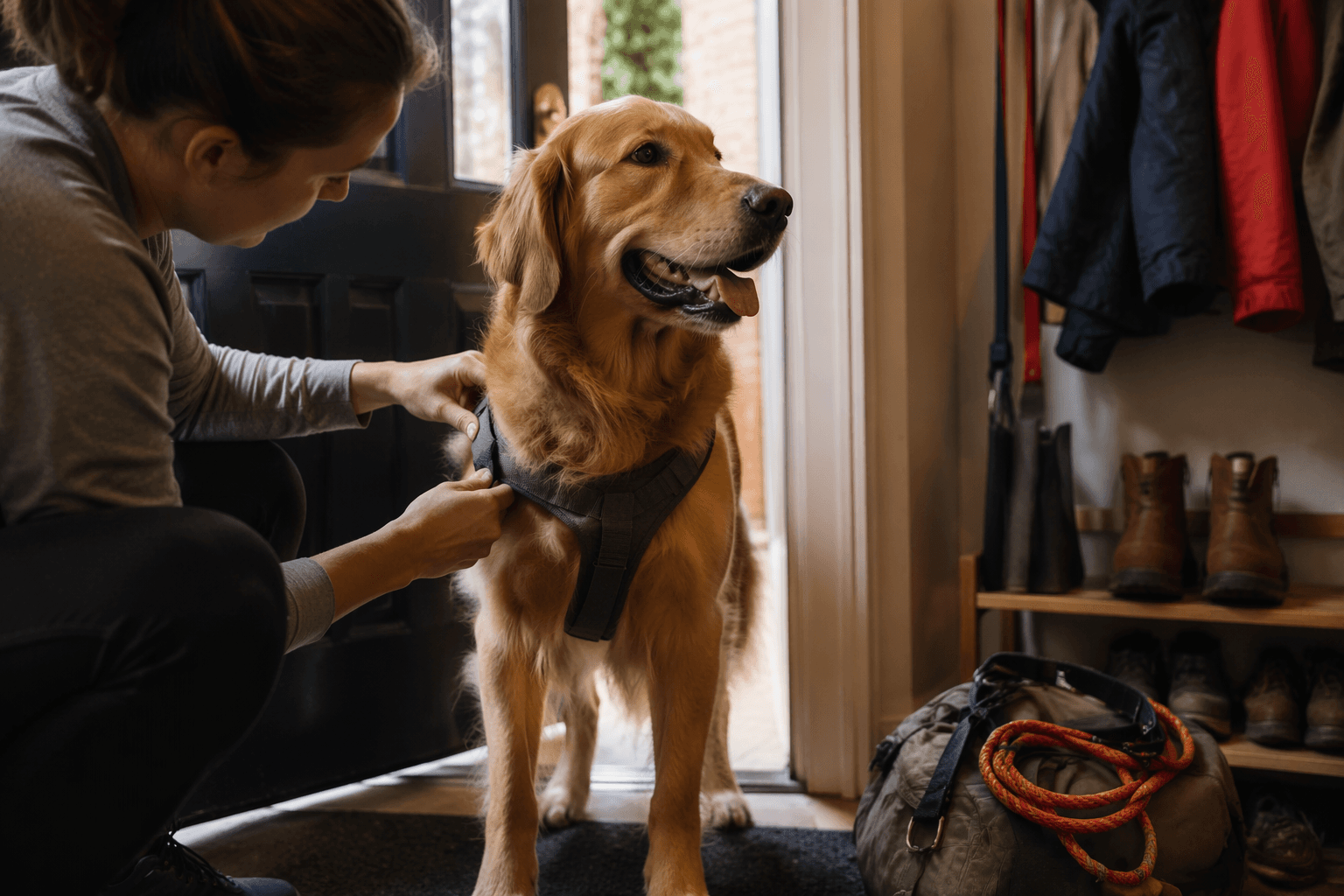
A good daycare day starts before the zoomies do. In Annette Caporusso’s description of facilities in Woodbury, Minnesota, dogs are commonly accepted between 6:30 a.m. and 8:00 a.m., and staff do not funnel every arrival straight into one big play yard. They review owner notes, give a brief health check, and turn away dogs showing signs of illness or visible injury.
That early filter matters for hyperenergetic dogs because arousal management begins with selection, not after-the-fact correction. A dog that is sick, sore, or already off balance cannot settle into group life safely, no matter how much room there is to run.
Why sorting is the whole game
The biggest mistake people make when they picture daycare is assuming the answer to a high-energy dog is more exercise. The better model is more precise than that. Caporusso’s account makes sorting by size, temperament, and energy level the foundation of the daycare setup, and that is exactly what keeps a hyper dog from turning the room into a pressure cooker.
When dogs are matched by play style, the facility is not just preventing scuffles. It is helping each dog find a workable social speed. A bouncy dog can still get satisfaction from group time, but the play has to fit the dog instead of overwhelming a calmer pen mate or spiraling into rough, frantic behavior.
What structured play looks like in practice
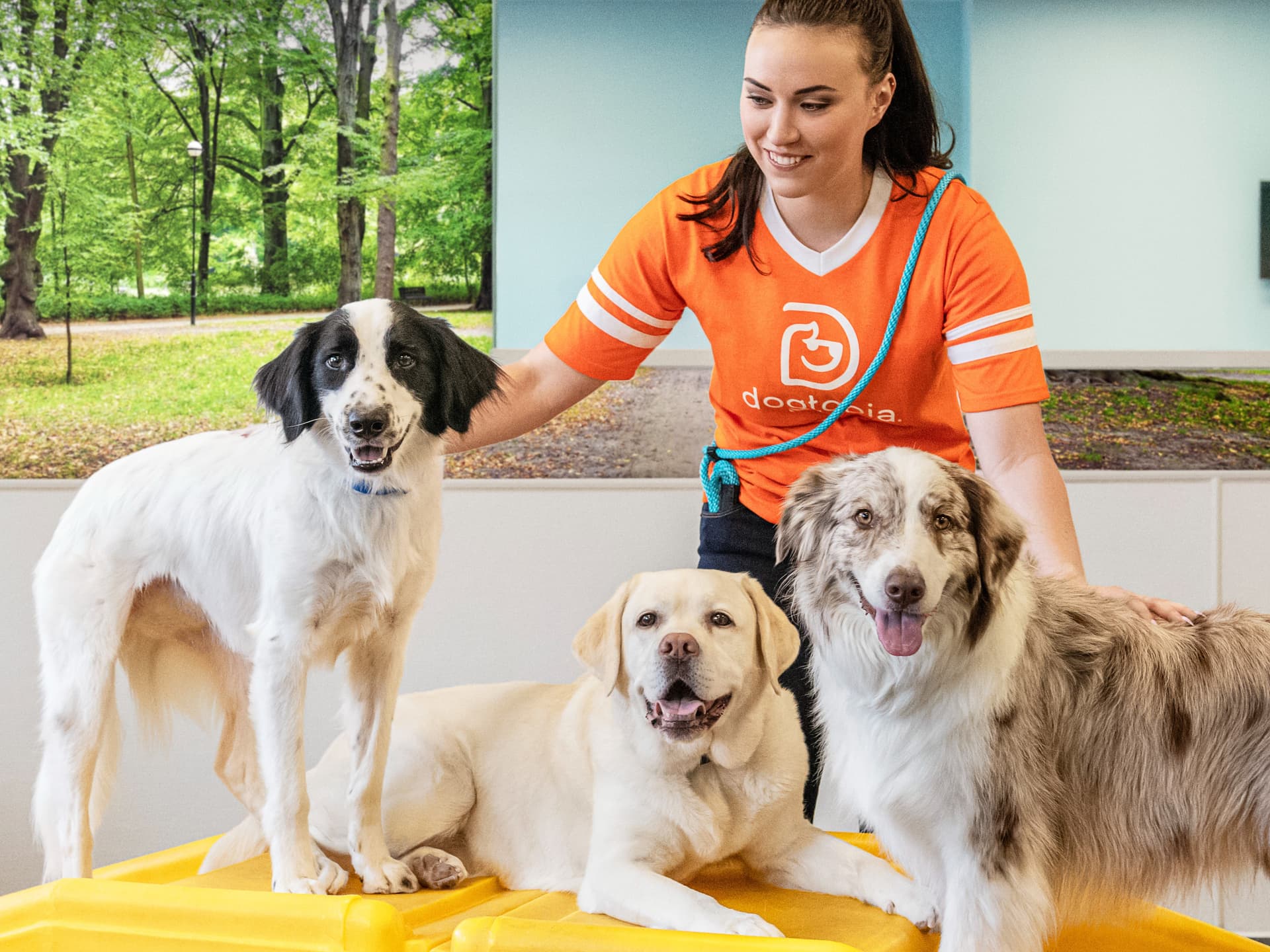
After check-in, the day begins with group play, but this is not free-for-all chaos. Staff stay alert for body-language changes that suggest a dog is moving past healthy excitement into overstimulation, and they redirect before the moment tips into trouble. That distinction is the core of a well-run daycare: the goal is not to wear dogs out until they collapse, but to keep them in a usable emotional range.
For a hyper dog, that structure can be more valuable than raw minutes of activity. A controlled play block lets the dog practice impulse control, read other dogs, and stay engaged without building the kind of frantic momentum that often leads to bad choices. The best facilities understand that energy and regulation are not opposites. They have to be balanced together.
Signs the staff understand arousal, not just exercise
When you tour a daycare, look past the size of the yard and ask what happens when dogs start getting too wound up. Facilities that understand arousal management usually make that answer very clear.
- They sort dogs by size, temperament, and energy level before play starts.
- They check health and behavior at the door, not after a problem starts.
- They talk about redirection, not just “burning energy.”
- They can explain how they spot escalation in body language.
- They use pauses and resets, not only constant movement.
If the pitch is all about tiring dogs out, that is not the same thing as teaching them to stay socially safe. Hyper dogs need both motion and brakes.
Rest blocks matter because chaos is not the goal
Daycare is often sold as a place where dogs can go all day and come home exhausted, but that is only half the story. A dog that never gets a reset may leave physically tired and mentally fried. The more useful version of daycare builds in calm between activity, so the dog learns that stimulation comes in waves, not in one endless blast.
That approach is especially important for dogs with big energy reserves. Structure channels the energy into monitored activity instead of chaotic exhaustion, which means the dog is getting more than a workout. It is getting a pattern the brain can learn from. For many hyper dogs, that predictability is what makes the day safe.
Why the puppy socialization guidance still matters for older dogs
The American Veterinary Society of Animal Behavior says the first three months are the most important socialization period for puppies, and that puppies should be exposed safely to as many new people, animals, stimuli, and environments as possible. It also notes that early and adequate socialization helps prevent behavior problems, and that puppy socialization should be considered standard of care before puppies are fully vaccinated.
That matters even if your dog is past puppyhood, because the underlying principle is the same: exposure has to be managed, not dumped on the dog all at once. The AVSAB also warns that overstimulation in puppies can show up as excessive fear, withdrawal, or avoidance behavior. Those are not just puppy issues. They are reminders that too much intensity, too fast, can push a dog out of learning mode and into self-protection.
What safe socialization looks like inside daycare
A daycare that respects social development does not confuse constant interaction with good interaction. It uses supervision, pacing, and matching so the dog gets practice in a setting that stays legible. That is especially important for hyper dogs, because big drive can hide stress until the dog is already over threshold.
In a strong program, social time is purposeful. Dogs are not simply thrown together to “figure it out.” They are watched, redirected, and given chances to succeed in the group without being pushed into overload. That is where daycare shifts from entertainment to behavior support.
The safety basics are not optional
Industry guidance commonly emphasizes vaccination proof, sanitation, active supervision, and staff training as core safety standards. Recent summaries also cite active-play staff-to-dog ratios of roughly 1:10 to 1:15, though there is no single federal standard. Those numbers matter because supervision is what makes all the other decisions work.
If the room is too crowded, the staff cannot catch the small signs that a dog is losing control. If the staff are not trained, they may miss the difference between healthy play and rising arousal. And if sanitation slips, the risk goes beyond behavior into illness, which is exactly why health checks and turn-aways for visibly sick or injured dogs matter at intake.
The business landscape helps explain why this model is spreading
This is no tiny niche anymore. One recent market report estimates the U.S. pet daycare market at USD 1.7 billion in 2024 and projects 8.6% compound annual growth from 2025 to 2034. Another industry summary says the United States has about 20,000 petcare facilities and 9,000 boarding kennels.
That growth helps explain why daycare is being framed less as a place to burn off energy and more as a managed behavioral environment. The better facilities know that families are not just buying supervision. They are buying judgment, structure, and a staff that understands how to handle a dog who lives at a higher volume than most.
For hyperenergetic dogs, that is the difference between being exhausted and being regulated. The best daycare does not just empty the tank. It teaches the dog how to stay inside it.
This article was produced by Prism’s automated news system from verified source data, official records, and press releases, then run through automated quality and moderation checks before publishing. The system is built and supervised by the people who set the standards it runs under. Read our full AI policy.
Did this article answer your question?