Lost Border Collie Rescued from New Zealand Alps After Week-Long Search
Molly, a 4-year-old border collie, survived seven days alone in New Zealand's alpine backcountry after strangers raised NZ$11,000 to fund the thermal-camera search that found her.
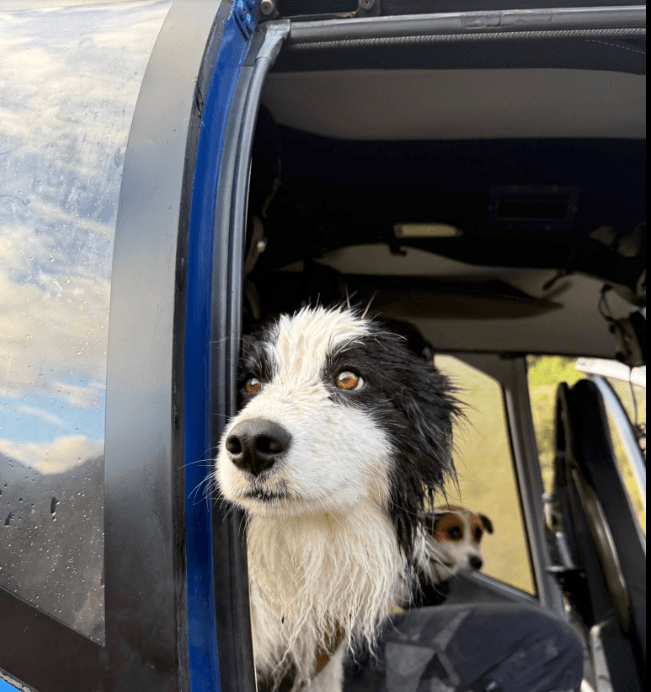
Molly, a four-year-old border collie who had spent her days scaling snowy peaks with owner Jessica Johnston, survived seven days alone in New Zealand's alpine backcountry before a thermal imaging camera lit her up on a helicopter screen within an hour of takeoff on March 31.
The story began on March 24, when Johnston lost her footing at a rocky waterfall in the Arahura Valley on the West Coast of the South Island and fell 55 meters (180 feet). Emergency rescuers airlifted Johnston, who sustained bruises and lacerations, but Molly had vanished into the surrounding wilderness and could not be located during the evacuation. A border collie left alone in terrain that rugged was not a dog likely to wander far from last known ground, but she was invisible to searchers on foot.
Matt Newton, owner-operator of Precision Helicopters New Zealand, based at Hokitika Gorge near the Arahura River, reached Johnston in the hospital and made her a direct offer. "I contacted her in hospital and said I'd go for a look for it," Newton said. He flew three search missions into the terrain around the Campbell Range. "I went and looked for the dog several times and no avail."
Newton and his family then launched a public fundraiser to cover additional flying hours and advanced search gear. Strangers pledged more than NZ$11,000 (approximately $6,300 USD), enough to fund a three-hour flight with thermal imaging equipment. On March 31, Newton loaded a veterinary nurse, volunteer searchers, and a rescue dog named Bingo into the helicopter and returned to the Arahura Valley. "We struck jackpot within about an hour," Newton said. "As we made our way up the river, we could see the dog in the thermal and then we could visually see it."
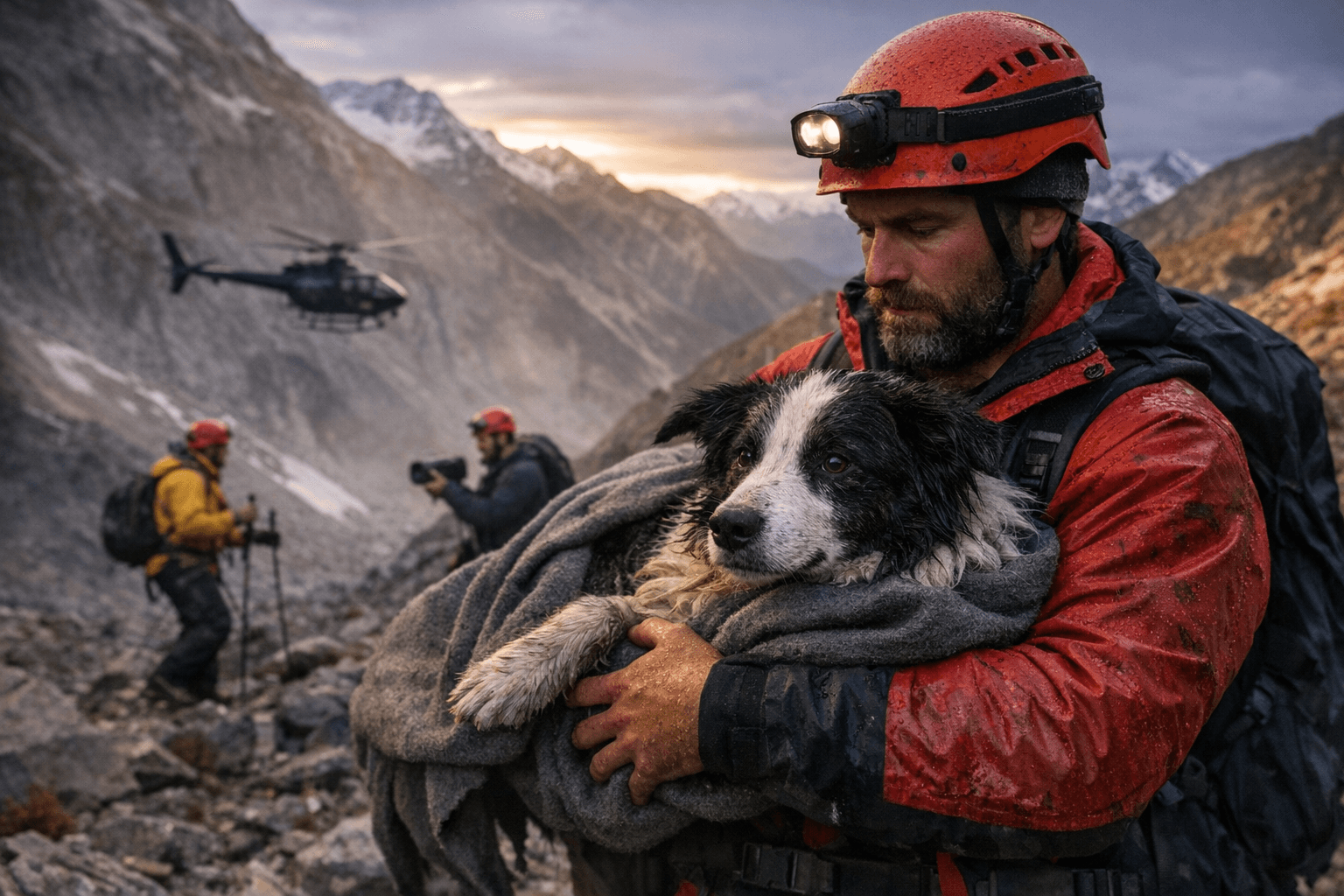
Molly was found just meters from the waterfall where Johnston had fallen, bedraggled and hungry but alive. The helicopter dropped low enough for volunteer Wayne Holmes to climb out onto the terrain below. He coaxed Molly with a piece of sausage, picked her up, and carried her aboard. The photograph of Molly peering from the helicopter door, Bingo tucked under Holmes's other arm, became the defining image of the rescue.
What the Arahura Valley case makes concrete for anyone running a high-drive dog off-leash in backcountry is how quickly a working breed's survival instincts can keep it alive while remaining completely undetectable to ground searchers. Molly held her position near last-known territory for a week and still required thermal technology to locate. That technology was not funded by any government agency; it was funded by NZ$11,000 raised from the public in days. A GPS tracking collar would not have guaranteed Molly's return, but it would have narrowed a week-long search to coordinates, and secure leashing through technical terrain near the waterfall would have changed the outcome entirely before the first mission ever launched.
This article was produced by Prism’s automated news system from verified source data, official records, and press releases, then run through automated quality and moderation checks before publishing. The system is built and supervised by the people who set the standards it runs under. Read our full AI policy.
Did this article answer your question?