Multinational forces train for urgent evacuation of military working dogs in Kosovo
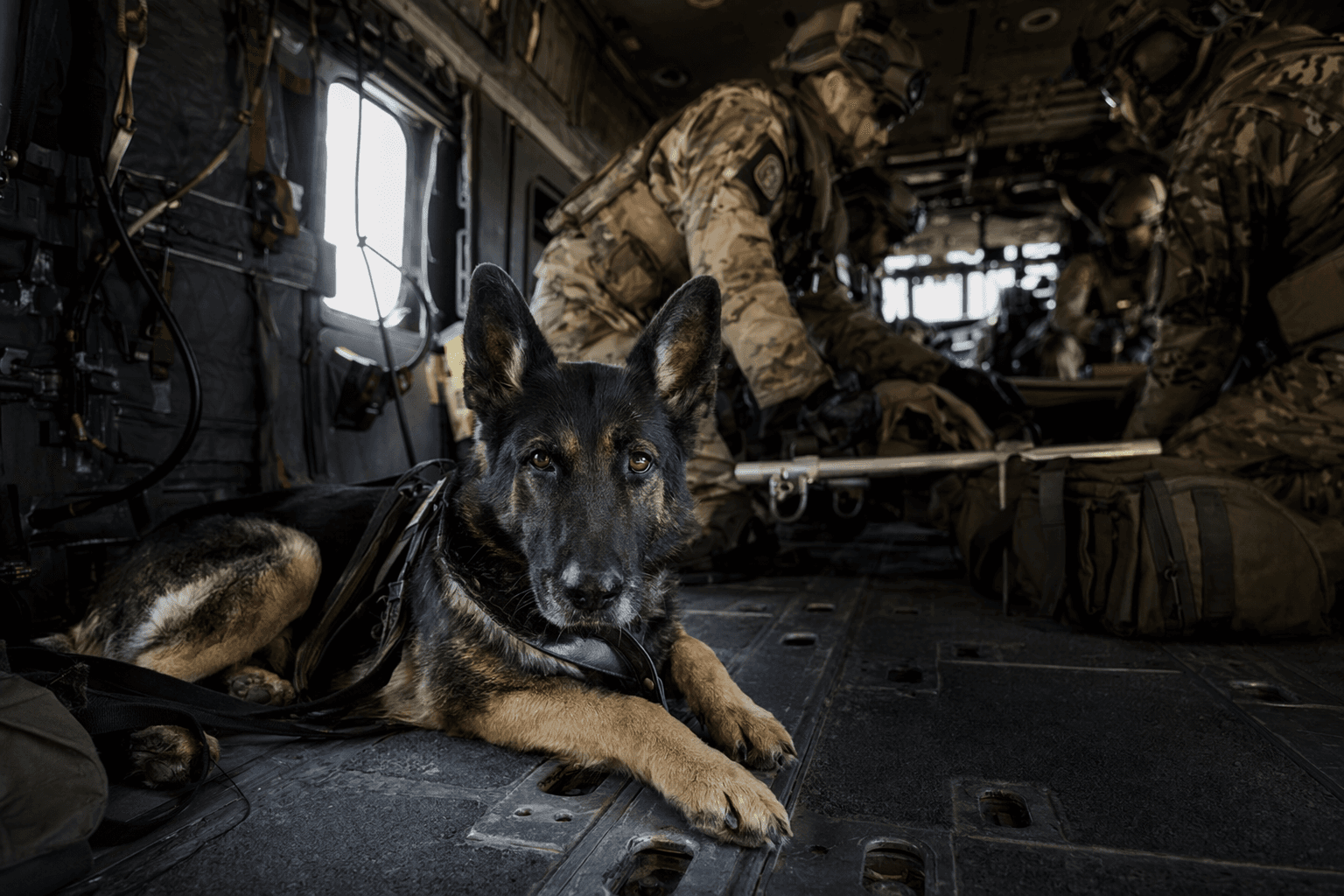
Erek stayed calm in a UH-60 Black Hawk as KFOR crews rehearsed how to rush injured military dogs to surgical care from across Kosovo.
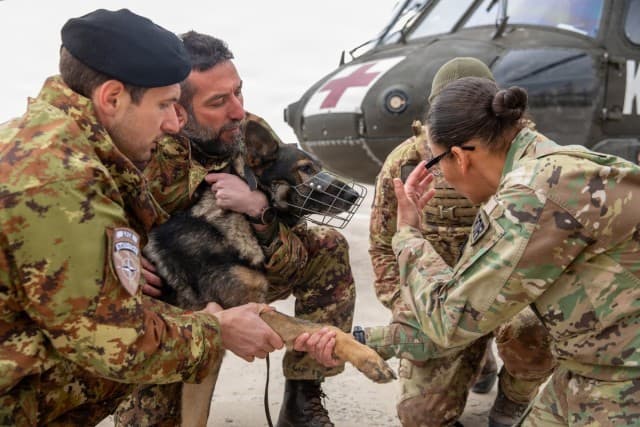
Erek’s calm ride in a UH-60 Black Hawk was the point. On March 17, 2026, multinational forces in Kosovo rehearsed how to move an injured military working dog fast enough to reach surgery, a problem that can turn critical when veterinarians and dogs are not on the same base.
The training brought together U.S. Army Reserve veterinary personnel, Italian Army K-9 handlers, an Italian veterinarian, and aviation crews from the Tennessee Army National Guard’s Detachment 1, Company C, 1st General Support Aviation Battalion, 135th Aviation Regiment. Neo and Erek were the dogs at the center of the exercise, and handlers practiced loading a K-9 into the Black Hawk as part of a larger effort to tighten the steps between the field, the aircraft and the clinic.
Camp Bondsteel is the only place in Kosovo with surgical veterinary capability, which makes every minute matter. Maj. Christine Bui, a U.S. Army Reserve veterinarian, said response times can run from one to two hours because working dogs and veterinary staff are not always housed on the same base. That gap is exactly what the K-9 MEDEVAC drill was designed to close, with the goal of making future air evacuation to Camp Bondsteel faster and more predictable.
The exercise also showed how much this mission depends on coordination across national lines. Maj. Filippo Panigali, Clara Maia, Staff Sgt. Spencer Rhodes, OR-4 Giuseppe Dipietro and OR-4 Simone Trimarchi were among the personnel tied to the training, underscoring that canine evacuation in Kosovo is now being treated as a shared operational task, not an informal arrangement. During the drill, Clara Maia demonstrated IV placement, adding a medical layer to the helicopter loading work and showing how treatment, transport and handler control have to move together.
That broader approach fits the mission KFOR has carried since June 12, 1999, when NATO deployed under United Nations Security Council Resolution 1244. NATO says roughly 4,500 allied and partner troops currently serve in Kosovo, and the scale helps explain why working-dog procedures now matter as much as human casualty plans. KFOR had already run K9 tactical combat casualty care training at Camp Bondsteel on November 21, 2020, and a June 2023 Army article described the KFOR Veterinary team as serving both the base and surrounding communities. A five-day K-9 Tactical Combat Casualty Care course in Celestynów, Poland, from April 7-11, 2025, was described as the only course of its kind for the working-dog community in Europe.
For Neo and Erek, the lesson was simple but serious: a dog that can sprint, search and work under pressure also needs a rescue plan built with the same precision as the mission itself.
This article was produced by Prism’s automated news system from verified source data, official records, and press releases, then run through automated quality and moderation checks before publishing. The system is built and supervised by the people who set the standards it runs under. Read our full AI policy.
Did this article answer your question?