Pentagon Kennel Failures Killed Military Dogs, Sickened Nearly Half at Some Bases
Four military working dogs died of pneumonia traced to their own kennels. At one base, nearly half the dogs were sick at the same time.
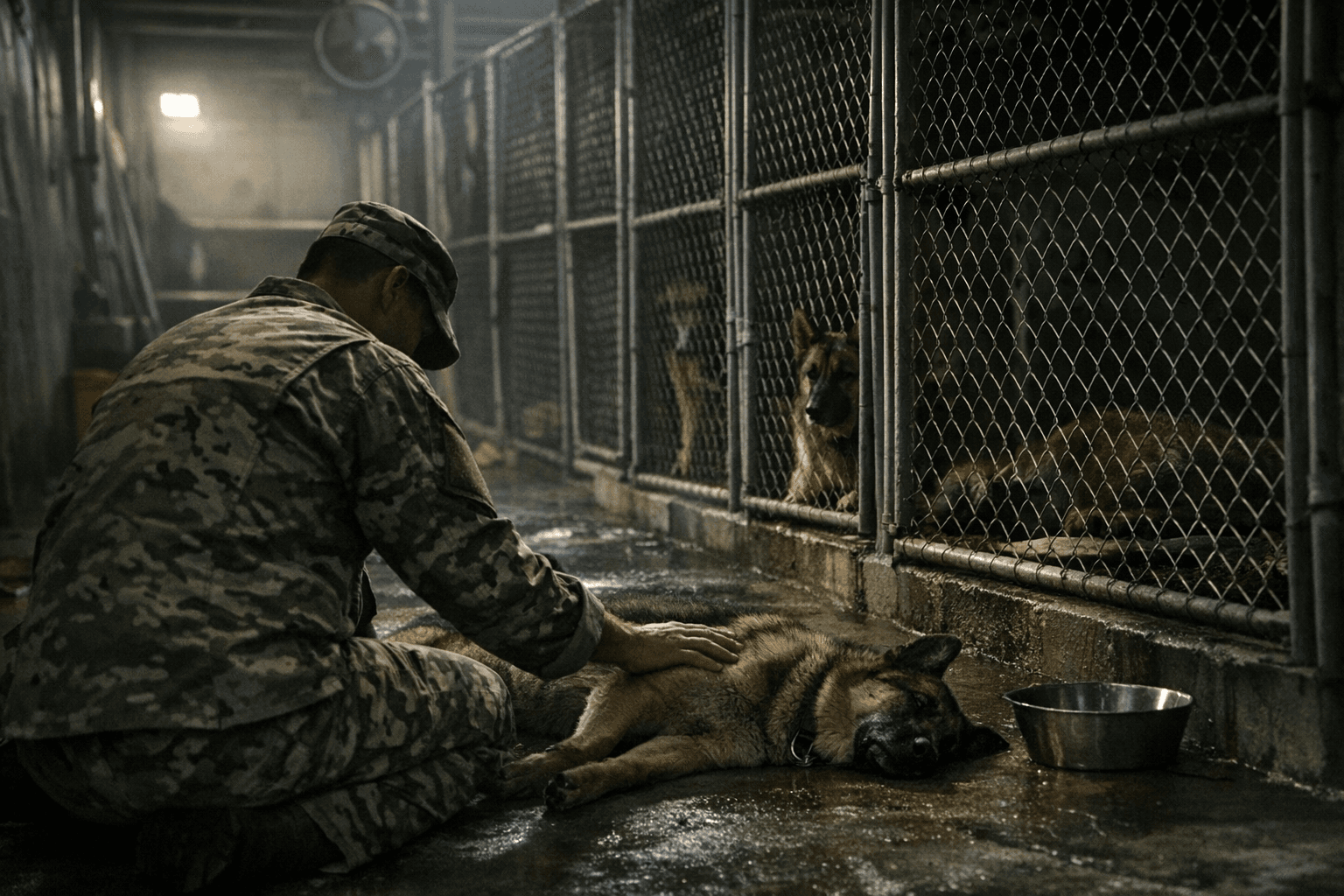
Four military working dogs died of pneumonia between fiscal year 2021 and 2023 because the kennels housing them offered no meaningful protection from weather, mold, or contamination. That finding, documented in a 42-page Department of Defense Inspector General report dated February 17, 2026, covers 12 installations evaluated from April 2024 through September 2025. Ten of those 12 were rated aging and unsatisfactory.
The worst conditions clustered at the Air Force's 341st Training Squadron at Joint Base San Antonio-Lackland, Texas: the single facility that trains and initially houses every military working dog across all U.S. branches. An August 2024 IG site visit found 230 dogs in non-training status there, with disease rates reaching as high as 47% at one location, attributed directly to poor kennel conditions. Open-air runs offered no shelter from heat, rain, or cold. Investigators documented black mold and toxic debris on facility surfaces. Standing waste contaminated the environment. Quarantine areas, essential for any high-turnover working-dog program, did not exist.
The damage radiated outward. Dogs transferred from Lackland to bases in Virginia, North Carolina, Maryland, and California arrived carrying skin disorders, histories of heat injuries, and a gastrointestinal parasite that thrives in facilities not adequately disinfected of feces. Shoddy quarantine procedures at receiving installations allowed those infections to spread further through the kennel populations.
Col. Tom Pool, retired former chief of the Army Veterinary Command, was direct about what the investigation represents: "This is a DOD-level IG, so that's about as bad as it gets."
For the roughly 1,600 MWDs currently in service, all of whom pass through Lackland's 341st pipeline, these deficiencies are not isolated failures. Belgian Malinois, Dutch Shepherds, and German Shepherds selected for high drive and sustained physical intensity have specific welfare requirements: clean housing, consistent veterinary access, mandatory enrichment time, and immediate isolation when illness appears. The IG report found those minimums absent or inconsistently applied across services including the Army, Navy, Air Force, Marine Corps, Coast Guard, and Space Command.
The report issues two formal recommendations to DoD leadership. Animal welfare organizations including Animal Wellness Action, Center for a Humane Economy, and Animal Wellness Foundation are urging immediate implementation alongside capital investment in facility upgrades and expanded veterinary staffing. Wayne Pacelle, president of Animal Wellness Action and Center for a Humane Economy, called the situation deeply distressing given what MWDs are asked to do. The Pentagon has not publicly committed to a specific construction or funding timeline, leaving advocates and handlers watching to see whether the IG's findings produce real structural change or remain a documented failure on paper.
HOW TO SUPPORT MWD WELFARE AND ADOPTION
The 341st Training Squadron at Joint Base San Antonio-Lackland runs the official Air Force Military Working Dog Adoption Program for dogs disqualified from or retired out of the program; information is available through the 37th Training Wing. Mission K9 Rescue (missionk9rescue.org), which operates as Chapter 6 of the US War Dogs Association, coordinates transport and placement for retired MWDs nationwide and does not charge former handlers for that service. The Warrior Dog Foundation, founded by former Navy SEAL Mike Ritland, provides sanctuary for retired MWDs who cannot be rehomed. Animal Wellness Action (animalwellnessaction.org) is running an active campaign urging Congress to fund kennel improvements and includes a direct tool for contacting representatives on the issue.
Know something we missed? Have a correction or additional information?
Submit a Tip