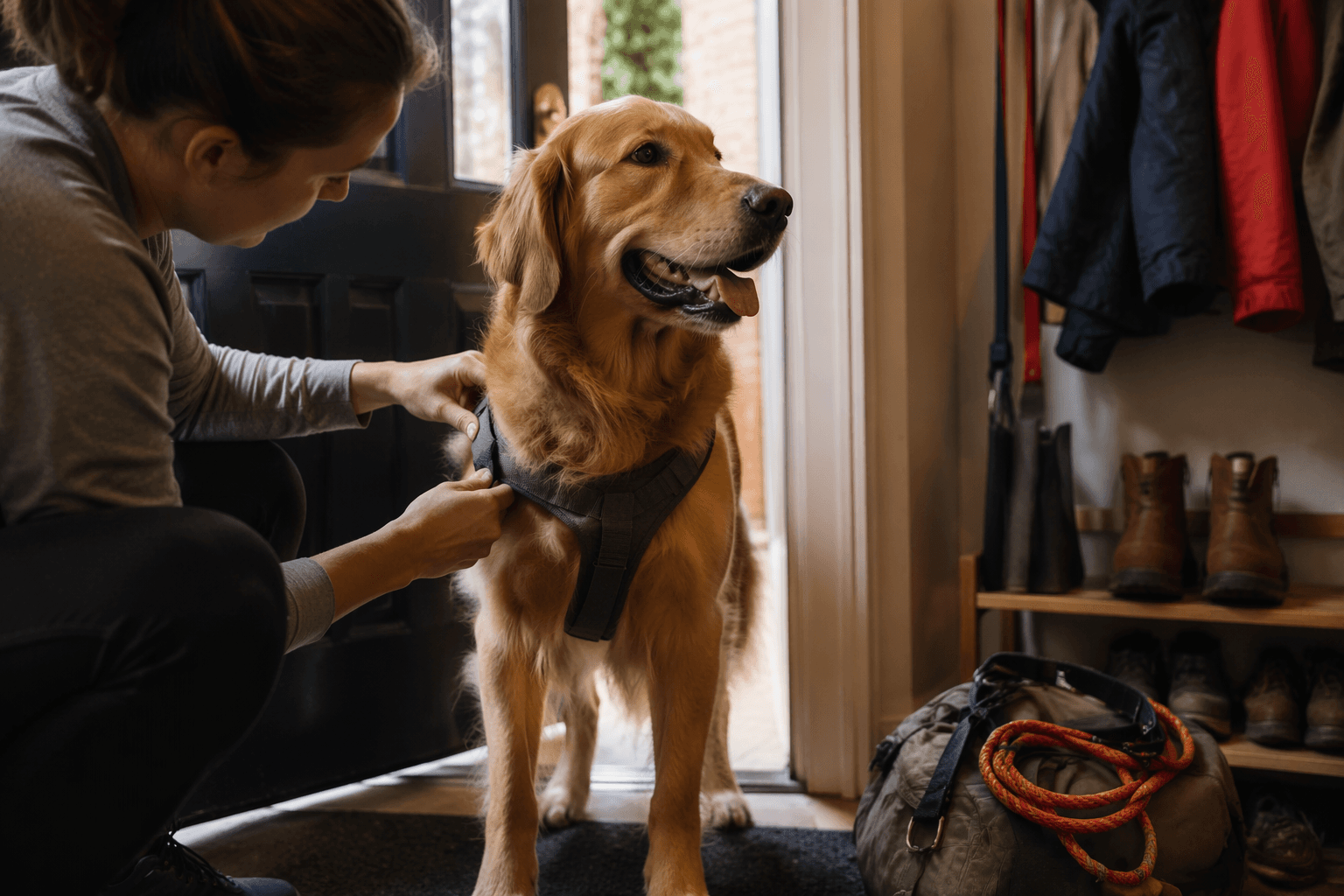
Prancing Paws delights assisted living residents with high-energy dog show
Five hyperenergetic dogs turned spins, rolls and obstacle bursts into an emotional lift at Legends Park Assisted Living, showing how performance work can double as therapy.
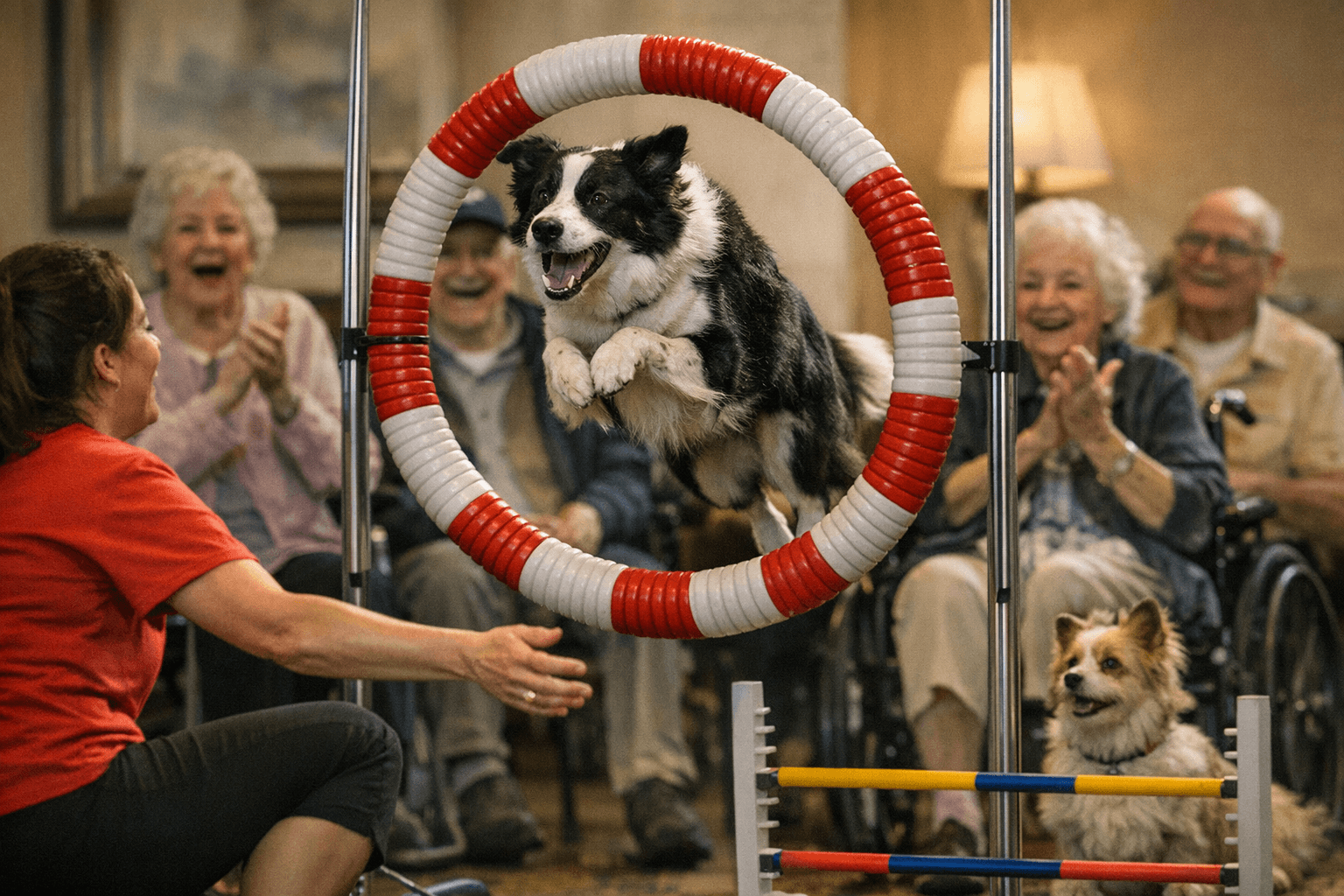
Bella, Kimber, Tucker, Bodhi and Zola turned a high-speed routine into a quiet kind of outreach at Legends Park Assisted Living, where the five-dog Prancing Paws troupe mixed dancing, rolling over, spinning and bursting through obstacles with theatrical storytelling and hands-on interactions.
The visit took place April 19, 2026, at the senior-living community at 1820 Legends Pkwy in Coeur d’Alene, Idaho. Bella, a 6-year-old Labradoodle, joined Kimber and Tucker, 3-and-a-half-year-old Jack Russell terriers, along with Bodhi, an 8-year-old Portuguese water dog, and Zola, a 5-year-old Australian Labradoodle, in a show built around movement, focus and quick rewards.
Prancing Paws is one of two performance teams under Coeur d’Alene Dog Fanciers, alongside Loose Leash Ladies. The nonprofit says it is an American Kennel Club-affiliated club dedicated to responsible dog ownership, responsible breeding practices and education, with objectives that include low-cost training classes and educational programs. That club structure gives the performances a bigger purpose than a novelty visit: the same dogs that work through agility-style movement and obedience cues are also being shaped for public-facing community work.
The performance style matters. The dogs are trained with positive reinforcement and treats, and the routines are structured so the owners can direct each action while the dogs stay engaged enough to entertain a room full of residents. That combination of athleticism and control is what makes the crossover stand out. These are not mellow lap dogs being asked to sit still for a photo. They are active, high-drive dogs showing that discipline can be as important as speed when the goal is to connect with people.
The setting also fits a broader therapy-dog model. The AKC says therapy-dog teams volunteer in places such as assisted living centers, and it distinguishes therapy dogs from service dogs. Research backs that up: a 2025/2026 randomized trial found that a human-plus-registered-therapy-dog visit reduced loneliness in hospitalized older adults, while a human-only control visit did not. A 2023 systematic review also found evidence that animal-assisted interventions can benefit residents in long-term care settings.

For Coeur d’Alene Dog Fanciers, the payoff is practical as well as emotional. The club’s performance teams, training classes and educational programs show how agility, obedience and nose work can feed into community outreach, giving energetic dogs a job that serves both their instincts and the people watching them work.
This article was produced by Prism’s automated news system from verified source data, official records, and press releases, then run through automated quality and moderation checks before publishing. The system is built and supervised by the people who set the standards it runs under. Read our full AI policy.
Did this article answer your question?