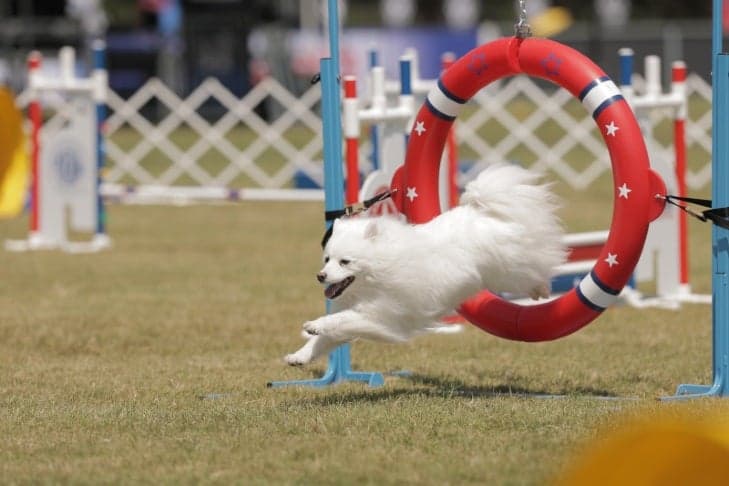
Vet warns hyperactive dogs need exercise, not food, to prevent aggression
Feeding a frantic dog can miss the real problem: underworked minds often turn into aggression, territorial behavior, and road danger.

The food bowl is not the fix
The viral warning lands because it flips a familiar reflex on its head: a hyper dog usually does not need more food, it needs more structure, more work, and a real outlet for the energy already surging through the body. When that outlet is missing, the problem is not just buzzing behavior. It can turn into snapping, guarding, territorial tension, and risky choices near roads, where a dog keyed up by frustration is far less likely to stay safe.
That is why the sharpest part of the post resonates so strongly in dog circles: feeding more does not calm a dog that is mentally underfed. Veterinary guidance points in the same direction, but with a clearer framework. The issue is not simply "too much energy." Often it is too little age- and breed-appropriate work, too little mental stimulation, and too little management around the situations that keep pushing the dog toward overload.
When "hyper" is really unmet need
The American Kennel Club says hyperactivity is one of the most commonly reported behavioral concerns among Canine Good Citizen and S.T.A.R. Puppy owners. That matters because it shows how often active dogs are misunderstood as being difficult when they may simply be under-occupied, under-trained, or physically and mentally shortchanged.
The AKC also warns that some dogs that seem hyper may actually have a medical condition, which is why a veterinary exam matters before anyone assumes the answer is just more exercise or more food. A dog that cannot settle can be dealing with pain, illness, or another health issue that changes the whole picture. In other words, the first read on a frantic dog should not be "bad manners." It should be: what is driving this behavior, and is the dog actually healthy?
Exercise has to do more than tire paws
The Merck Veterinary Manual puts the first step in treating abnormal repetitive behaviors exactly where experienced handlers often land after trial and error: make sure the dog gets age- and breed-appropriate exercise and mental stimulation. That distinction matters. A high-drive dog can log miles and still come home unsatisfied if the work does not ask for thinking, focus, and impulse control.
VCA Animal Hospitals adds an important caution here: play naturally provides physical exercise, mental stimulation, and social interaction, but safety depends on avoiding play interactions that lead to excessive arousal. That is the trap many owners fall into with excitable dogs. The game seems productive because the dog looks busy, but if the session cranks arousal higher and higher, the dog may come off the field or out of the yard more wired, not more regulated.
That is the practical lens for spotting the difference between "too much energy" and "too little structured work." A dog that settles after a good walk, a training session, scent work, or another mentally demanding task is showing normal drive being channeled. A dog that only gets more frantic after unstructured hype may be telling you the routine is feeding adrenaline, not balance.
Aggression grows when the cause is ignored
The stakes rise fast when hyperactivity bleeds into aggression. The American Veterinary Medical Association has reported that veterinary behaviorist Karen Overall sees aggression fundamentally as an anxiety disorder, and in that 2022 reporting she said, "I've never not treated aggression with medication, because aggression is fundamentally an anxiety disorder." That is a reminder that behavior is not just about willpower or discipline. Anxiety can be the engine underneath the display.
The AVMA also notes that aggression is serious because it can injure people, damage the human-animal bond, and affect decisions about whether a dog can stay in the home or must be rehomed. That is the daily-life consequence angle the viral post gets at when it warns about territorial behavior and road risk. A dog that is chronically overaroused is not just annoying. It can become harder to handle, harder to read, and much more dangerous in ordinary moments like opening a gate, crossing a driveway, or passing another dog on leash.
VCA says aggressive behavior often persists unless the underlying cause is identified and behavior is modified, and each aggressive display may increase the chance of future incidents. That creates a grim feedback loop. One charged encounter can teach the dog that barking, lunging, or snapping works, or at least that it is part of the pattern, which makes the next incident more likely.
Enrichment is not spoiling, it is welfare
Fear Free Happy Homes frames enrichment as something broader than entertainment. It is about meeting a dog’s physical, emotional, and mental needs in ways that reduce stress and build confidence. That is a useful correction for anyone still hearing the word "exercise" and thinking only of burning calories.
- Physical movement that fits the dog’s age and breed
- Mental work that asks for problem-solving, not just chaos
- Calm, structured play that does not send arousal through the roof
- Environmental management around triggers, traffic, and mealtimes
- Veterinary input when the dog seems unable to settle for reasons that do not fit a simple behavior story
The most effective routines for high-energy dogs usually combine several pieces:
That last piece matters more than people think. Feeding a dog in a stressful, territory-triggering setting can turn mealtime into a conflict rather than a reset. The viral warning about not using food dumps to calm a frantic dog lines up with that reality: if the environment is already loaded with stress, competition, or road-side stimulation, tossing food into the mix does not solve the problem. It can add pressure.
What a calmer day actually looks like
For a hyper dog, the win is not exhaustion. The win is regulation. That means the dog gets enough exercise to take the edge off, enough brain work to satisfy instinct, and enough management that the environment does not keep provoking the same reaction over and over again.
That is the common thread running through the guidance from the AKC, Merck Veterinary Manual, VCA, AVMA, and Fear Free. Hyperactivity is often a clue, not a personality trait. Sometimes it signals a medical issue. Sometimes it reflects a dog whose needs are not being met. And when aggression enters the picture, the answer is not to simply pour in more food and hope the dog settles. The answer is to treat the behavior as a whole-dog problem, because that is what it is.
Know something we missed? Have a correction or additional information?
Submit a Tip