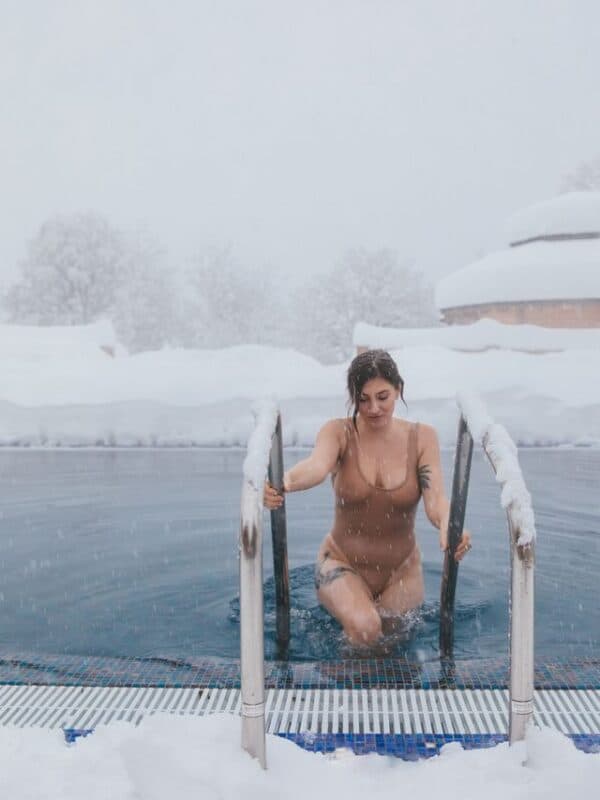
Alaska’s cold plunge revival links wellness trend to deep sauna heritage
Alaska’s plunge revival isn’t borrowed wellness theater. It grows from sweat lodges, steambaths, and a climate that makes hot-cold ritual feel native.
A ritual that fits the landscape
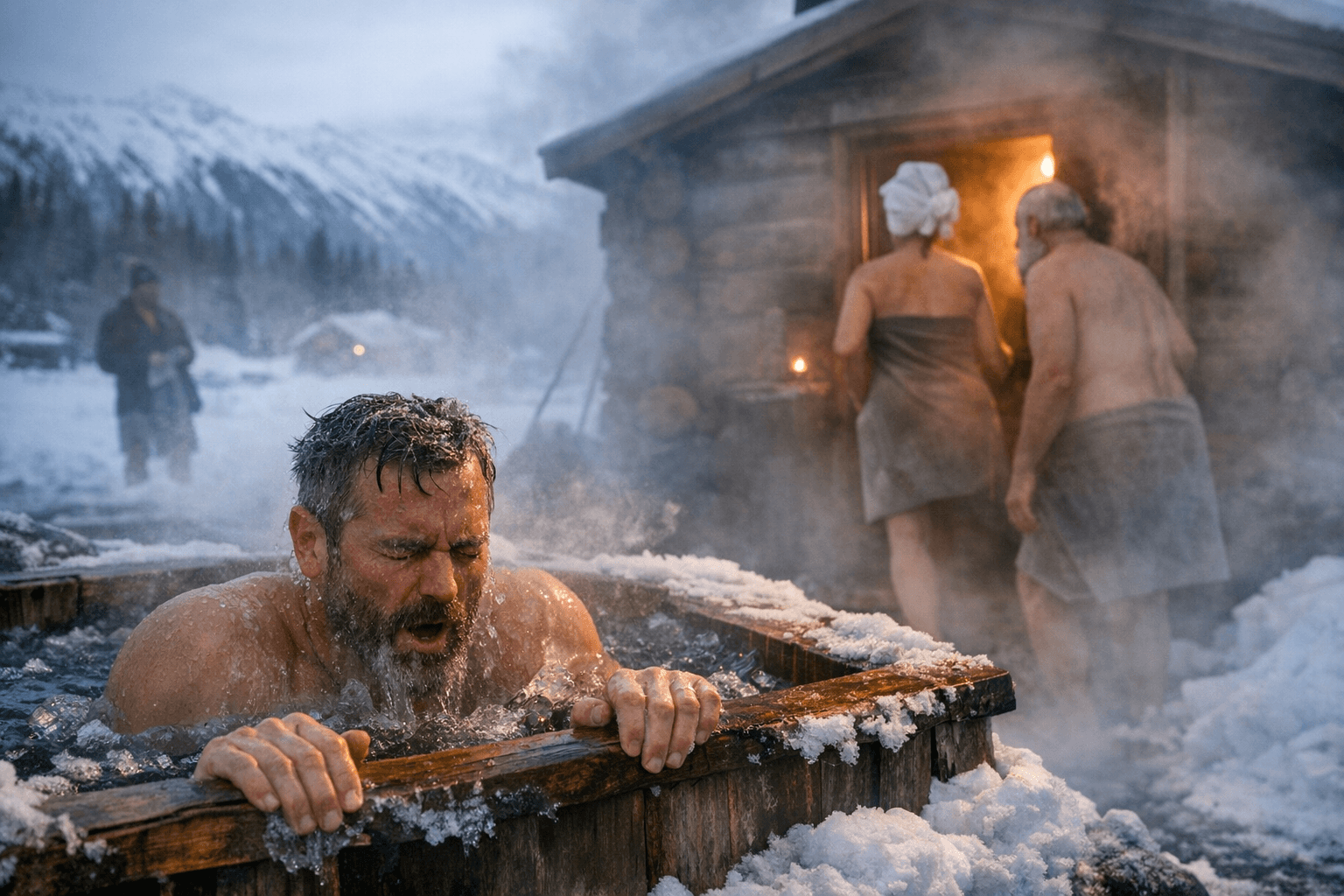
Step into Alaska’s cold-plunge moment and the first thing to notice is that it does not feel imported. The state’s current wave of wood-fired saunas, icy-water dips, and backyard recovery setups is landing in a place where heat, steam, and cold have long been part of daily life, not just weekend self-improvement. That is why the resurgence feels bigger than a wellness fad: it is brushing up against a deeper Alaskan habit of using the body, the weather, and shared space to reset.
The clearest sign of that shift came through Alaska Public Media’s *Hometown, Alaska* conversation on April 13, hosted by Kim Sherry with Kali Bennet, owner of The Waterworks. The discussion treated sauna and cold plunge culture as something that has roots, lineage, and local shape. In Alaska, the appeal is not simply that a plunge is intense. It is that the practice makes cultural sense in a place where hot and cold have always been part of how people endure, recover, and gather.
Why Alaska keeps returning to steam
The deeper history matters here. The Alaska Native Knowledge Network says steambaths have been important in Alaska for centuries, serving physical, spiritual, and communal purposes. Alaska Magazine adds that Alaska steambath culture predates Western contact, which places today’s revival inside a much longer story rather than at the start of one. An archival Alaska State Library photo from 1940 documenting a native steam bath in Kalskag gives that continuity a concrete image: this is not a new scene with a new vocabulary, but an old one reappearing in modern form.
A peer-reviewed NCBI article on traditional healing at Serpentine Hot Springs strengthens that picture by describing steam bathing and hot springs bathing as culturally significant healing practices among Alaska Native people. In other words, the current enthusiasm for recovery is not a sudden discovery of something Alaska never had. It is a contemporary expression of practices that already carried meaning in the state’s social and spiritual life.
That continuity also explains why the modern version spreads so naturally through community networks. In June 2025, Alaska Public Media reported on a Homer cold-plunge group that found community, peace, and confidence in the practice. The article also made clear that researchers still say the evidence for broad health benefits remains limited. That combination, a strong social payoff with still-debated physiological claims, is very Alaska: practical, communal, and skeptical of overstatement.
What makes Alaska’s version different from lower-48 wellness hype
The state’s plunge culture is not just a cooler version of social-media wellness. It is being shaped by place. Alaska’s climate makes the hot-cold cycle feel immediate and legible, and the cultural memory around steam gives it a stronger foundation than a lifestyle accessory imported from somewhere else. When people gather around wood-fired saunas and step into icy water, they are participating in something that feels both contemporary and inherited.
The global comparison that helps explain this best is Finland. UNESCO says sauna culture there is integral to the lives of the majority of the Finnish population. Another source notes Finland has about 3.3 million saunas for about 5.5 million people, a ratio that shows how fully the practice is embedded in everyday life. That matters because Alaska’s most durable sauna culture is looking less like a niche wellness market and more like a place where the sauna is becoming part of normal life, the same way it is in Finland.
That is why the current revival across Alaska is so interesting. The Hometown, Alaska conversation described sauna culture as reviving around the state and beyond, with wood-fired saunas and cold plunges in icy waters drawing fresh attention. But the most revealing part is not the attention itself. It is the way Alaskans are reinterpreting it through local history, climate, and community rather than treating it as a borrowed trend with a fixed formula.
The local voices behind the revival
Kali Bennet’s presence in the Alaska Public Media conversation matters because it grounds the story in an actual operator, not just an abstract trend. The Waterworks stands as a real piece of the state’s sauna ecosystem, and that makes the discussion feel lived-in rather than promotional. People like Bennet are the ones translating tradition into present-day spaces where newcomers, longtime users, and the merely curious can all make sense of the practice.
That human layer is what gives Alaska’s plunge culture staying power. A social-media challenge can make a splash for a season, but a practice attached to place, ownership, and community can endure. In Alaska, the conversation around sauna is not just about feeling better after a workout. It is about shared ritual, local climate, and the old idea that heat and cold are not opposites to avoid, but forces you can move between with purpose.
Why the science story is part of the culture story
The enthusiasm has to be held beside the caution. The National Weather Service warns that cold water can be dangerous even when the air does not feel severe, because sudden immersion can trigger cold shock, rapid breathing, and blood-pressure changes. That warning is especially important in Alaska, where the water is not a metaphor. It is real, immediate, and capable of turning a recovery ritual into an emergency if people underestimate it.
The research picture remains mixed too. A 2025 PLOS One systematic review found that cold-water immersion has become popular as a wellbeing intervention and examined cold showers, ice baths, and plunges of 15°C or colder. But popularity is not the same as proof. Alaska Public Media’s reporting from Homer underlines that point: people may find community, calm, and confidence in the practice even as researchers stop short of promising universal benefits.
That tension may actually be part of the practice’s appeal in Alaska. The ritual is humble enough to survive scrutiny. It does not need to promise transformation to matter. It can be about showing up to a sauna, bracing for the plunge, and emerging with a clearer head, a warmer body, and a stronger sense of belonging.
From private tubs to public possibility
The revival is also moving beyond backyards and into civic imagination. A July 2024 Alaska Public Media report said a proposed Anchorage sales tax could help fund a public sauna, which shows how far the idea has traveled from novelty. A public sauna proposal suggests that heat, steam, and recovery are not just personal wellness choices anymore. They are becoming part of conversations about shared amenities, community space, and what local investment can look like in Alaska.
That civic angle is one more reason the state’s plunge culture feels different from lower-48 hype. It is not just about the body in isolation. It is about what communities build around the practice: a place to gather, a reason to return, and a ritual that makes sense in a state where winter, water, and endurance are always part of the story.
In Alaska, the cold plunge revival is not starting from zero. It is standing on centuries of steambath tradition, Indigenous healing practice, Finnish precedent, and the simple fact that this landscape has always asked people to know heat and cold intimately. That is why the current surge feels less like a fad and more like a culture remembering itself.
This article was produced by Prism’s automated news system from verified source data, official records, and press releases, then run through automated quality and moderation checks before publishing. The system is built and supervised by the people who set the standards it runs under. Read our full AI policy.
Did this article answer your question?