Ice baths may get easier as the body habituates to cold
The first plunge is the worst because the body fires a cold-shock reflex. After a handful of short immersions, breathing can settle and the same tub may feel less hostile.
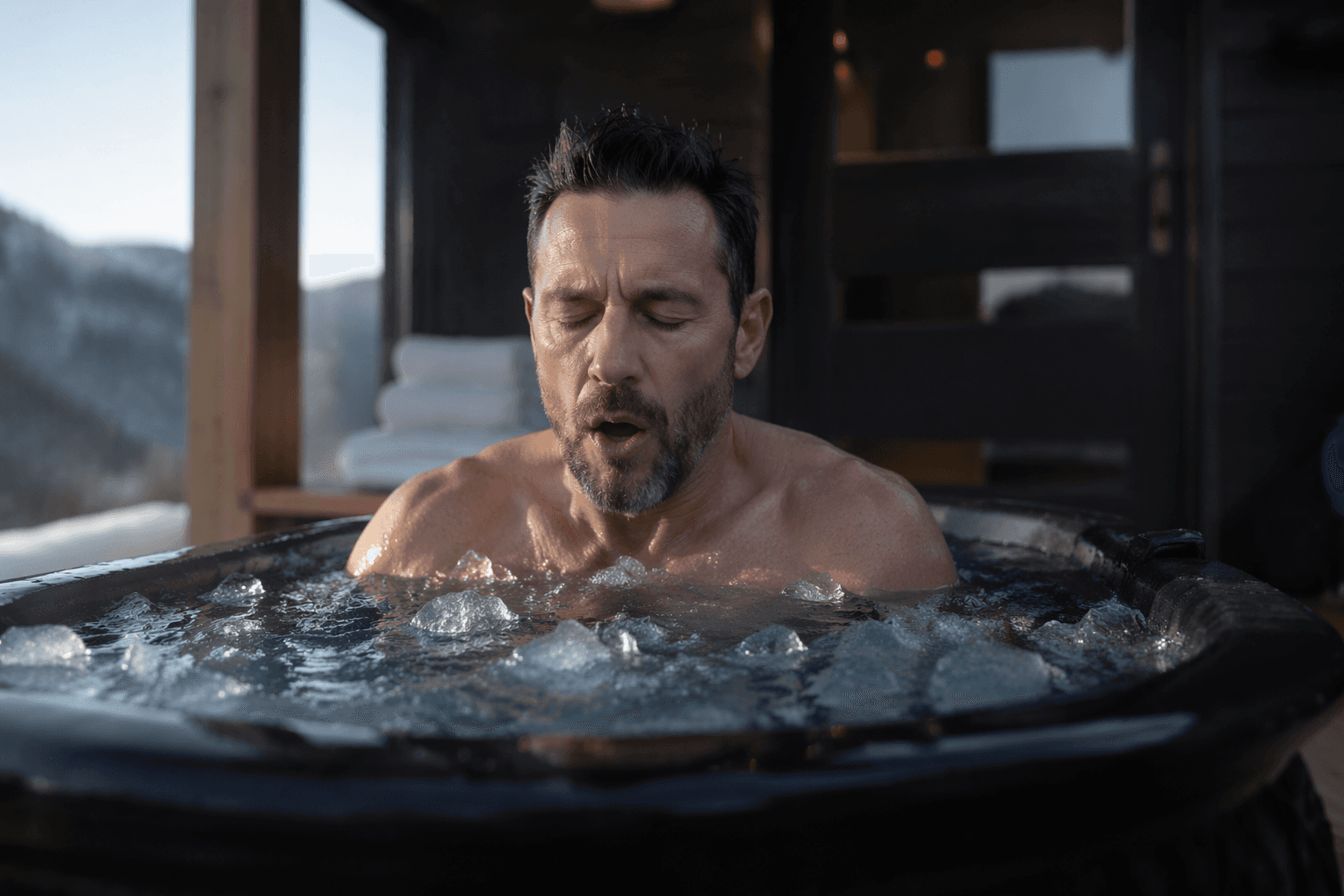
On first exposure to cold water, breathing rate can jump by more than 110% and ventilation by more than 600%, a systematic review and meta-analysis on habituation of the cold shock response found. That cold-shock response can bring involuntary gasping, rapid breathing, sympathetic activation, and cardiovascular strain, which is why the opening seconds feel far more dramatic than the final stretch of the plunge.
What actually changes after the first few sessions
Cold habituation is not vague “toughness.” In *Human cold habituation: Physiology, timeline, and modifiers*, cold habituation is a measurable reduction in the body’s reaction to the same cold stress, and the size of that change depends on the number, duration, and severity of the exposures. In practice, that means repeated plunges can change the response itself, not just your mindset.
The biggest shift is usually in breathing. As habituation builds, the gasping reflex gets less chaotic, the urge to inhale sharply can ease, and the whole entry into the tub becomes less of a fight with your own nervous system.
Discomfort changes too. The skin still feels cold, but the same water temperature may stop feeling instantly overwhelming once the body has seen it a few times. Shivering can also be delayed or blunted, and recovery after the session may feel less jagged because the initial shock is smaller.
The steep part of the learning curve
The timeline matters because the body often adapts faster than new plungers expect. Experiments have shown people can reduce the cold-shock response by 50% in as few as five two-minute immersions. Repeated cold-water immersion can produce cold-shock-response habituation after about four immersions.
That does not mean the fifth plunge feels easy for everyone. It does mean the early sessions are usually the steepest part of the curve, especially when the exposures are short, repeated, and controlled.
This is also where a lot of newcomers misread the experience. They assume the final 30 seconds in the tub should get easier first, when in fact the biggest change is usually at the start. Once the body stops treating the initial drop in skin temperature as a surprise, the rest of the session becomes far more manageable.
Why some plunges adapt faster than others
Habituation is different from other forms of adaptation. Habituation is a short-term reduction in response to a repeated stimulus. Metabolic or insulative acclimatization is different: those are more prolonged changes that do not map cleanly onto the quick rhythm of an ice-bath habit.
That distinction matters because not every cold protocol produces the same result. Short, repeated, controlled immersions are not the same as a single long, extreme plunge, and the response depends on how often you enter the water, how long you stay in, and how severe the cold is. A person doing five two-minute immersions is training a different response than someone sitting in a tub far longer once a week.
Other factors also shape the curve. Water temperature, how much of the body is submerged, and how suddenly the immersion begins all influence how strong the cold-shock response feels.
What normal acclimation feels like
The easiest way to tell acclimation from bravado is to track the body’s first response, not just willpower. In a normal adaptation pattern, the entry still feels sharp, but the gasping settles faster, the breathing becomes more controlled, and the session stops feeling like a panic drill.
Recovery after the tub often improves alongside that change. If the cold-shock response is smaller, the nervous system has less of a spike to recover from, and that can make the minutes afterward feel less dramatic.
Cold-water use dates back to Ancient Egypt around 3500 BCE, and physicians such as William Cullen and James Currie used cold water therapeutically in the 1700s.
When it is normal, and when it is too much
Habituation lowers risk, but it does not erase it. National Weather Service and cold-water safety guidance warn that sudden immersion can trigger gasping and rapid breathing, which raises drowning risk if water is inhaled during that first reflex. That is why even experienced cold-water users can get into trouble if they push the temperature, duration, or exposure area too far.
The practical warning sign is not simply discomfort. It is a response that stays erratic, turns into uncontrolled breathing, or leaves you feeling overwhelmed instead of briefly shocked. If the cold-shock response never settles, the session may be too aggressive for the level of adaptation you have built.
This article was produced by Prism’s automated news system from verified source data, official records, and press releases, then run through automated quality and moderation checks before publishing. The system is built and supervised by the people who set the standards it runs under. Read our full AI policy.
Did this article answer your question?