Can Korea create the next Labubu, as character IP turns global?
Labubu is now the standard Korea’s character studios are chasing, but Pinkfong’s whiplash shows hype alone does not build an export machine.

The Pinkfong listing made the question impossible to ignore: can Korea build a character IP that behaves like Labubu, not just in fandom, but in revenue, licensing, and staying power? That is the real benchmark now. Labubu has become shorthand for the kind of character that can jump from toy shelf to cultural object to global business asset, and Korean studios are trying to copy the parts of that playbook that actually travel.
Labubu set the bar because it proved the character itself can carry the company
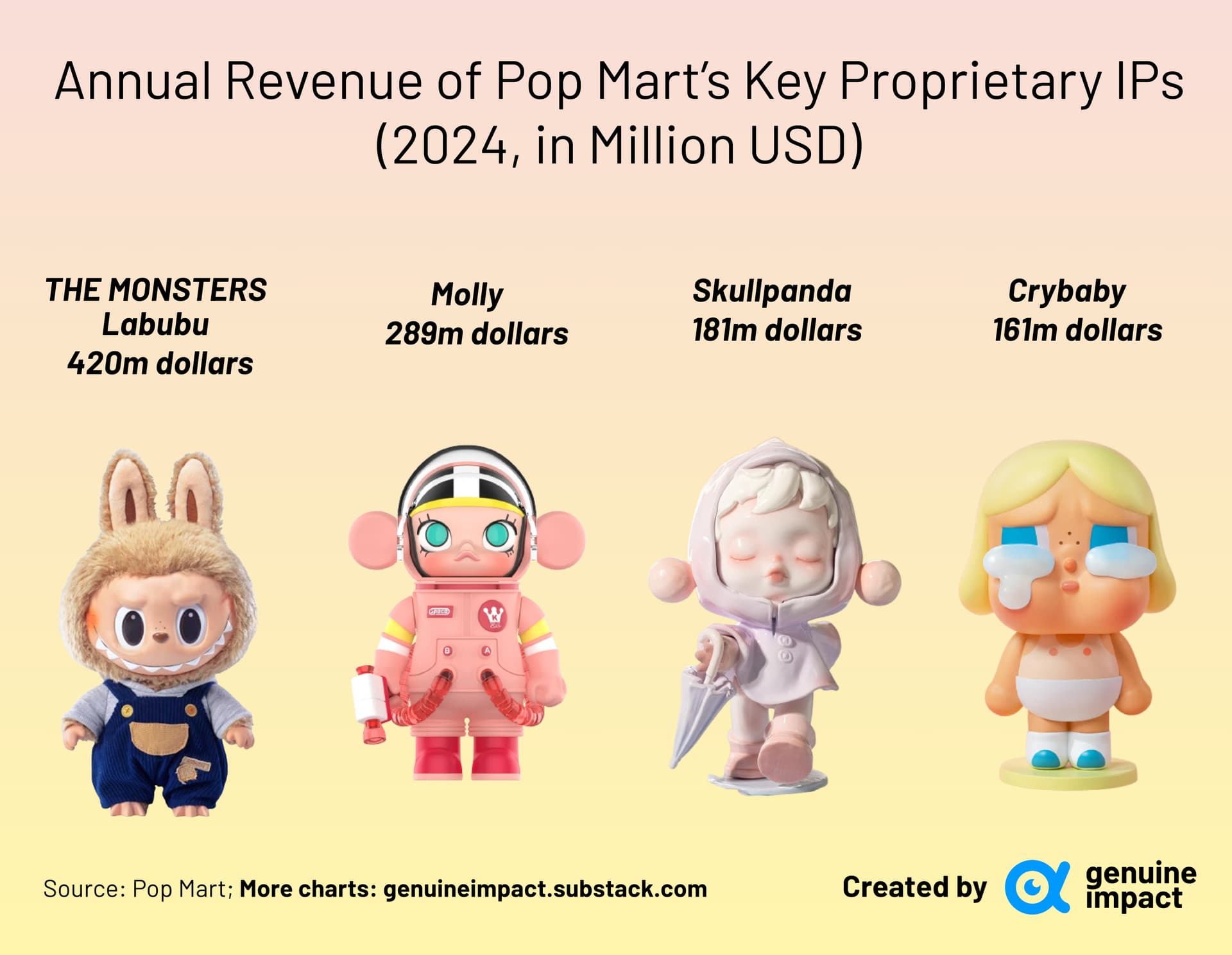
Labubu was created by Hong Kong illustrator and toy designer Kasing Lung as part of The Monsters series, then commercialized by Pop Mart. That matters because the character did not succeed as a one-off product line. It became a repeatable IP engine, with Pop Mart reporting 2024 revenue of RMB 13.04 billion, up 106.9% year on year, and saying The Monsters alone generated RMB 4.81 billion that year.
The bigger signal is how the numbers kept climbing. Later reports put The Monsters and Labubu franchise sales at RMB 14.16 billion in 2025, with Labubu becoming Pop Mart’s first IP to enter the 10-billion-yuan club. That is why Labubu is now used as the benchmark in every serious conversation about character IP: it is not just a cute design, it is a proof point for scarcity, fandom, and monetization working together at scale.
What Korean companies are copying from the Labubu formula
The first thing Korean character companies are clearly chasing is scarcity. Labubu’s appeal is not only that people like the design, but that not everyone can get it instantly. That controlled access creates collector behavior, drives resale heat, and turns a purchase into a hunt.
They are also copying the blind-box mentality, even when they do not say it out loud. The underlying logic is the same: make the drop feel finite, make the reveal feel like a small event, and make the character feel more collectible than consumable. That is the exact mechanism that turns casual interest into repeat buying.
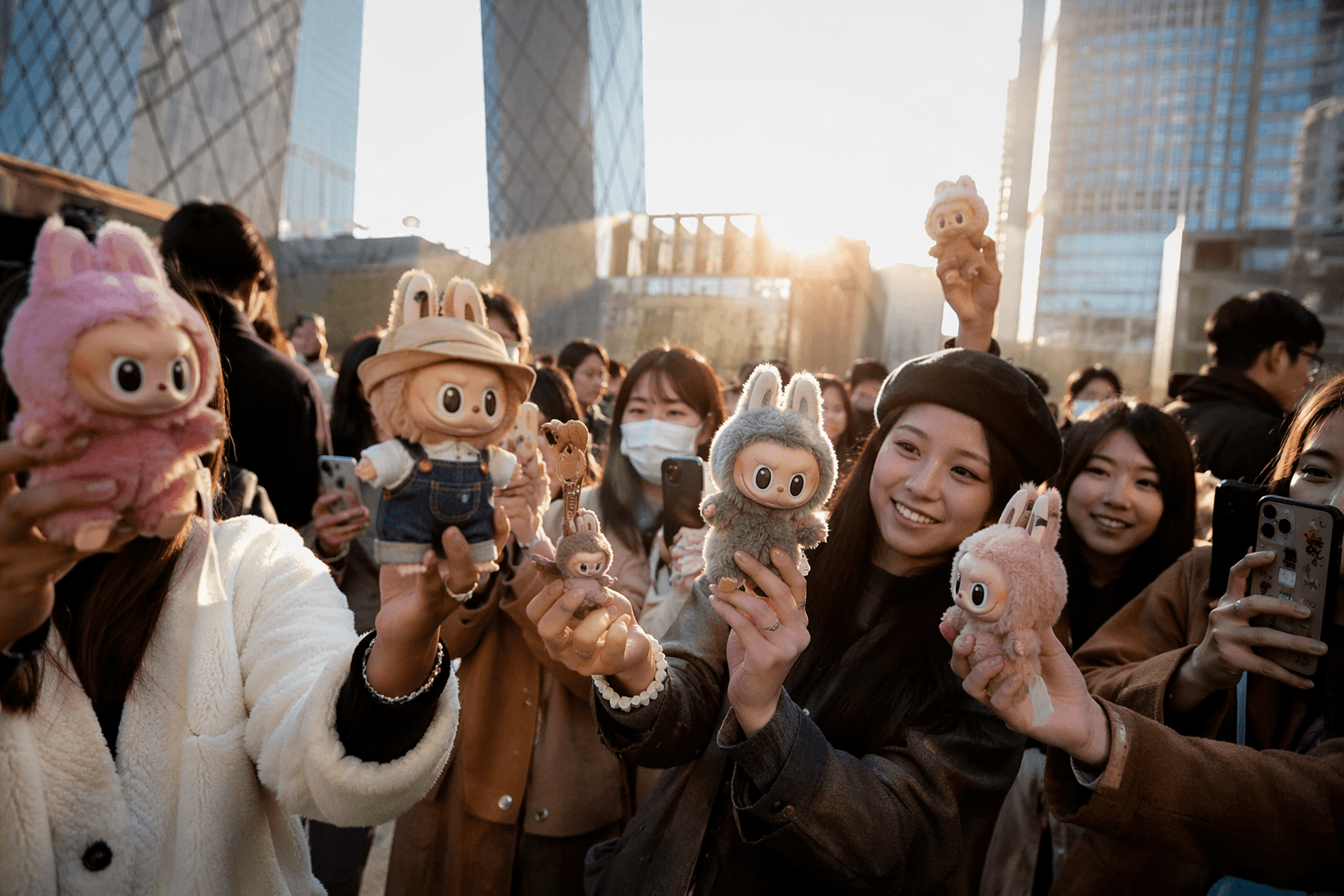
The third piece is social virality. Labubu works because people do not just buy it, they display it, post it, customize it, and treat it as a signal. Korean studios are trying to build characters that can move through the same social channels, where the product is only half the story and the image does the rest.
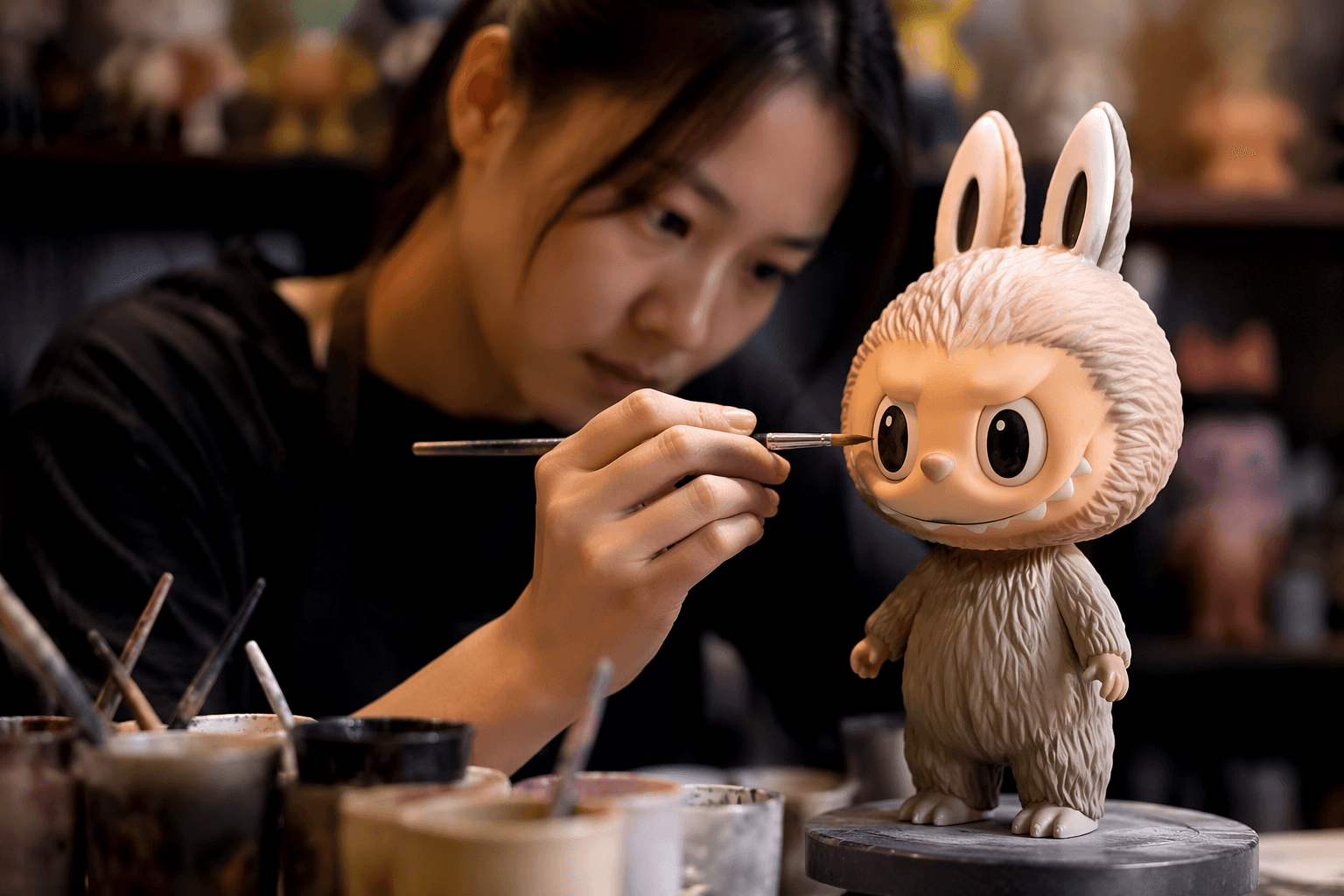
Then there is artist identity. Labubu is tied to Kasing Lung, and that creative origin gives the character a real authorial edge instead of the flatness that comes with generic mass-market mascots. Korean companies understand that the creator story can deepen trust, particularly when they want to sell the IP abroad as more than domestic fan service.
Where Korea is misreading the formula
The main mistake is assuming Labubu was mainly a retail flashpoint. It was not. The character only became valuable because the business underneath it was built to convert attention into durable product demand. If a company only copies the hype cycle, it gets a spike. If it copies the IP structure, it gets a franchise.
Pinkfong is the cleanest cautionary example. The company priced its IPO at KRW 38,000 per share and raised KRW 76 billion. Shares surged more than 60% intraday on debut on November 18, 2025, then fell to as low as KRW 32,500 by November 21, slipping below the offer price. That kind of move tells you exactly where the market is skeptical: recognition is not the same thing as repeatable monetization.
The other misread is overvaluing domestic fame. Korea already has huge character economics, but the growth story is increasingly overseas. KOCCA puts South Korea’s character industry at about KRW 6.9688 trillion in 2024, while character exports came in at about USD 460.6 million, down 5.9% year on year. The opportunity is not just making a famous character in Seoul. It is making one that can be licensed across multiple markets without losing momentum.
The real business model is bigger than merchandise alone
KOCCA’s framing of the industry is useful because it shows where the business is heading. The model is now a loop of world-building, merchandising, location-based entertainment, and digital media. That is much closer to a franchise system than a toy business.
That distinction matters for Korean studios trying to follow Labubu. A character that only sells plush, keychains, or limited drops may create noise, but it will not automatically become a global asset. The companies that win will build a pipeline where the character appears in content, physical retail, live activations, and licensing, so each touchpoint reinforces the others.
KOCCA’s own role reinforces that point. The agency says it supports production, distribution, overseas expansion, business growth, training, R&D, policy financing, and policy study across character, comics, animation, and related sectors. That tells you character IP in Korea is not being treated as a novelty category. It is being treated as a strategic export sector.
Pinkfong, BT21, and the next test for Korean IP
Pinkfong and Baby Shark show how far a Korean character can travel, but they also show how hard it is to turn recognition into durable public-market confidence. Pinkfong’s IPO plan to fund new characters, premium animations, and global pop-up stores is exactly the right direction, because it points beyond one hit and toward a broader character slate.
BT21 belongs in the same conversation because it proved a Korean-born character brand can move internationally when it is attached to a broader cultural flywheel. The common thread is not just cuteness or memeability. It is the ability to create demand in multiple formats and across multiple countries at once.
If Korea is going to produce the next Labubu, the collector signals will be obvious. Look for sustained sell-through after the first drop, not just day-one buzz. Look for licensing outside home markets, not just local fandom. Look for a character that can support retail, content, and pop-up experiences without collapsing into a one-season trend.
That is the real question now. Korea does not need another character people recognize for a week. It needs one that can do what Labubu already did: turn attention into a durable, exportable collecting habit, and make the market believe the character itself is the asset.
This article was produced by Prism’s automated news system from verified source data, official records, and press releases, then run through automated quality and moderation checks before publishing. The system is built and supervised by the people who set the standards it runs under. Read our full AI policy.
Know something we missed? Have a correction or additional information?
Submit a Tip