GQ revisits the Labubu boys, a year after the viral toy boom
A year on, the Labubu boys look less like a meme and more like the first visible edge of a lasting style-and-collector segment.
The one-year question
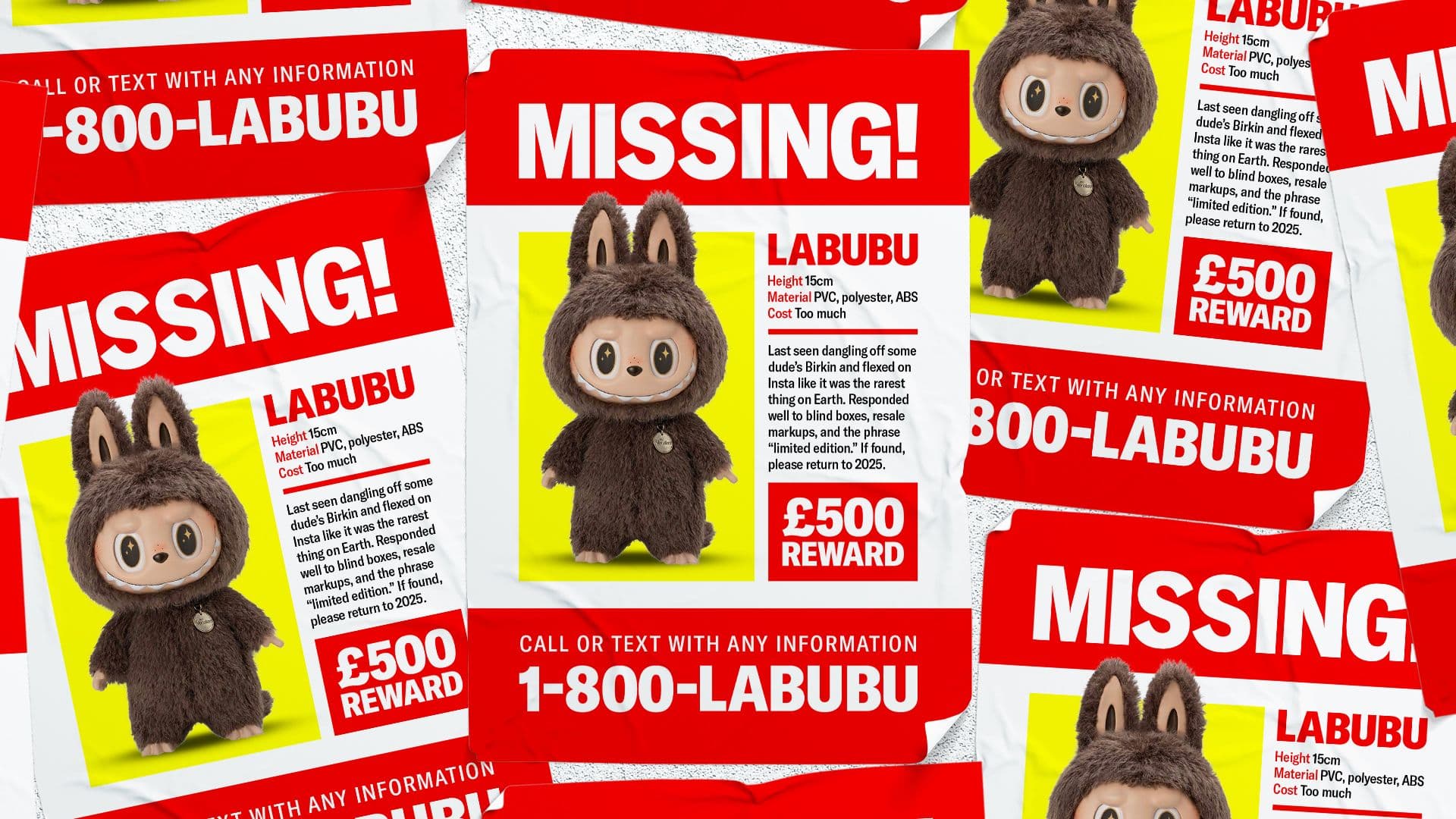
British GQ’s one-year follow-up lands on the real story behind Labubu’s viral rise: not just who bought the toy, but who wore it, posted it, and turned it into a sign of taste. That is why the phrase “Labubu boys” still matters. It points to a male-facing scene that helped make the character feel less like a cute oddity and more like a cultural marker with fashion credibility.
What GQ is really checking is whether that first wave was a flash of internet styling or the beginning of a durable buyer segment. A year later, the answer looks closer to the second. The toy still sits at the intersection of accessory, status symbol, and inside joke, which is exactly why it has lasted long enough to deserve a retrospective rather than a eulogy.
How Labubu became more than a toy
Labubu’s backstory gives the character a stronger spine than a typical viral collectible. Pop Mart says Kasing Lung created the fairy world behind The Monsters in 2015, drawing on Nordic mythology, and Labubu emerged as the most prominent figure in that universe. The character’s appeal has always rested on a neat contradiction, a mischievous look paired with a kind-hearted identity, which makes it easy to read as both cute and slightly subversive.
That blend helped Labubu travel far beyond the collector shelf. Pop Mart’s U.S. site still actively sells Labubu-branded items across multiple collections and price points, and the company’s search results for Labubu remain deep enough to show 129 results. In other words, this is not a dead trend being nostalgically remembered; it is a living product line with real commercial weight behind it.
The moment the crowd noticed
The mainstream fashion breakout is often traced to Lisa of BLACKPINK posting Labubu on Instagram in April 2024. That single celebrity signal helped push the character out of the collector lane and into the wider style conversation, where it became something to clip to a bag, show off in a fit pic, or use as a shorthand for being in on the joke.
The scale of the boom explains why the follow-up matters. Pop Mart’s 2024 annual results put total revenue at RMB13.04 billion, up 106.9% year on year, and said revenue from THE MONSTERS passed RMB1 billion for the first time. The company’s interim report also showed THE MONSTERS generating RMB626.8 million in the first half of 2024 alone, and later reporting on the annual results said the franchise reached RMB3 billion in revenue in 2024, up 726.6% from the year before, making it Pop Mart’s largest IP.
What actually stuck after the first viral wave
The most interesting part of GQ’s revisit is the implication that Labubu was never just about the object itself. It was about visibility. The “Labubu boys” gave the character a male collector image that was unusual enough to feel new, especially in fashion-adjacent spaces where the toy read as ironic, curated, and self-aware all at once.
A year later, the question is not whether the meme existed. It is which part of it endured. Fashion credibility has clearly stuck, because Labubu still functions as an accessory that says something about the wearer before they say anything themselves. Male collector visibility also stuck, because GQ could return to the subject and find enough cultural residue to make a follow-up feel necessary. The bigger open question is crossover appeal, and the answer there is already broadening beyond the original scene.
When a collectible starts affecting the real world
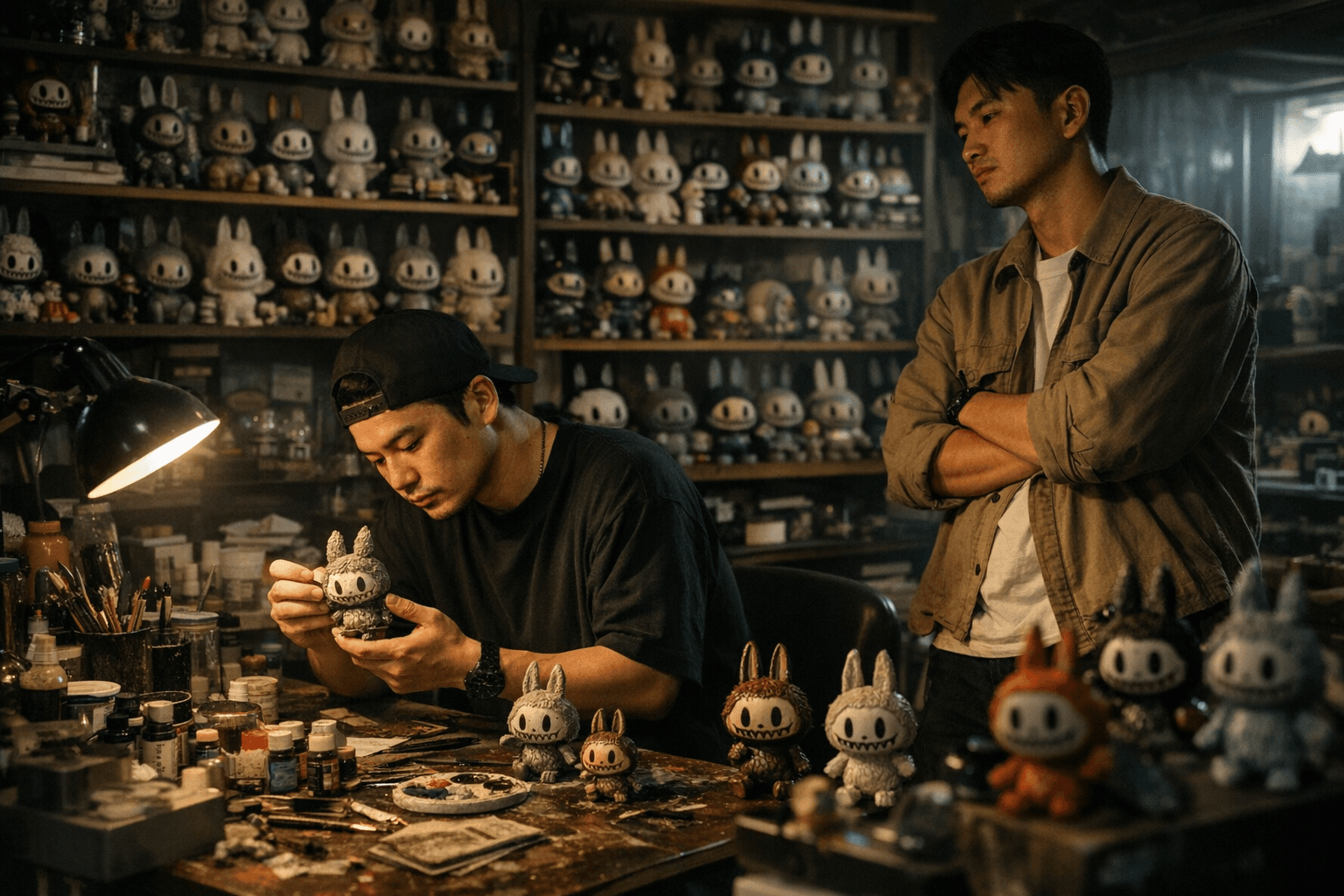
The boom did not stay online. In May 2025, UK in-store Labubu sales were suspended amid crowding, theft concerns, queue violence, and staff threats, which is a stark reminder that hype can become an operational problem as quickly as it becomes a cultural one. Once a toy starts generating that kind of friction, it has crossed from niche fandom into public-facing retail chaos.
That kind of pressure is part of why Labubu now looks like a durable category rather than a passing style meme. Pop Mart has the infrastructure to keep feeding it, with more than 350 offline stores and over 2,000 Roboshops in its global retail network, and the character still shows up as a current, actively merchandised franchise. When a collectible can move from social media to store operations to financial reporting, it has already changed the hobby around it.
The audience has widened, and that matters
The Labubu boys were an important entry point, but they were never the whole audience. Later reporting described Labubu as an adult-heavy craze, and The Independent cited market research showing that adults 18 and over drove more than $800 million in year-over-year growth in the U.S. toy market in 2024. That same coverage said adult buyers, mostly female, were a major force behind Labubu demand.
That shift matters because it changes how the character is read. Labubu is no longer only a signal inside a male fashion circle; it is now part of a broader adult collecting boom that cuts across gender, age, and taste communities. The toy can still function as a flex, but it is equally comfortable as a bag charm, desk companion, blind-box chase, or display piece, which is exactly the kind of flexibility that gives a character staying power.
What to watch next
If you collect Labubu, the next chapter is about three things: collaborations, styling, and audience expansion. The fashion credibility built by Lisa’s 2024 moment means any future tie-in will be measured not just by scarcity, but by whether it looks good in the wild, on a bag, in a mirror selfie, or in a street-style frame.
Styling trends will matter just as much. The reason the “Labubu boys” story still lands is that the toy became part of personal presentation, not just possession. That means the strongest releases ahead will be the ones that keep working as visual shorthand, the ones that can move from collector shelf to outfit without losing their edge.
And then there is the audience. Pop Mart has already proved that Labubu can scale into a major franchise, but the real test is whether it keeps broadening without flattening what made it feel special in the first place. A year after the boom, Labubu looks less like a passing meme and more like a character with a long afterlife, shaped as much by the people who wear it as by the people who buy it.
This article was produced by Prism’s automated news system from verified source data, official records, and press releases, then run through automated quality and moderation checks before publishing. The system is built and supervised by the people who set the standards it runs under. Read our full AI policy.
Did this article answer your question?


