How to Authenticate, Document, and Preserve Your Labubu Collection
Knowing exactly what to check on tags, vinyl, and QR codes separates a real Labubu from a convincing fake; the nine-teeth rule is just the beginning.
Authentic Labubu figures always carry exactly nine small teeth with even spacing — that single detail has become one of the most widely shared authenticity tests in the community. But a thorough authentication goes far deeper than a tooth count. Whether you picked up a blind box at a Pop Mart store, won a rare variant at auction, or bought second-hand from a marketplace listing, the same layered verification process applies. Here is how to do it properly, from the box in your hands to the photo archive on your hard drive.
Start With the Packaging
The outer box is your first line of evidence. Official Pop Mart packaging features high-quality print, clean barcodes, and clear manufacturer markings, along with batch or lot codes and consistent UPC and QR code placement. On blind-box releases, the outer sleeve and inner tray frequently carry an internal sticker or numbered pull list; record the SKU and printing batch if one is present. Blurry text, inconsistent color tones, or obvious misprints are immediate red flags, regardless of how convincing the figure inside appears.
On non-plush figures, the steel stamp on the bottom of an authentic piece is clean, deep, and precisely engraved. On counterfeits, the engraving is often shallow and rough around the edges. Check that stamp before anything else once the figure is out of the box.
Material, Weight, and Sculpt Fidelity
Official Labubu figures use consistent vinyl or plush materials sized to the specifications of their series. One of the easiest physical checks is weight: counterfeits frequently use cheaper stuffing or thinner vinyl shells, making them feel lighter or slightly misshapen compared to an official reference piece. If you have access to a verified original, hold both simultaneously.
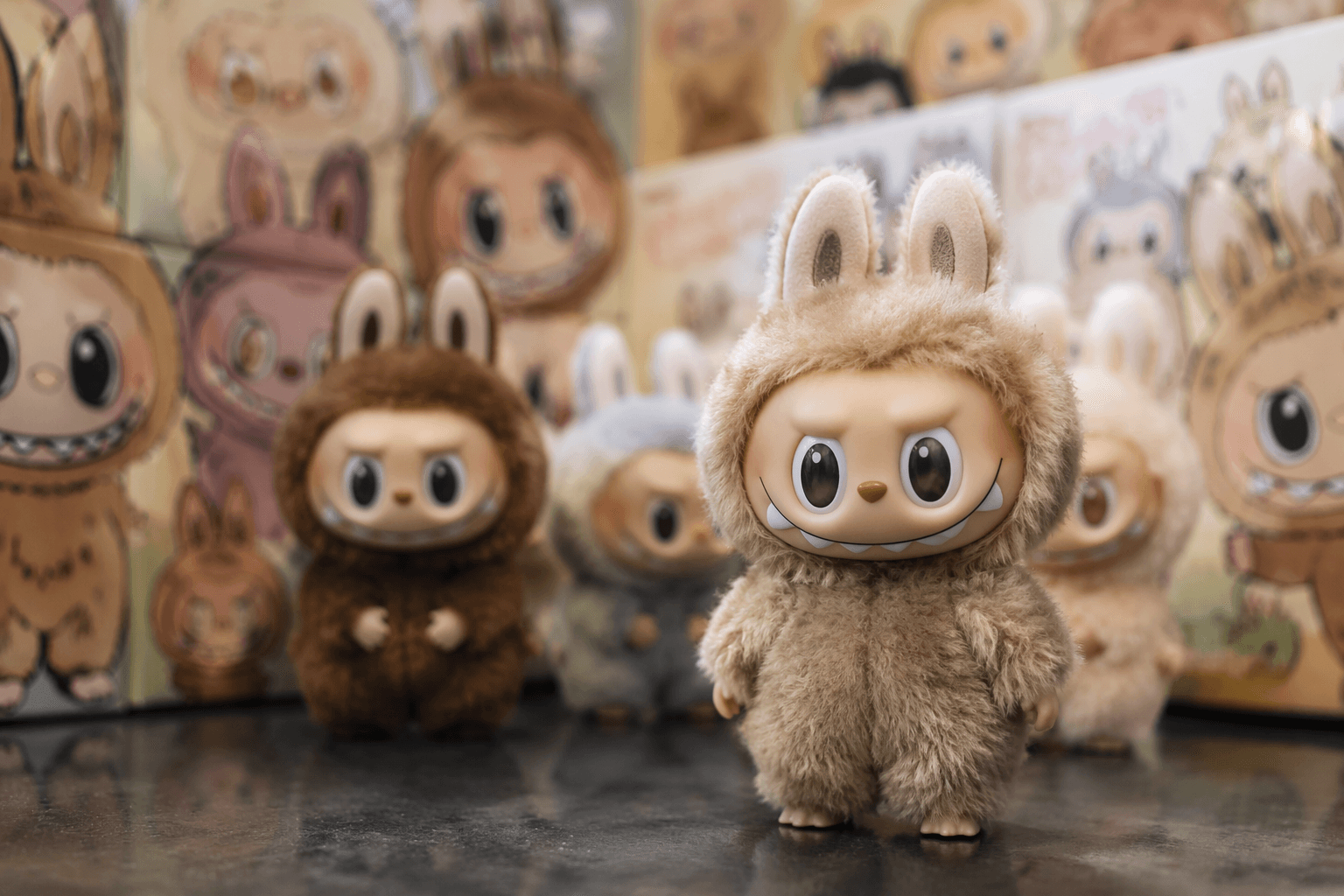
Sculpt fidelity is where authentication gets specific. Beyond the nine-teeth rule, pay close attention to ear flare, eye placement, and seam lines. Labubu's character cues are intentionally precise; misaligned eyes, uneven teeth spacing, or sloppy seams where the ears meet the head are all consistent indicators of a counterfeit. Tags on authentic pieces should feel high quality, either soft fabric or premium printed paper, depending on the series.
Markings, Tags, and the QR Code Verification Step
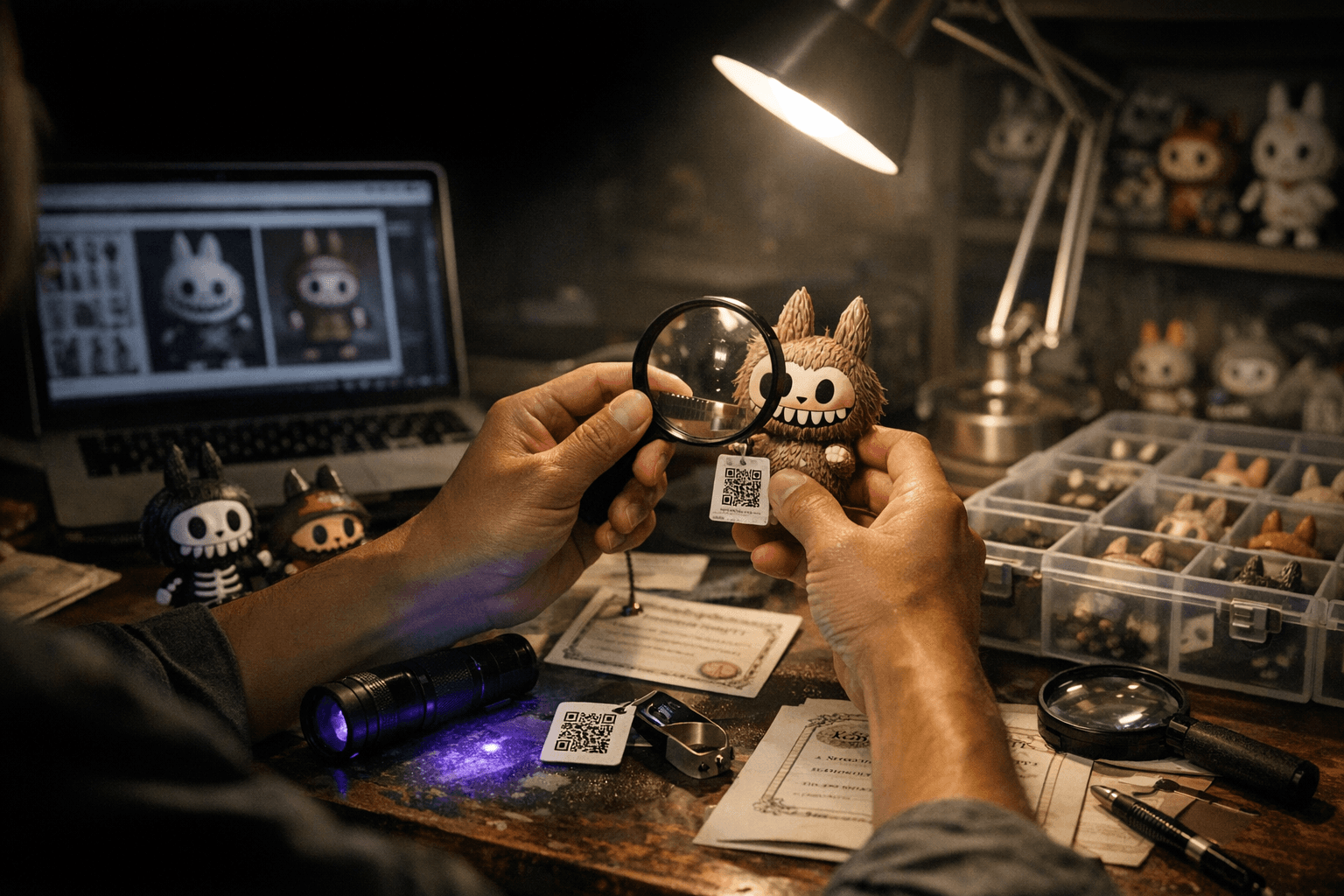
Many Pop Mart pieces include inner tags, heat-stamped identifiers, or UV-reactive markings. For event exclusives, look for printed event identifiers on tags or promo cards. The QR code has become one of the most practical verification tools available: only use fwsy.popmart.com for QR verification. Recent Macaron Labubus have QR codes on their tags; however, older versions may not. If scanning a QR code redirects you anywhere other than Pop Mart's official verification page, treat the piece as suspect. Pop Mart also offers a dedicated authenticity check through its official site, which is worth bookmarking for any serious collector.
Check for official holographic seals or licensed marking stickers where applicable to the series. These are harder to replicate convincingly at scale, and close inspection under good lighting will reveal quality differences even on well-made fakes.
Cross-Reference Before You Commit
Use Pop Mart's official product pages alongside independent collector resources and catalogue sites with high-resolution photos to verify minor color hues, secret variant details, and sticker placement. Secret variants in particular have subtle differences that counterfeiters rarely replicate accurately. Photograph both the figure and its packaging, then save the images in a timestamped folder. Those images become your first piece of provenance documentation and are worth more than you expect if you sell later.
For high-value pieces, ask the seller for an original receipt, pre-order confirmation, or any communication showing purchase date and buyer identity. Auction houses and professional resellers routinely provide this documentation. For private-party purchases, request a short written history of where the piece came from.
Care, Storage, and Preservation
Once you have a verified piece, keeping it in collectible condition is a separate discipline. The fundamentals are straightforward: climate-controlled storage away from direct sunlight and humidity. Limited edition and flocked-surface Labubus should be stored in climate-controlled conditions between 15 and 25°C with low humidity.
For plush Labubus, use breathable storage: acid-free tissue paper inside archival boxes. For vinyl pieces, avoid plastic bags, which trap moisture. Sealed display cases with silica gel packs reduce humidity fluctuations effectively. When handling figures, use clean hands or cotton gloves; the oils in skin accelerate material degradation over time, particularly on painted surfaces and flocked finishes.
Rotate your display occasionally to prevent uneven dust patterns, and use anti-static sprays on glass cases to reduce dust buildup. Regular cleaning keeps figures hygienic and helps preserve original texture; brush away dust with a soft makeup brush, then gently wipe the body using lukewarm water and mild baby shampoo, never hot water, which can deform vinyl.
Documenting Your Collection for Resale or Insurance
A well-documented collection is worth significantly more than an undocumented one, and the process is straightforward. Take at least six photos per piece: front, back, both sides, top, tags, and packaging. Record the purchase date, seller name, and any event or edition identifiers. Write a short condition note using precise language, something like "near-mint with light shelf wear on right ear seam" rather than vague descriptors. Note any repairs or alterations, even minor ones. These records matter for insurance claims, resale listings, and community verification requests.
Shipping Safely as a Seller
Include the original box whenever possible when shipping. Pad with bubble wrap and protect box corners with corner guards. For pieces above a threshold you consider significant, insure the shipment and require tracking with signature confirmation. A damaged arrival on a rare variant is a dispute no seller wants, and the cost of proper packaging is minimal compared to the cost of resolving it.
Red Flags Worth Knowing
Significantly underpriced rare variants are the most common warning sign in secondary market listings. Others include sellers who refuse to show clear photos of tags and packaging, listings that offer only low-resolution images, and any push to complete the transaction off-platform. If something feels off, ask for a short verification video: the item held next to a handwritten note showing the seller's username and the current date. A legitimate seller will have no objection to providing it.
Putting It All Together
Authentication is cumulative. One inconsistent detail does not automatically confirm a fake, but two or three discrepancies together should trigger caution and a pause before any payment. Use community forums and regional meetup groups to cross-check questionable pieces; shared photo archives built from verified originals are among the most useful reference tools available. For pieces with significant resale or insurance value, professional authentication is worth the cost. The steps above cover the vast majority of transactions, but no field checklist replaces expert appraisal when the stakes are high.
This article was produced by Prism’s automated news system from verified source data, official records, and press releases, then run through automated quality and moderation checks before publishing. The system is built and supervised by the people who set the standards it runs under. Read our full AI policy.
Know something we missed? Have a correction or additional information?
Submit a Tip