How to Customize, Paint and Mod Labubu Figures Safely and Creatively
Your Labubu is a blank canvas — here's how to prep vinyl and resin, paint faces, style hair, and build outfits from felt to miniature designer replicas.
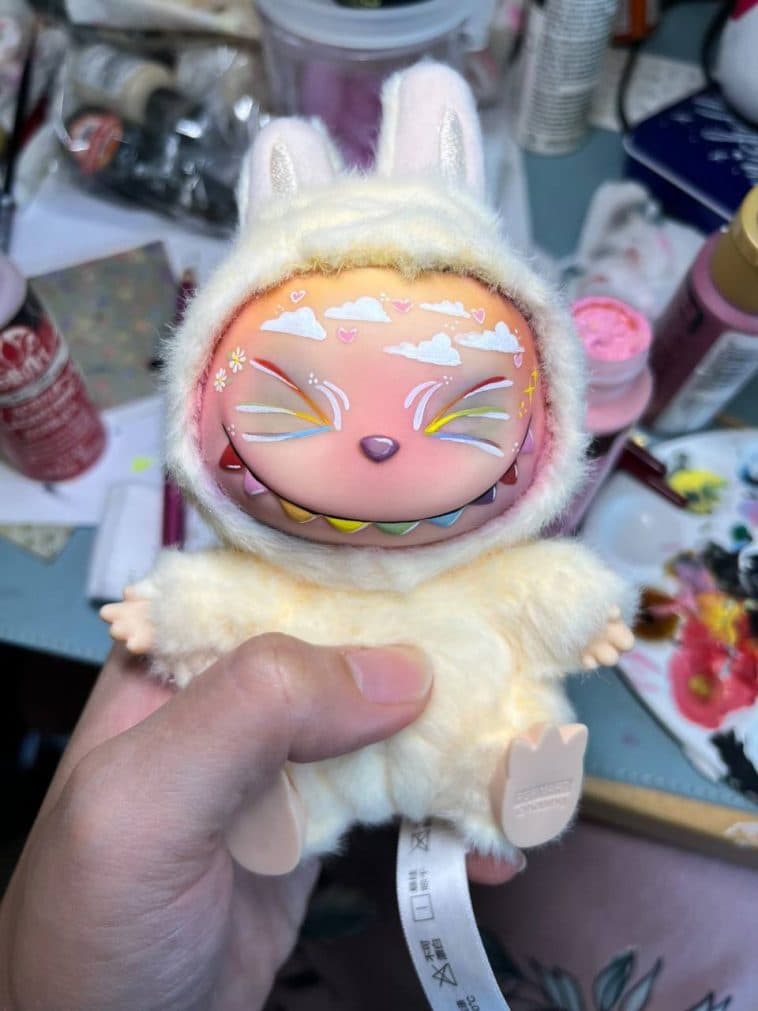
There's a moment every Labubu customizer knows: you're holding a fresh figure, studying those serrated teeth and wide eyes, and thinking about everything you could turn it into. That feeling is exactly why this guide exists. It's aimed squarely at Labubu hobbyists and custom figure artists — people who want to safely modify, repaint, or add features to Labubu figures for personal use, trade, or sale — and it covers the full spectrum, from prepping vinyl and resin figures to paint selection, masking, airbrush work, hair mods, clothing construction, and display design.
As Filmora Wondershare noted, "their unique combination of cute and creepy, collectible yet customizable, makes them perfect blank canvases for creative expression." That dual nature is what makes the custom Labubu scene so compelling, and in 2025 the community is only accelerating.
Prepping Vinyl and Resin Labubu Figures
Before any paint touches your figure, prep work determines whether your custom holds up or flakes off in a month. Vinyl and resin Labubu figures require different approaches because the materials behave very differently at a surface level. Vinyl, which makes up most standard Pop Mart releases, is flexible and slightly oily from the manufacturing process; resin blanks, increasingly popular with customizers who want a firmer substrate, are more rigid and porous. Both need to be degreased and prepared before any primer or paint is applied.
The general principle for vinyl is a thorough clean to remove mold-release residue and skin oils, followed by a surface preparation step that gives paint something to grip. Resin typically tolerates light sanding to smooth any imperfections and open the surface for better adhesion. Skipping prep on either material is the most common reason custom paint jobs fail early, so treat this stage as non-negotiable. When in doubt, consult other customizers in your community about the specific products they use for cleaning and priming, since paint chemistry evolves and community knowledge is often ahead of published guides.
Paint Types and What to Use Where
Choosing the right paint for the right surface is where a lot of first-time customizers get tripped up. The broad categories relevant to Labubu work are acrylics for general body painting, specialized fabric paints for detail work, and potentially urethane or enamel options for specific finishing effects, each with different flexibility, adhesion, and dry-time characteristics.
For facial detail work specifically, Filmora Wondershare notes that "some collectors carefully repaint facial features or add details like freckles, blush, or unique expressions using specialized fabric paints. This advanced technique helps create customized labubu dolls with one-of-a-kind expressions." The recommendation of specialized fabric paints for faces makes sense: they retain some flexibility once dry, which matters on vinyl figures that get handled. Standard craft acrylics can crack or peel on flexible vinyl if not properly sealed or if applied too thickly, so fabric-formulated paints offer a more forgiving alternative for delicate detail areas like blush gradients and freckle dots.
Whatever paint type you choose, thin coats are always better than heavy ones. Multiple light passes build color more evenly and reduce the risk of obscuring the fine sculptural detail that makes Labubu faces so expressive.
Masking and Airbrush Techniques
Masking and airbrushing are the techniques that separate a flat repaint from something that looks professionally finished. Masking involves using tape, liquid masking fluid, or cut stencils to protect areas of the figure you don't want to paint while you work on adjacent areas, essential for keeping white teeth sharp against a painted face or creating a clean gradient across the forehead.
The airbrush is particularly powerful for blush effects, shading, and any color transition you want to look seamless rather than hand-brushed. The soft, misted application of an airbrush mimics how illustrators shade characters on paper, which is one reason airbrushed Labubu customs tend to look so polished. Getting comfortable with airbrush pressure, paint thinning ratios, and nozzle distance takes practice, so most experienced customizers recommend working through test pieces on spare vinyl before approaching a figure you care about. Community forums and video tutorials are your best resource for dialing in the specifics, since settings vary by airbrush model and paint brand.
Repainting Facial Features
Facial repainting is considered one of the more advanced customization skills precisely because the face carries the entire personality of the figure. A slightly off placement of the blush, and your Labubu looks sick rather than blushing. A smudged freckle reads as a stain. The margin for error is small, and the payoff when you get it right is significant.
The approach most customizers use starts with sealing or removing the factory face print, then rebuilding the expression from scratch using fine brushes for linework and airbrushing for gradients. Freckles are typically dotted on with a thin round brush or a fine liner. Blush is best built up in transparent layers rather than applied opaque, giving it that soft, skin-like quality. Unique expressions, whether a more intense snarl, softened eyes, or completely new brow shapes, require confidence with a brush and a clear reference sketch before you start.
Hair Styling and Fiber Mods
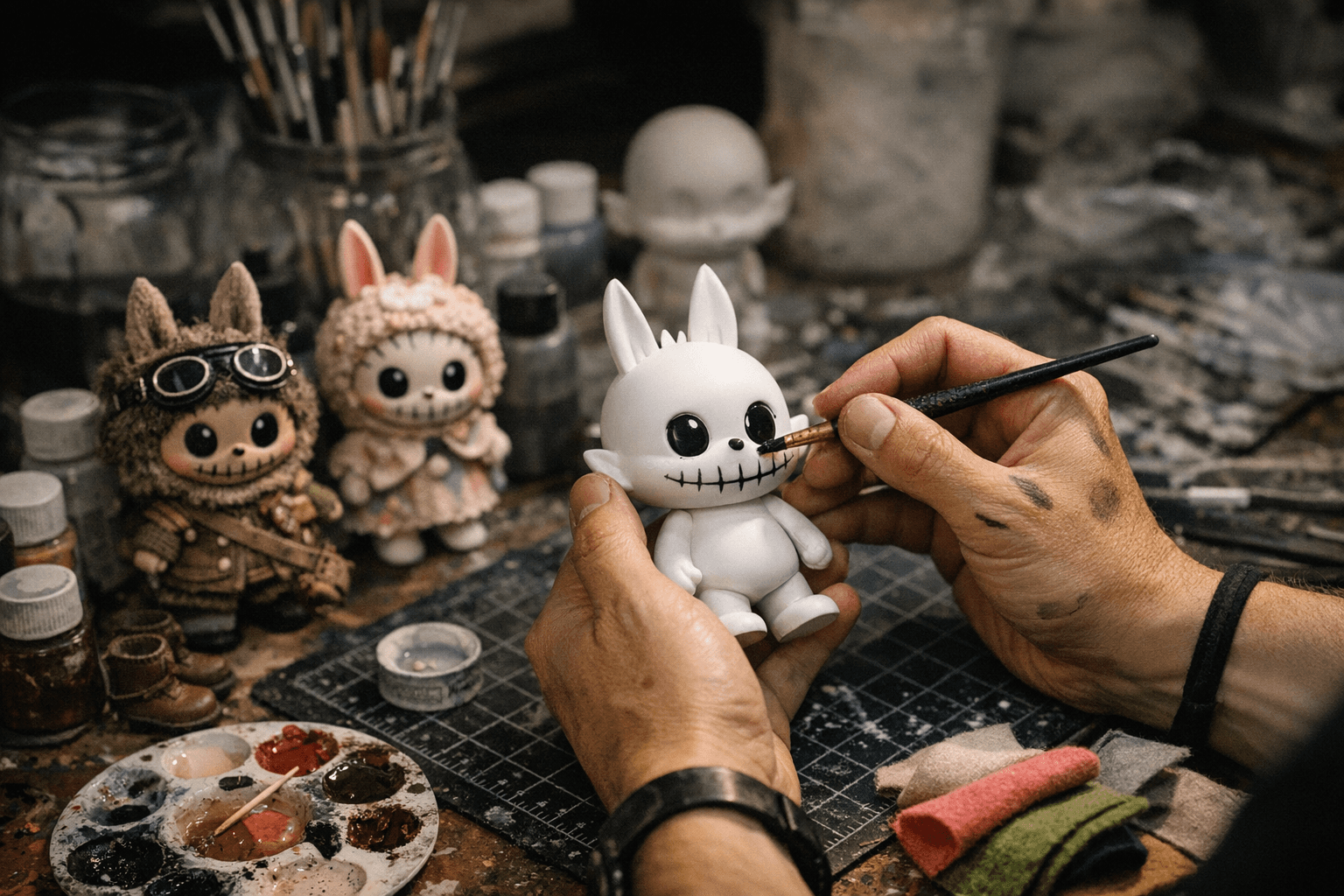
Hair work is one of the most visually transformative modifications you can make to a Labubu figure. As Filmora Wondershare puts it, "adding, trimming, or dyeing the hair on your DIY labubu doll can dramatically change its appearance." Those three actions cover a wide range of skill levels: trimming is the most accessible entry point, letting you reshape the existing hair into a different silhouette; dyeing opens up color customization without removing and re-rooting fiber; and adding hair is the most involved, requiring anchoring new fiber to the figure's head in a way that looks intentional rather than patched.
The specific materials, adhesives, and fiber types that work best for Labubu hair mods are an area where community knowledge is essential. Dye compatibility varies by fiber type, and the adhesives used for re-rooting or adding new hair need to bond to vinyl or resin without causing surface damage. Connecting with experienced modders before your first hair project will save you a lot of expensive trial and error.
Clothing and Accessories
Dressing your Labubu is its own creative discipline, and the techniques range from genuinely beginner-friendly to technically demanding. Filmora Wondershare outlines three clear tiers.
- No-sew clothing uses fabric glue, felt, and simple patterns to create outfits without any sewing required, making it "perfect for beginners who want to DIY their labubu without advanced crafting skills." Felt is forgiving because it doesn't fray, and fabric glue bonds quickly and holds well on miniature scale. Simple rectangular patterns cut to size can become capes, scarves, and tunics with almost no construction complexity.
- Crochet and knitting take more skill but produce results that are impossible to replicate with any other method. Many crafters create customized Labubu accessories using these techniques, and the handmade texture of crocheted pieces adds a warmth and dimensionality that fabric alone can't match. There are tutorials available specifically for Labubu scale, which helps since standard doll-sized patterns often need adjustment for Labubu's proportions.
- Miniature fashion design is the highest tier, requiring sewing experience and a strong eye for scale. The challenge is translating full-sized garment construction into pieces that might be two inches long. Some creators have made impressive miniature replicas of designer fashion pieces for their Labubu figures, treating the doll as a tiny runway model. If you've sewn before and want a serious technical challenge, this is where the craft gets genuinely complex.
Display, Stands, and Themed Collections
A well-built custom deserves a presentation that matches the work you've put into it. Custom stands and display cases let you design the context around your figure, and Filmora Wondershare frames it this way: "create personalized display options that enhance your collection's presentation, perfect for showcasing multiple DIY labubu creations together." A thoughtfully designed display can transform a shelf of individual customs into a cohesive visual statement.
Theme collections take that logic further. Designing "multiple coordinated DIY labubu doll projects that tell a story or represent characters from your favorite media" turns individual pieces into something more like a series. Whether you're building a set around a specific color palette, a film or game, or a completely original narrative, the theme gives each individual custom more meaning as part of a larger whole. Construction methods for display infrastructure, from acrylic cases to custom-built wooden stands, are worth researching based on your budget and skill level in woodworking or 3D printing.
The Community in 2025 and Beyond
The scale of what's being created and shared right now is genuinely remarkable. As Filmora Wondershare observed, "the DIY labubu trend shows no signs of slowing down. If anything, the customization community continues to grow more sophisticated, with increasingly impressive techniques for how to make labubu clothes and create customized labubu figures being shared online daily." The knowledge base available to a beginner today, through video tutorials, community forums, and creator documentation, is far richer than what existed even two years ago.
What that means practically is that whatever your starting skill level, there is a corner of this community building at your level and sharing what they know. The no-sew beginner and the airbrush expert are both contributing to the same expanding tradition of treating Labubu not just as something to collect, but as something to make entirely your own.
Know something we missed? Have a correction or additional information?
Submit a Tip