Pop Mart CEO Says Sewing Machines Are Smoking as Labubu Demand Surges
Wang Ning confirmed Pop Mart ships 10 million Labubus monthly, production is doubling, and overseas sales are on pace to surpass China - with Hollywood studios already circling.

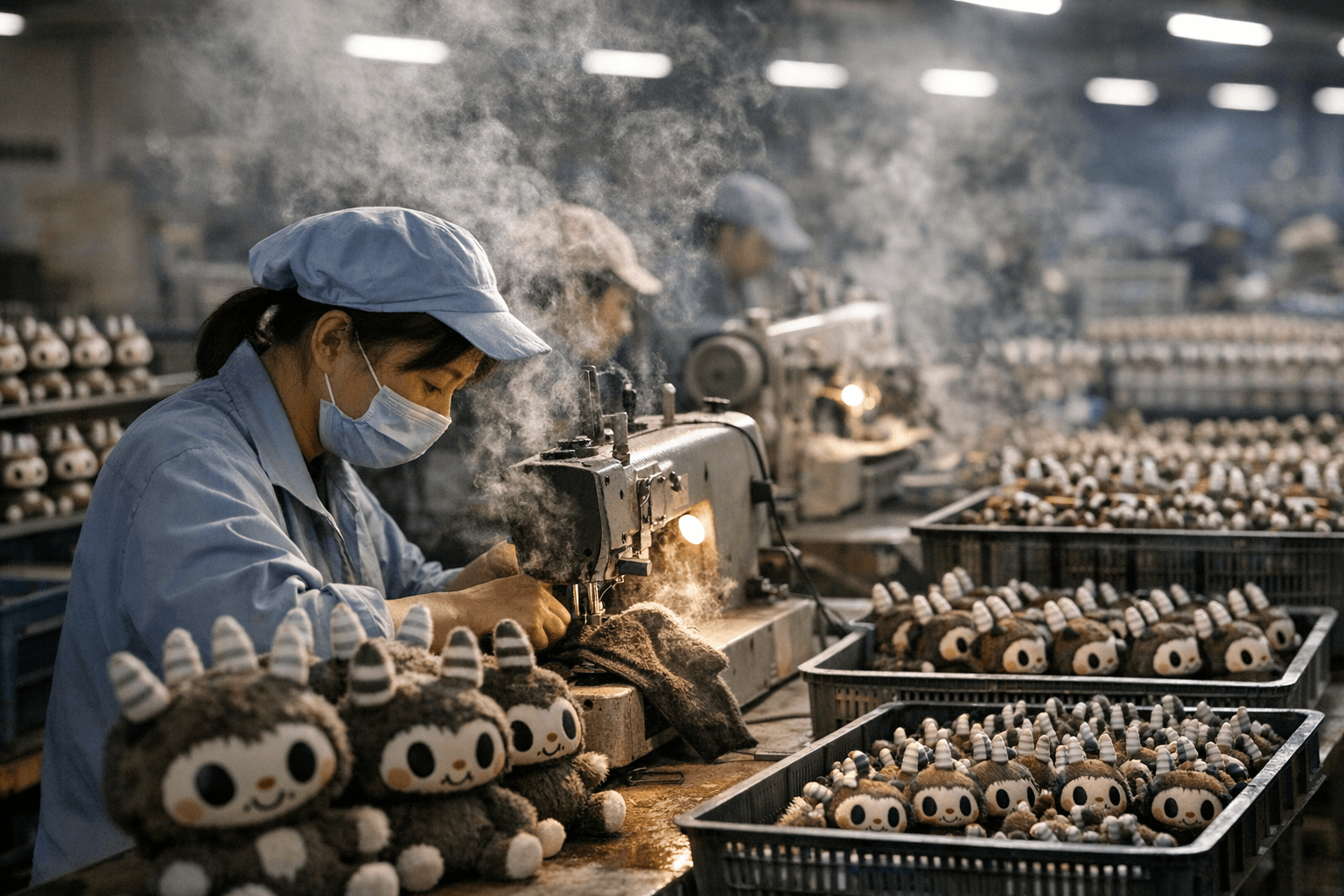
Wang Ning, Pop Mart's founder and CEO, used a CCTV interview in early April to put a number on Labubu's demand that most collectors had only guessed at: the company is shipping 10 million units every single month. "The sewing machines are about to smoke," he said, describing production lines pushed to their absolute limit while Pop Mart races to scale output without compromising the product.
The comments addressed what has become one of the sharpest criticisms aimed at the company, that Pop Mart deliberately restricts supply to manufacture hype and inflate secondary market resale prices. Wang rejected that framing directly. Production for the month of the interview had "doubled compared to last month," he said, and "there will be another significant increase next month." The bottleneck is manufacturing capacity, not marketing strategy, and the pace of expansion is actively accelerating.
For collectors watching restock frequency and overseas availability, the supply chain picture Wang described points toward meaningful improvement over the next two to three quarters. Pop Mart has extended its production network from its original bases in mainland China and Vietnam to six facilities globally, adding partner factories in Indonesia, Cambodia, and Mexico. The Mexico facility is the most consequential signal for North American collectors: shorter shipping routes reduce lead times and import pressure, two variables that directly affect how quickly new drops reach shelves and at what price. Wang confirmed that overseas sales are on track to surpass domestic China revenue this year, with North America identified as a primary growth market, which suggests the Americas will be prioritised in any allocation decisions as capacity increases.
The core blind box formats and oversized plush figures, which account for the bulk of monthly volume, stand to benefit first from the ramp. Collaboration releases, produced in tighter print runs by design, are less likely to see the same volume jump but will carry additional weight as the IP's global profile grows.
That profile is the subject of Wang's most far-reaching disclosure. "Famous film companies all over the world, including many Hollywood companies," he said, have approached Pop Mart about developing a Labubu feature film or long-form media project. Wang said the company is "still discussing" whether to produce in-house, partner with a Hollywood studio, or pursue a hybrid model. No deal has been announced, but the confirmation that multiple studios are in active conversation is a significant shift: it moves a potential theatrical release from rumour to a named, attributed negotiation.
Wang framed Pop Mart's ambition plainly: "We originally hoped to become China's Disney; now we hope to become the world's Pop Mart." A cinematic release would be the single most powerful demand multiplier the IP has ever seen, generating a new wave of collab formats and licensed drops tied to whatever story universe emerges.
With six factories active, monthly output doubling, and Hollywood in conversation, the supply picture heading into late 2026 looks materially different from the perpetually constrained drops that defined the past year.
This article was produced by Prism’s automated news system from verified source data, official records, and press releases, then run through automated quality and moderation checks before publishing. The system is built and supervised by the people who set the standards it runs under. Read our full AI policy.
Did this article answer your question?


