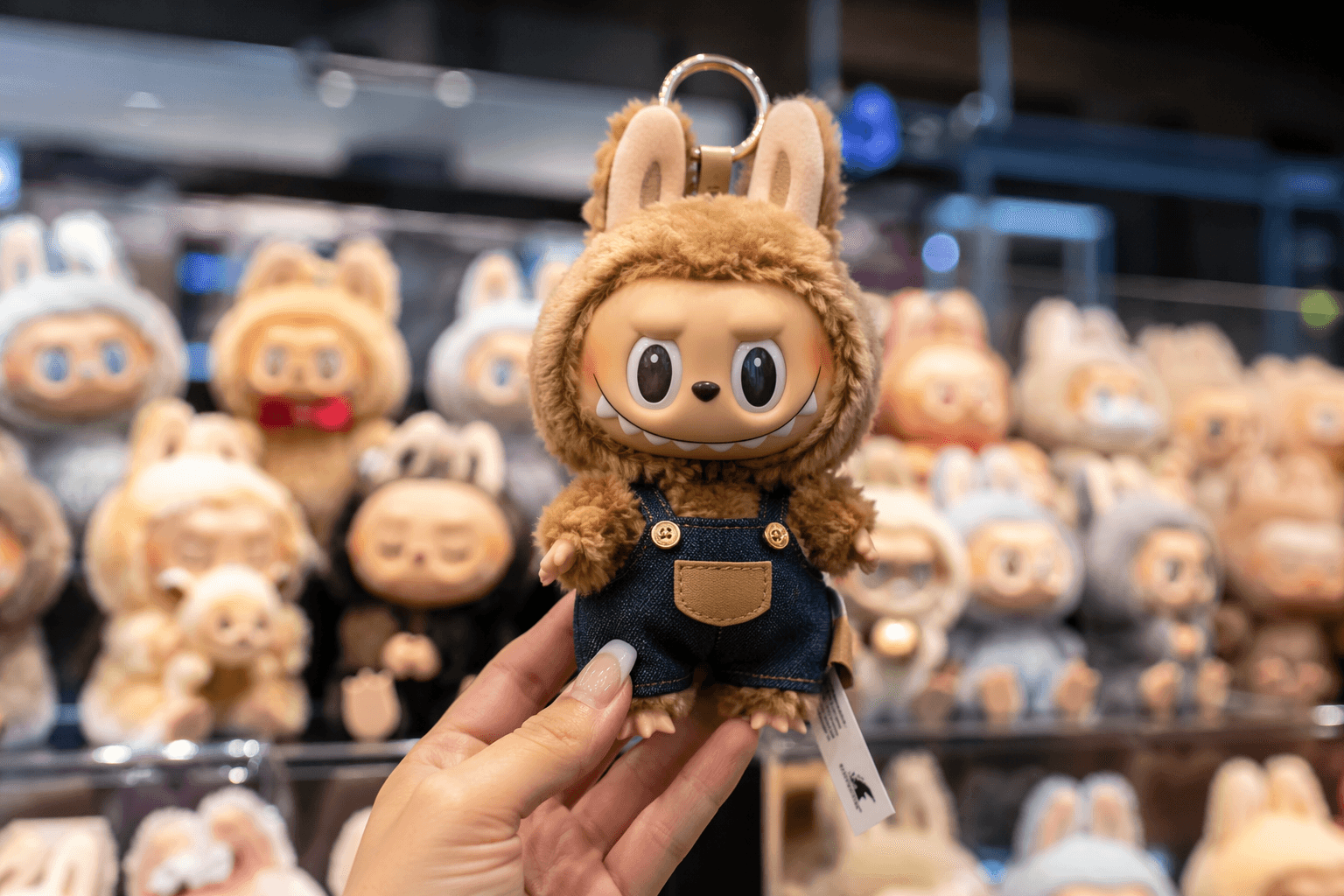
Pop Mart turns Labubu into a platform for autism awareness and charity
Pop Mart’s autism-awareness push is more than a feel-good tie-in. It pairs Labubu with charity-linked access, guided exhibits, and a three-year donation plan that collectors will want to track.

What every Labubu watcher needs to clock
Pop Mart is no longer using Labubu only as a blind-box magnet. The company is turning its Monsters universe into a cause-linked platform, and the clearest example is Every Star Shines, an exhibition built with the One Foundation around World Autism Awareness Day. For collectors, the key question is not just what the event says, but what it unlocks: charity-linked merchandise, guided access, and a new way for Pop Mart to make Labubu feel scarce in meaning rather than only in supply.
Every Star Shines is built as an experience, not just a display
The core of the activation is an exhibition timed with April 2, World Autism Awareness Day, the global observance that in 2026 carried the United Nations theme “Autism and Humanity - Every Life Has Value.” The World Health Organization used the moment to emphasize neuroinclusive environments across health, education, workplaces, sports, and other sectors, which gives Pop Mart’s timing a much larger frame than a standard brand campaign.
What makes Every Star Shines stand out is the structure. Dao Insights described the campaign as designed in three parts: exhibition, education, then participation. That matters because it tells fans this is not a quick logo placement or a one-off charity badge. Pop Mart built the project around support notes, educational material, and myth-busting displays, turning the space into a guided experience that asks visitors to slow down and learn.
The show also spotlighted 21 families with autistic children, which shifts the tone away from abstract awareness and into lived experience. That choice gives the event a human center, and it also gives the Monsters characters a different job: they become a bridge into a subject that can feel difficult or unfamiliar, rather than simply a cute object to chase in a drop.
Why collectors should care about access, not just messaging
The most important collector takeaway is that this is not framed like an ordinary merch cycle. Pop Mart is using Labubu-style character culture as a social interface, one that can carry workshops, installations, educational prompts, and charity-linked merchandise in the same offline space. In other words, the brand is testing a model where access itself becomes part of the collectible story.
That has two effects. First, it can create event-only demand around anything tied to the exhibition, especially if merchandise, participation materials, or commemorative items are available on-site rather than through broad retail release. Second, it changes how fans think about value. When a Labubu product is linked to a specific cause, a specific date, and a specific venue, the object can feel harder to replace than a standard mass drop, even before resale enters the picture.
Pop Mart’s broader branding makes that strategy easier to understand. On its investor-relations page, the company describes itself as “a market leading player in character-based entertainment,” and its U.S. site describes Labubu as “a kind-hearted monster with high ears and serrated teeth.” Those are not just marketing lines. They show how carefully Pop Mart is separating the character from pure product hype and building a personality that can move across retail, culture, and advocacy.
The charity tie-up is deeper than a one-day campaign
The partnership with the One Foundation gives the project more weight than a seasonal awareness push. Dao Insights reported that Pop Mart has committed to a three-year donation programme supporting the foundation’s Ocean Heaven initiative, which focuses on inclusive education for children with special needs. That is the kind of long-horizon commitment that makes a campaign harder to dismiss as opportunistic.
The One Foundation itself has history behind it. It was founded in 2007 and later registered as a public fundraising foundation in Shenzhen in December 2010. Its Blue Action autism advocacy campaign has run every April 2 since 2012, making 2026 its 15th consecutive year. That continuity matters because it places Pop Mart inside an established advocacy calendar rather than letting the brand invent its own moment from scratch.
For fans, this also means the event is not likely to stand alone. It sits inside a long-running charitable framework with a recognizable date, an annual rhythm, and a public-facing mission. If Pop Mart keeps building around that structure, collectors may need to track April more closely, because cause-linked releases and participation-driven activations could become part of the Labubu calendar.
Labubu’s scale explains why Pop Mart is widening the playbook
The company would not be investing this kind of attention in Labubu if the character were still just a niche darling. Pop Mart’s 2025 revenue reached RMB 37.12 billion, up 184.7% year on year, and The Monsters franchise generated RMB 14.16 billion, up 365.7%, making it Pop Mart’s first IP franchise to surpass RMB 10 billion in annual revenue. Those numbers explain why the company is thinking beyond shelf presence and into cultural infrastructure.
A March 2026 state-media report said Pop Mart was also preparing a Labubu film with Sony, which suggests the character is being pushed toward mainstream entertainment at the same time it is being used for education and charity. That combination is the real story here. Pop Mart is not choosing between commerce and goodwill; it is layering them together so the IP can live in retail, film, exhibition spaces, and advocacy campaigns at once.
For collectors, that creates a new kind of watch list. Labubu is no longer only about which figures drop, how fast they sell out, or what the resale market does next. It is also about when Pop Mart attaches the character to a cause, whether that access is limited to an event, and how much of the experience is designed to be shared in person before it spreads online.
What this means for the Labubu market now
Every Star Shines points to a future where cause-driven exclusives may matter almost as much as standard releases. If Pop Mart continues to tie Labubu to autism awareness, educational programming, and charity-linked merchandise, then the brand is teaching fans to follow a different kind of scarcity: limited-time social access, not just limited-run vinyl.
That is a smart move for a company whose characters already function like emotional shorthand. Labubu can now signal collectability, community, and visible social value in one package. For the fandom, that means the next meaningful drop may not just be the one that sells out fastest. It may be the one that carries the most context, the strongest story, and the hardest-to-recreate place in the calendar.
This article was produced by Prism’s automated news system from verified source data, official records, and press releases, then run through automated quality and moderation checks before publishing. The system is built and supervised by the people who set the standards it runs under. Read our full AI policy.
Did this article answer your question?