Valve Defends CS2 Loot Boxes by Comparing Them to Labubu Collectibles
Valve named Labubu blind boxes alongside Pokémon and baseball cards in its March 11 Steam rebuttal to New York AG Letitia James's illegal gambling lawsuit.

Valve put Labubu in its legal defense on March 11, posting a lengthy public rebuttal on Steam to a New York Attorney General lawsuit that accused the company of running illegal gambling operations through its CS2 cases and other loot boxes. In that statement, Valve listed blind boxes alongside baseball cards, Pokémon, and Magic: The Gathering as proof that randomized collectibles with secondary markets have existed in mainstream culture for generations.
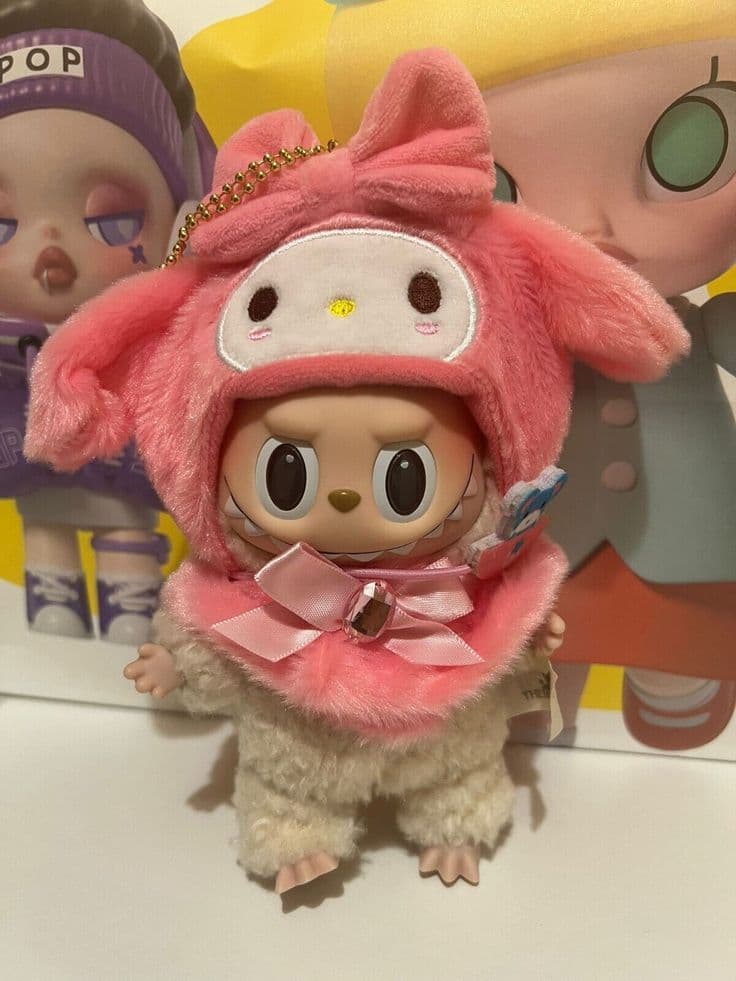
"Generations have grown up opening baseball card packs and blind boxes and bags, and then trading and selling the items they receive," Valve wrote. "On the physical side, popular products used in this way include baseball cards, Pokemon, Magic the Gathering, and Labubu."
The lawsuit was filed by Attorney General Letitia James on February 25, and it is not a light allegation. The NYAG's complaint describes Valve's loot box systems as "quintessential gambling" and compares them to slot machines, arguing that players spend money in exchange for virtual goods without knowing what they will receive. The state notes that while most items obtained from cases are worth little, others fetch thousands of dollars on the secondary market, which it uses to reinforce the gambling characterization. The lawsuit seeks to halt the practice in New York and could require Valve to pay financial restitution.
Valve's rebuttal pushed back on every major point. The company argued that CS2 cases are optional cosmetics that do not affect gameplay and that "there is no disadvantage to a player not spending money." It also drew a hard line on item transferability, stating that the ability to trade in-game items "is a right we believe should not be taken away, and we refuse to do that." Valve said it had been working to educate the NYAG's office since the agency first contacted the company in early 2023, and that while it would respect any state law that explicitly banned randomized loot boxes, the NYAG's lawsuit "went far beyond what existing New York law requires and even beyond New York itself."
Settling, Valve said, would have been the easier path, but doing so "would have been bad for users and other game developers, and impacted our ability to innovate in game design." The company also objected to a proposed NYAG compliance measure that would require collecting additional data from players to detect location anonymization, warning that flagging someone "on the off-chance someone in New York was anonymizing their location to appear outside of New York, such as by using a VPN" would be an "invasive" intrusion on every Steam user.
PCGamer noted that Valve's willingness to publish a public statement at all is unusual; the company typically leaves legal matters entirely to its attorneys. The public rebuttal may reflect mounting pressure: a consumer class-action lawsuit was filed against Valve in the same week, a separate loot box lawsuit is ongoing in Washington state, and Valve faces a nearly billion-dollar antitrust claim in the UK unrelated to loot boxes.
The Labubu comparison landed unevenly in the collector community. On Reddit's r/valve, u/IORelay asked plainly: "Serious question, how are they not like Magic cards or Labubu?" u/DrB00 agreed, calling it "a very valid and fair argument for Valve to make." But u/LukePJ25 raised a structural distinction: Valve operates the secondary market itself and takes a cut of every trade, which has no equivalent in the physical blind box world. Another commenter put it more bluntly: "Labubu nor Magic Cards facilitate the easy conversion of what you win into cash or cash equivalents. You can't win a rare magic card and instantly convert it into cash via the same platform you purchased it through." On Polygon's Facebook post covering the story, at least one commenter responded to the Labubu reference with genuine confusion: "What does labubus mean? Did you just make up a word."
Whether courts accept Valve's analog to blind box collecting, the case sets up a consequential test for whether digital randomized loot mechanics, built on the same psychological architecture as Pop Mart's surprise figures, will be treated differently under the law simply because they live on a screen.
Know something we missed? Have a correction or additional information?
Submit a Tip