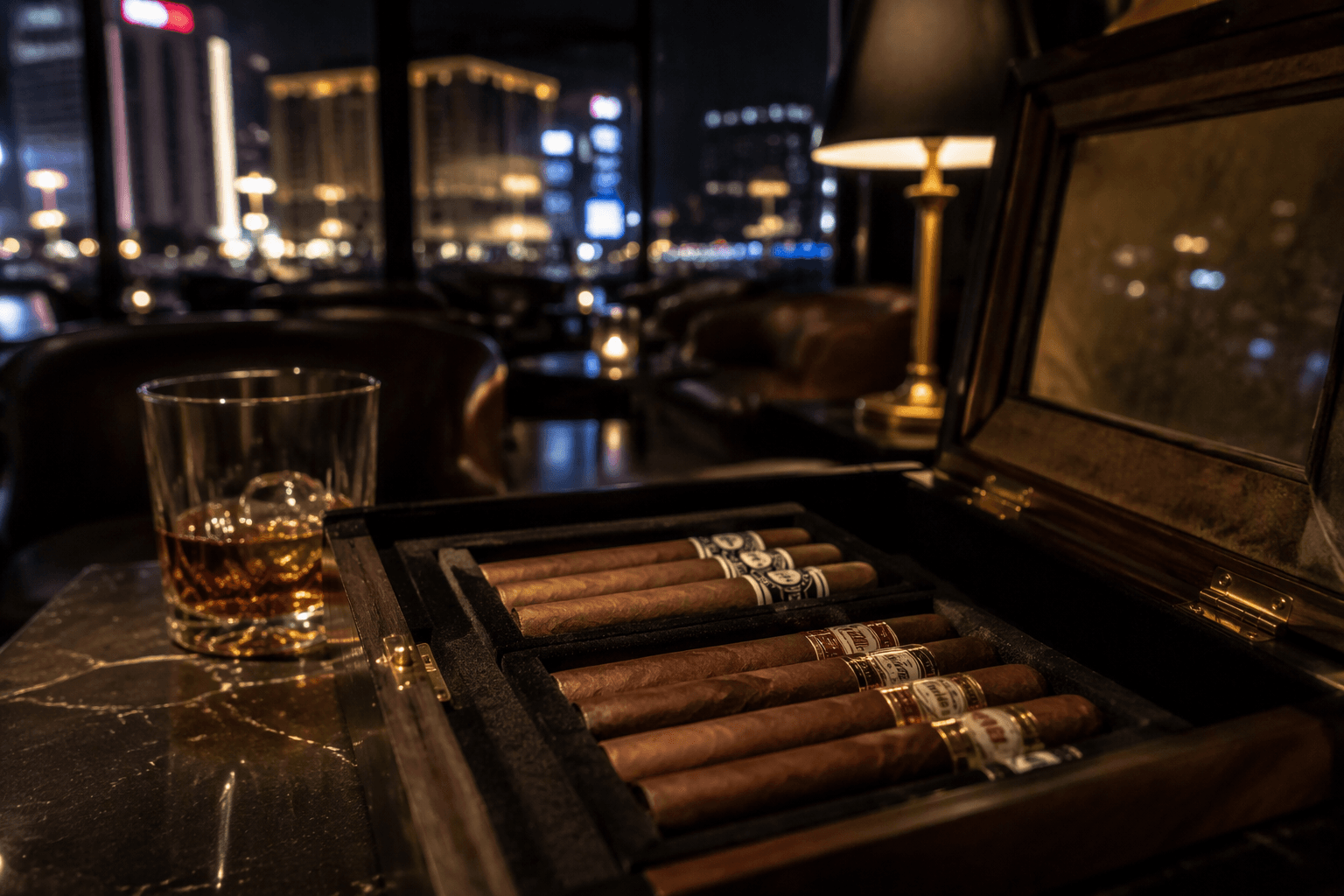
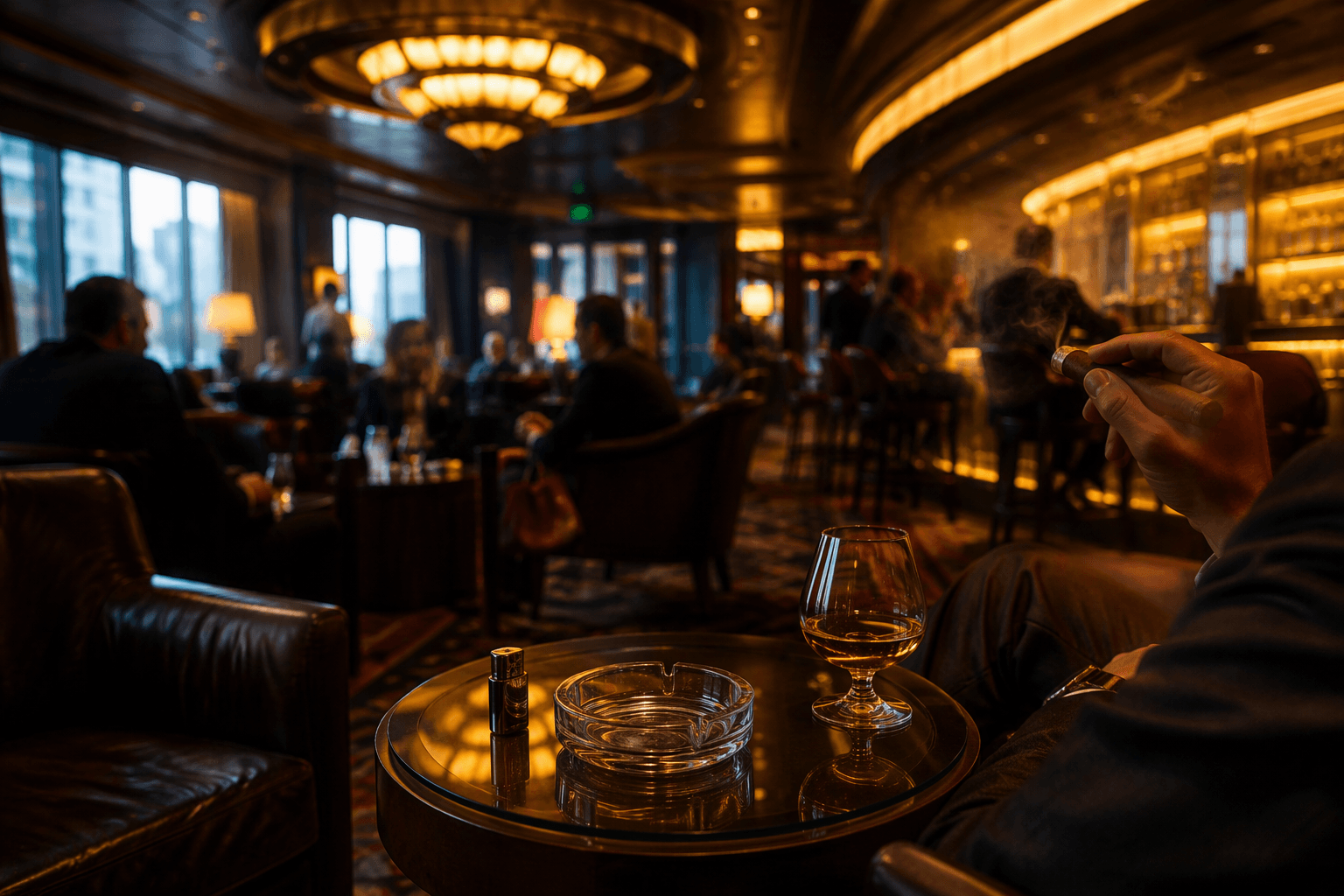
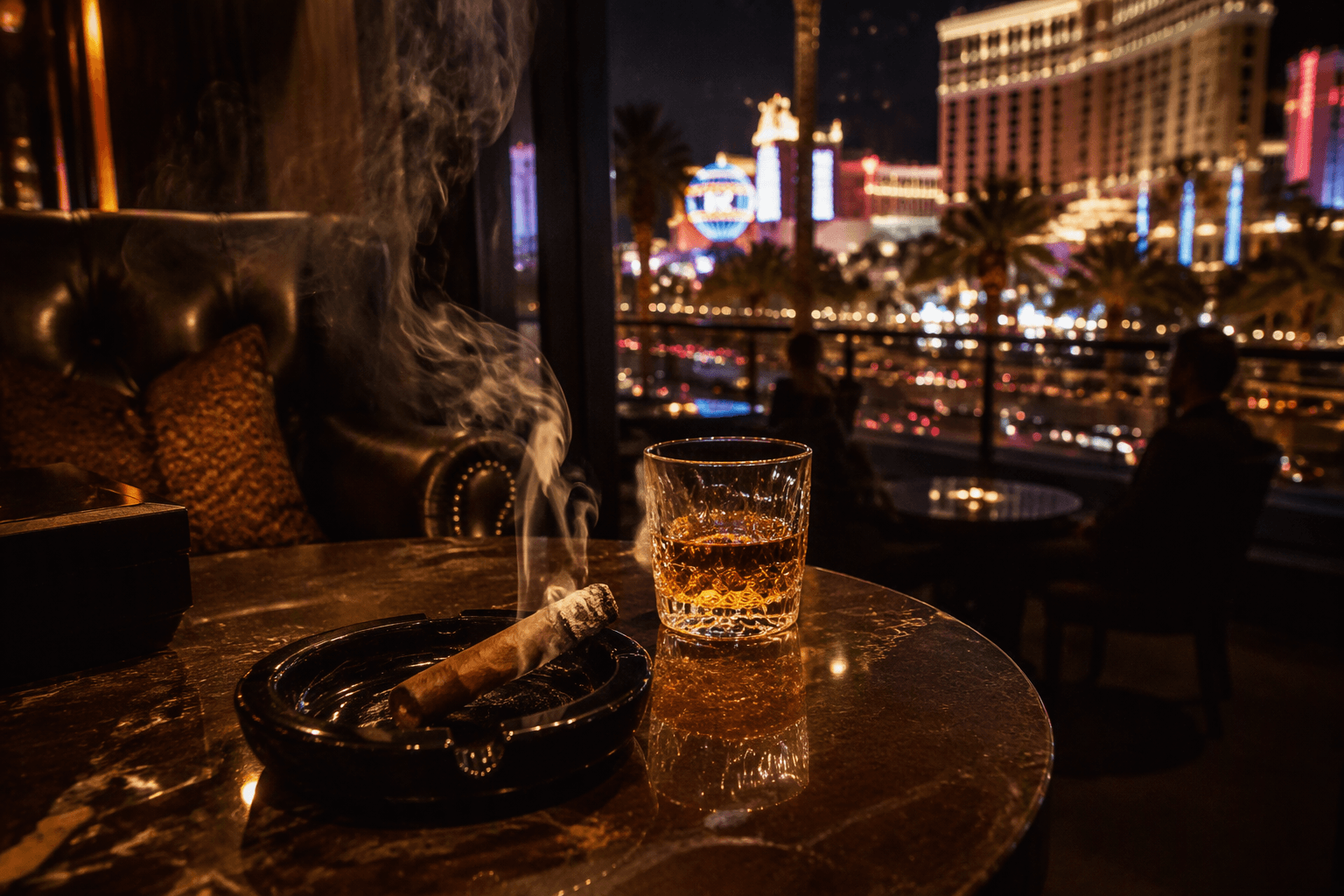
Why Las Vegas cigar lounges live and die by humidity
In Las Vegas, a cigar lounge lives or dies on moisture control. Sealed storage, steady hygrometers, and clean air tell you if the room will protect your stick.
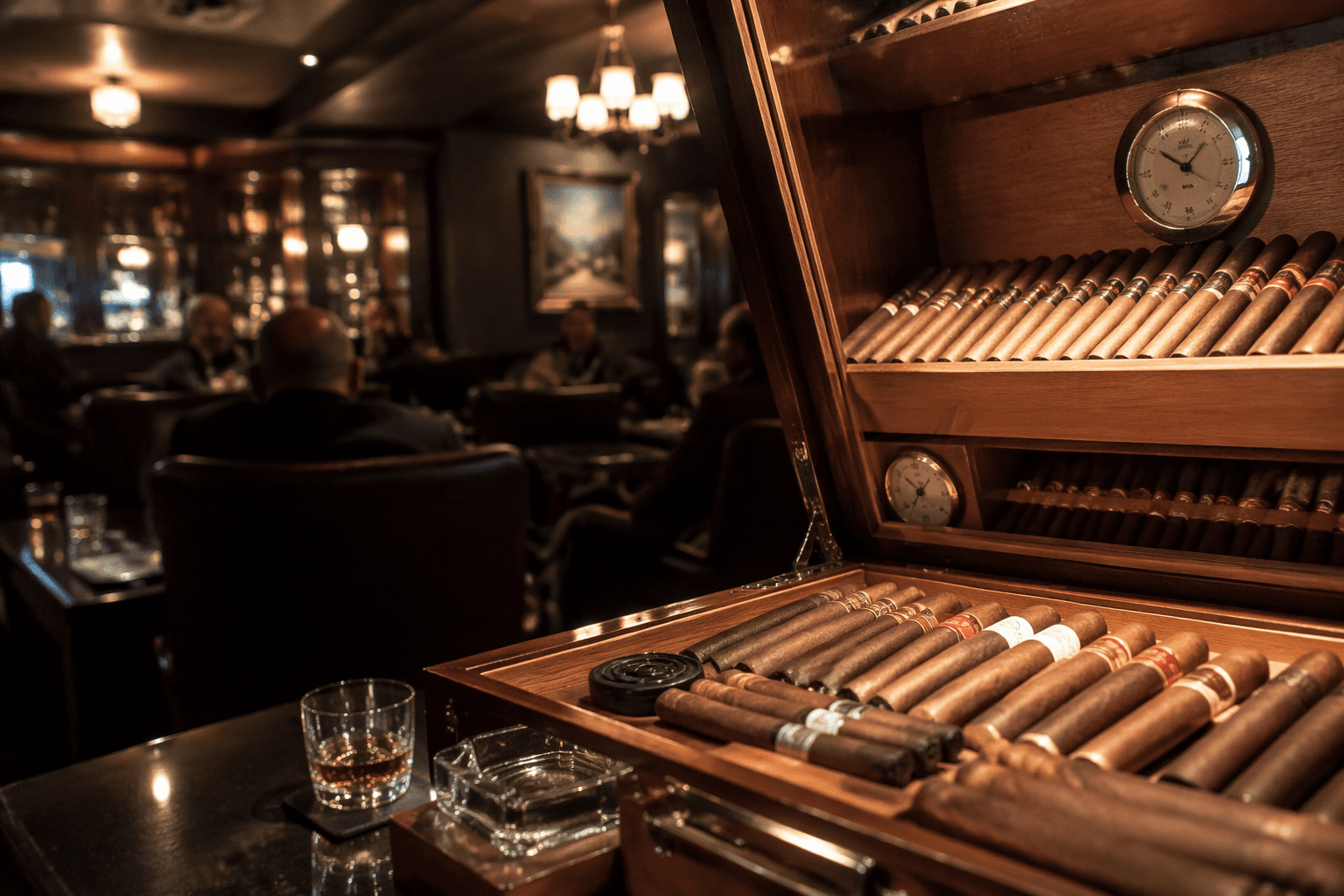
A premium cigar in Las Vegas can dry out fast when low relative humidity pulls moisture out of the wrapper and filler. The city sits in a desert environment with abundant sunshine and very limited rainfall, and premium cigars are fermented tobacco leaves. If the room is right, the draw stays smooth and the wrapper stays supple; if it is not, the cigar turns brittle, burns hot, and can crack before you even get to the flame.
What Las Vegas dryness does to a cigar
The practical effects show up fast in a city like this. A cigar kept in a lounge that cannot hold moisture will lose the oils that help the wrapper shine, the burn line can go uneven, and the smoke can feel thin or harsh instead of rounded. The common benchmark is the 70/70 rule, about 70 degrees Fahrenheit and 70 percent relative humidity, but many smokers and retailers treat that as a guide rather than a commandment.
Las Vegas does not forgive sloppy storage. Air conditioning, frequent door openings, and the constant exchange between indoor and outdoor air all push against humidity control.
How to judge a lounge before you light up
The quickest way to separate a real cigar room from a tourist trap is to look for signs of discipline. A serious lounge usually has a sealed humidor or a walk-in storage area, calibrated hygrometers, and a stable indoor environment that does not swing wildly when the front door opens. If the cigars are sitting out in dry showroom air, or the room smells more like hot HVAC than tobacco, the space is already losing the battle.
A good room gives you several easy signals before you cut a cigar:
- The sticks look supple, not chalky or over-dry.
- Wrapper leaves hold a slight sheen instead of looking dull or papery.
- Hygrometers are placed where guests can actually see them, and they look like working instruments rather than decoration.
- The humidor door or walk-in stays closed enough that the room is not constantly leaking conditioned air.
- The smoke in the room clears without the space feeling stripped dry.
When humidity control slips, the wrapper can crack, the draw gets uneven, and the flavor can flatten into heat and bitterness instead of building from the foot to the band.
Why ventilation matters as much as humidification
Las Vegas lounges have to solve two problems at once: they need smoke removal so the room does not feel stale, and they need enough moisture retention that the air does not become too dry. Strong ventilation is necessary, but if airflow is handled badly, it can strip the room and punish the cigars as much as the smoke.

That engineering problem is bigger than a single cabinet humidor. Commercial cigar lounges are really room-scale humidity and air-quality projects, where the layout, airflow, and moisture system all work together. If the balance is right, you get better wrapper integrity, a steadier burn, and a smoother draw; if it is wrong, the cigar can taste hot, harsh, or flat long before it is finished.
Vegas made humidity a cigar topic, not a footnote
At the 2015 Big Smoke Las Vegas, Cigar Aficionado held its first-ever seminar on humidity and cigars, with Daniel Marshall of D. Marshall Humidors and Sean Knutsen, president and CEO of Boveda humidification systems, on the panel.
You can feel the difference between a controlled lounge and a room where the dry pull of HVAC wins.
The legal and hospitality backdrop
Nevada’s Clean Indoor Air Act went into effect on December 8, 2006, and that law helps explain why cigar bars and lounges operate as specialized spaces rather than ordinary bars. The state’s indoor smoking restrictions pushed these venues into a distinct category, where layout, airflow, and room design matter as much as drink service or decor.
That same tension shows up in public-health work around the city. A University of Washington thesis published in 2022 measured fine particulate matter in Las Vegas casinos that prohibit smoking and casinos that allow it, reinforcing why indoor smoke environments remain a serious air-quality issue. For a cigar lounge, ventilation has to be smart enough to manage smoke without turning the room into a desert.
Where the market is headed
In November 2023, Paris Las Vegas opened a new cigar bar and cocktail terrace inside the Eiffel Tower at Paris Las Vegas, adding a more deliberate, luxury-minded version of cigar hospitality to the resort lineup.
This article was produced by Prism’s automated news system from verified source data, official records, and press releases, then run through automated quality and moderation checks before publishing. The system is built and supervised by the people who set the standards it runs under. Read our full AI policy.
Did this article answer your question?