Bilbo's Gambit tests whether white cEDH interaction is actually worth the gift
Bilbo’s Gambit looks like the white counterspell cEDH has begged for, but the Treasure gift makes it a brutal test of whether the upside is worth the leak.
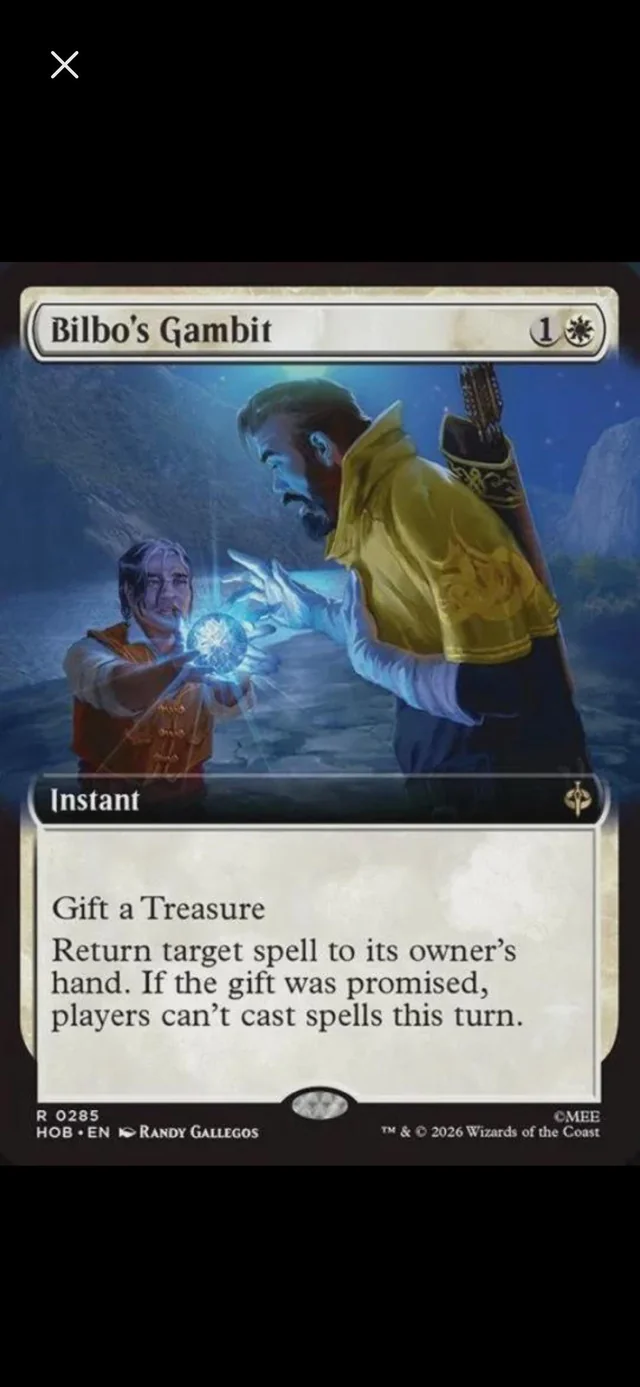
Bilbo’s Gambit, rare 0005 from The Hobbit, is a white instant that returns target spell to its owner’s hand and, if you promised the gift, locks the table out of casting spells for the rest of the turn. It is exactly the kind of text white decks have wanted for years. The catch is just as obvious: your opponent gets a Treasure first, and in a format built on razor-thin tempo, that can be enough to turn a clean answer into a bad trade.
The real question Bilbo’s Gambit asks
At face value, Bilbo’s Gambit solves a real cEDH problem. White decks often need interaction that can stop a winning turn without requiring them to hold up blue mana, and a spell-bounce effect paired with a temporary cast lock is a genuine attempt at asymmetry. If the spell target was a key tutor, a combo enabler, or a protection piece, forcing it back to hand while shutting off further spells for the turn can buy the window a deck needs.
The problem is the gift clause. In cEDH, giving an opponent a Treasure is not cosmetic value, it is a resource injection that can matter immediately if they untap into mana-efficient lines or use the token to pay for follow-up interaction. If the spell you stop does not end the turn on the spot, the opponent may have traded one stack piece for a permanent mana boost while you spent a card and a mana to slow them down.
Why the Treasure matters more at tournament speed
The Treasure token created by Bilbo’s Gambit is not just a trinket. It is an artifact that can be sacrificed for one mana of any color, which means it can fix awkward hands, help power through a stax piece, or convert into a mana positive line later in the game. That matters more in cEDH than in casual Commander because the format is already full of decks that are tuned to exploit one extra mana at the exact right moment.
The spell-lock rider also has to be measured against what cEDH tables actually present. Fast combo decks usually care less about losing a single spell to hand if they already have mana, a commander engine, or a backup line in play. Against a protected turn from a blue combo deck, a card like this can still fail to answer the larger problem: the table often needs interaction that trades cleanly, not interaction that hands the opponent a resource before it takes effect.
What white wants from interaction, and where this falls short
White cEDH interaction usually has to earn its slot by being cheap, flexible, and miserable for the opponent. That is why free or near-free stack interaction, silence effects, tax pieces, and exile-based answers carry so much weight in white-based shells. Bilbo’s Gambit reaches for that same role, but it does so with a generosity baked into the card text, and cEDH has little patience for spells that help the other side before they hurt them.

If the list is already structured to make use of a short spell lock, or if the deck can capitalize on the opponent being unable to cast spells for a turn, the card has a place as a test slot. If the deck is trying to survive turbo tables, protect a compact combo, or preserve every point of tempo, the Treasure gift becomes a liability that is hard to defend.
Where the card can actually fit
Bilbo’s Gambit is most believable in white-based decks that can turn one turn of spell denial into a real board-state advantage. Commanders and pods that already lean on hatebears, taxing effects, or combat-based pressure can sometimes use the card as a one-turn reset button when an opponent tries to force through a critical stack of spells. In those shells, the post-cast spell lock matters more because the deck is built to exploit the window immediately.
It gets much shakier in pods dominated by turbo combo or in lists that need every card to be live with no setup. If the table is full of decks that can pivot from one piece to another, or if your own plan depends on keeping mana open for multiple turns, the Treasure you hand over may do more work for them than the return-to-hand effect does for you. Decks that should be especially wary are the ones with low interaction density and no way to punish a slowed table, because they end up paying a card to buy a turn that does not convert into a win.
Why the spoiler-cycle reaction was so loud
Wizards of the Coast’s Hobbit preview and collecting materials positioned Bilbo’s Gambit as part of a larger cross-release push, and it quickly became a Commander spoiler-cycle talking point because white “counterspell” cards always trigger the same argument. The discussion was about whether white had finally been handed a stack answer that competitive players could justify.
The spoiler-cycle debate turned on the same tension in its text: bounce the spell and lock the table, but give the opponent a Treasure first.
This article was produced by Prism’s automated news system from verified source data, official records, and press releases, then run through automated quality and moderation checks before publishing. The system is built and supervised by the people who set the standards it runs under. Read our full AI policy.
Did this article answer your question?