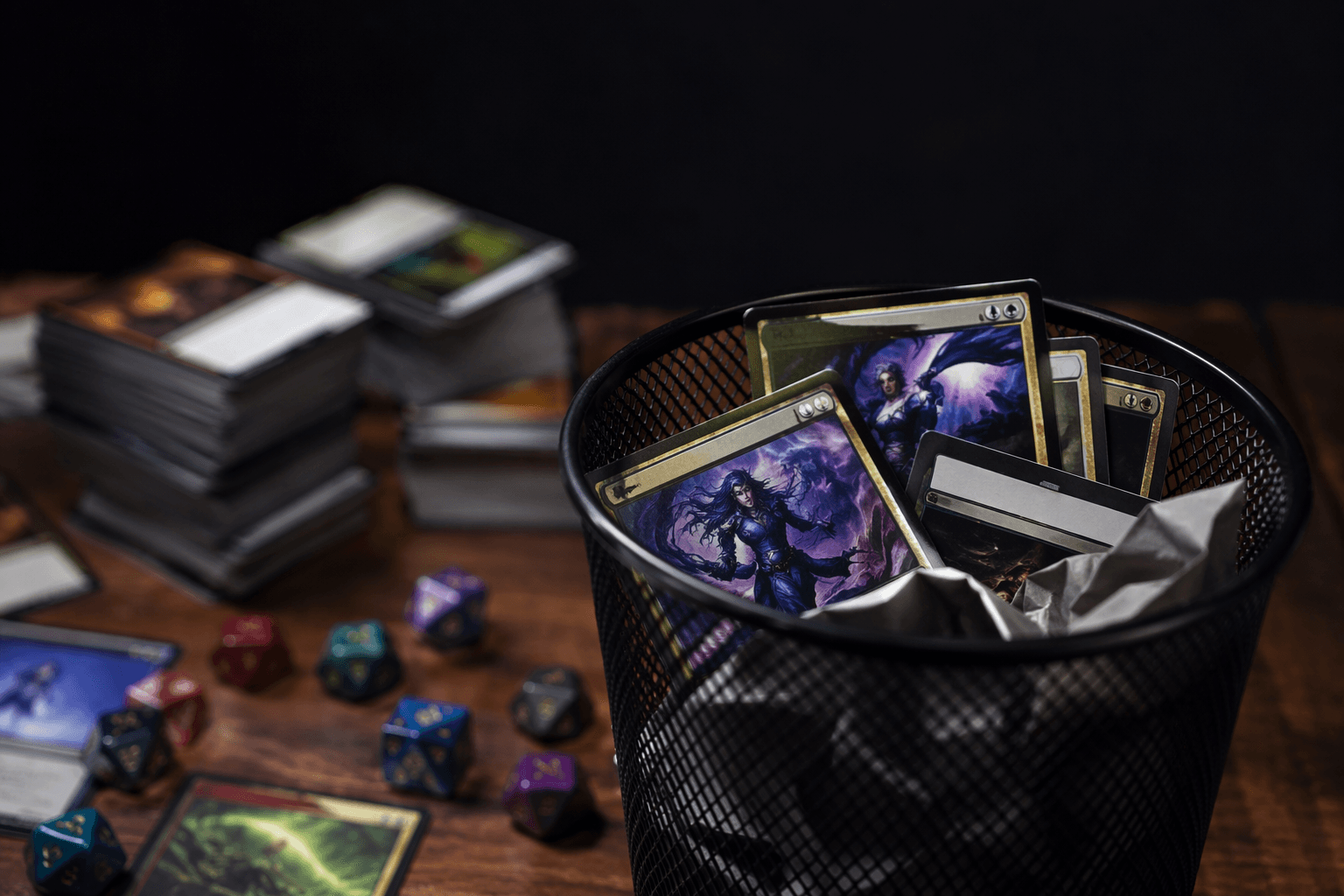
Commander balance is about table fun, not just win rate
Balance in Commander is the difference between a tense pod and a miserable one. Ezra Sassaman’s new EDHREC piece turns that into concrete table advice.

Commander balance starts before the first spell
Commander balance is easiest to miss when you only look at win rate. Ezra Sassaman’s May 21 EDHREC piece frames it as tablecraft: enough power to matter, enough interaction to answer a runaway board, and enough restraint to keep the pod enjoyable for everyone seated there. That lines up with the official Commander philosophy, which says the format is social, each game is a shared journey, and following the rules alone is not enough to guarantee a good play experience.
That matters because Commander is built around a very specific kind of pressure. The format uses 100-card decks, 40 starting life, and free-for-all multiplayer for three or more players, with commander damage at 21 combat damage from the same commander as a separate loss condition. Wizards’ format page also frames Commander as a four-player experience with about 20 minutes per player, which makes pacing part of balance, not just power level. If one deck races ahead while the others are still setting up, the whole table feels the mismatch.
Use brackets to set expectations, not to hide them
Wizards has spent 2025 and 2026 trying to make that pregame conversation easier. Commander Brackets launched as a beta on February 11, 2025, got an April 22 update that also unbanned five cards, then another update on October 21, 2025 that said the system had created more pregame conversations than expected. A February 9, 2026 update followed, and the current Commander page describes brackets as an optional matchmaking tool for finding people with similar intent.
That is the practical lesson for your own pod: balance is not a fixed power number, it is a shared expectation. The Commander FAQ says the Rules Committee updates the rules about every three months if needed, and that the Commander Advisory Group gives the committee community input from a broad range of perspectives. That structure exists because Commander is supposed to help players find others looking for the same kind of game, not force every deck into the same mold.
What balance looks like in a real game
At the table, balance often means the stronger deck does not try to prove a point on turn four if everyone else is still on setup pieces. It may mean trimming redundant fast mana, shaving a tutor, or choosing a slower commander so the pod gets to play a real game instead of watching one player solitaire through a goldfish. It can also mean the opposite concession: if your deck is the battlecruiser in the pod, be honest that you want a longer game and enough combat to matter. Wizards’ February 2026 update makes the broader problem clear, saying Commander now has to serve everything from thematic casual play to cEDH, so intent is doing a lot of the real balancing work.
Interaction should keep the game alive, not erase it
Over-tuned removal can be just as unhealthy as an over-tuned threat package. If every answer is a sweeper, or if you keep trading one-for-one with no regard for board development, the game can stop feeling interactive and start feeling like a reset loop. A healthier removal suite is one that keeps the table in play: answer the engine that will run away with resources, stop the piece that turns one board into three, and save the hard reset for the moment when it actually preserves the game instead of ending the social part of it. The October 21, 2025 bracket update is useful here, because Wizards defines Game Changers as the cards that warp games, run away with resources, block people from playing, or search for the strongest card without downside.
That same logic helps with stalled boards. When nobody can profitably attack, balance is a skill, not a slogan. Use your combat step to change the shape of the table, not just to chip in harmlessly, and aim your pressure at the player who is actually converting resources into inevitability. Commander damage makes those decisions especially sharp, because 21 combat damage from the same commander can end a player all by itself, so a good attack step should create tension, not just remove one person from the game early.
The salt usually hits at the finish line
The most miserable Commander games are often not the ones with big creatures in the middle turns. They are the ones where the ending feels untouchable, where one deck suddenly locks up the table, sneaks through a finish no one got to meaningfully contest, or shuts off the rest of the game before the final turn even matters. That is exactly why Wizards has kept adjusting the brackets and the Game Changers list, including the February 9, 2026 update that moved Biorhythm onto Game Changers while making Lutri, the Spellchaser a special exception, alongside the same day’s banned-and-restricted announcement that unbanned Biorhythm and Lutri as a card but kept Lutri banned as a companion.
Read together, the official philosophy and the bracket rollout point to the same conclusion: Commander balance is not the opposite of fun. It is what makes fun possible when the pod is right, the pace is right, and the game still feels like everybody got to play Magic before someone won.
This article was produced by Prism’s automated news system from verified source data, official records, and press releases, then run through automated quality and moderation checks before publishing. The system is built and supervised by the people who set the standards it runs under. Read our full AI policy.
Know something we missed? Have a correction or additional information?
Submit a Tip