Commander bracket guide clarifies when casual combo play is acceptable
Commander’s bracket system gives combo decks a clearer home: two-card infinites are out in low brackets, and Rule 0 still decides what fits the pod.
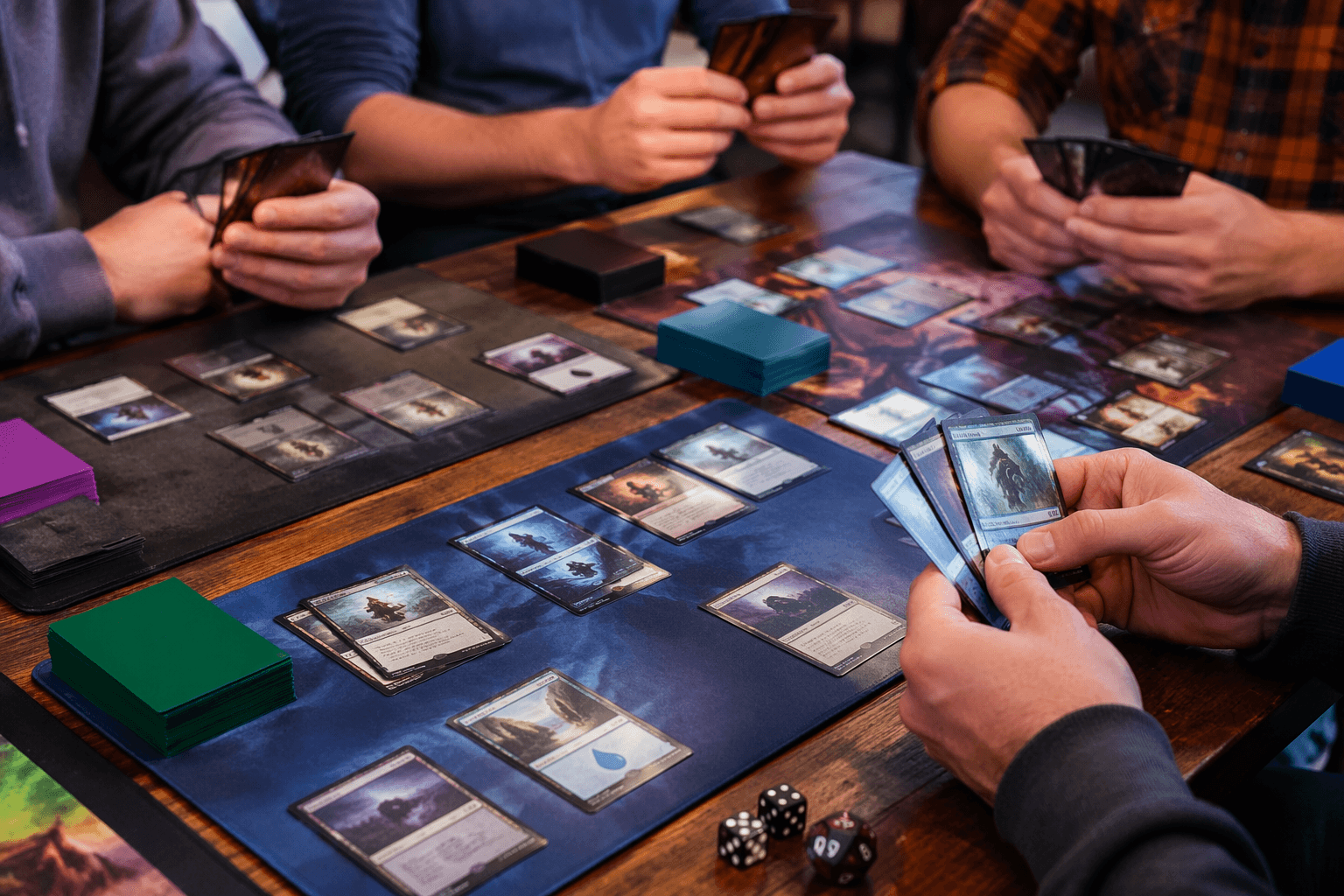
Two-card infinite combos are off the table in Bracket 1 and allowed in Bracket 3 only after turn six. Levi Perry frames the pregame check around three questions: how fast the win appears, whether it is telegraphed, and whether the table actually wants that kind of game.
How brackets sort combo decks
Bracket 1 is the clearest line in the sand, with an expectation of long, low-pressure games where a surprise win line does not belong in the first place. If your deck leans on a compact combo, Bracket 1 is not the place to hide it.
Bracket 2 opens the door a little, but not by much. Two-card infinites are still restricted, and the win conditions are supposed to feel incremental, telegraphed, and disruptable. That makes traditional combo finishes a gray area unless your group has already said it wants that style of game. The practical question is not only whether the deck is legal for the bracket, but whether the line you are presenting will feel fair to the other three players.
Bracket 3 changes the conversation again. Waiting until after turn six turns a combo from an early, table-warping surprise into something closer to a higher-power finish that the pod can plan around. A classic line like Mikaeus plus Triskelion can sit reasonably in that space even though it would feel wildly out of place in the lower brackets.
The system also leaves room for three-card combos at any bracket. The point is not to erase combos from Commander but to separate a deck that incidentally contains a combo from a deck built to assemble one as fast as possible.
What Rule 0 still has to settle
Bracket labels do not replace the pregame talk. Wizards and the Commander Format Panel have kept that point at the center. A deck can be technically legal for a bracket and still be a bad fit for the game your pod wants to play. Rule 0 comes back in because the conversation is still about intent, not just deck construction.
The most useful way to frame your deck is to say what it is trying to do. If the combo is a backup plan that shows up late, say that. If your list is built to assemble a line quickly, say that too. The bracket system works best when you use it as shared language for speed and pressure, not as a loophole around expectations.
Wizards’ February 2025 brackets announcement pointed players toward the same kinds of concerns, including two-card infinite combos, extra turns, mass land denial, and tutors. A combo deck rarely exists in isolation. A fast tutor package, a pile of extra turns, or repeated resource denial all push the same signal: this deck is trying to end the game on its own terms, quickly.
Why the bracket language exists at all
Commander Brackets launched as a beta on February 11, 2025, to replace the old power-level 1-10 shorthand with a common language for finding well-paired games. Wizards built the system to sort decks by the cards and combinations inside them, with community help, and aimed it at matchmaking more than policing.
In April, Gavin Verhey said 87% of players surveyed at MagicCon: Chicago found the system helpful. Wizards also said about half of Commander games on Magic Online were already using brackets, while SpellBot Discord communities were seeing about 54% of pairings use them.
Wizards kept refining the system through the fall and into 2026. After three MagicCons and nine months of use, the company called brackets a success overall in October while also saying the system still needed clearer terminology and a stronger emphasis on player intent. By February 2026, Wizards said brackets were working well, but that Commander still needs better language for different play experiences, from deeply thematic casual decks to cEDH, and that the game’s slower rate of change should be preserved even as brackets, Game Changers, and related rules continue to evolve. Wizards also said Brackets 2, 3, and 4 were expected to be the most popular brackets.
Why combo placement matters in Commander specifically
Commander’s structure keeps this conversation coming up. It is a four-player multiplayer format with 99 cards plus a commander, 40 starting life, and roughly 20 minutes of game time per player.
A fast or untelegraphed combo changes that pace immediately. Even if the line is perfectly legal, it can flip the table from a long multiplayer game into a sudden race to answer one player’s assembled pieces. That is why the bracket system focuses so heavily on timing, tutors, and the shape of a deck’s win conditions rather than simply asking whether a combo exists at all.
Before you shuffle up, the cleanest approach is simple:
- If your win is a two-card infinite, treat it as a higher-power signal and say so plainly.
- If your combo is three cards or more, explain how often it appears and whether your tutors make it reliable.
- If your deck is built for long, social games, avoid lines that end the game before the table gets to play theirs.
This article was produced by Prism’s automated news system from verified source data, official records, and press releases, then run through automated quality and moderation checks before publishing. The system is built and supervised by the people who set the standards it runs under. Read our full AI policy.
Did this article answer your question?