Commander Etiquette Checkup Highlights Rule Zero and Power Level Mismatches
A mismatched pod turned into a live-fire lesson in Rule Zero, proving that brackets only work when everyone says what their deck actually does.

The problem is not permanent exile. It is expectation mismatch.
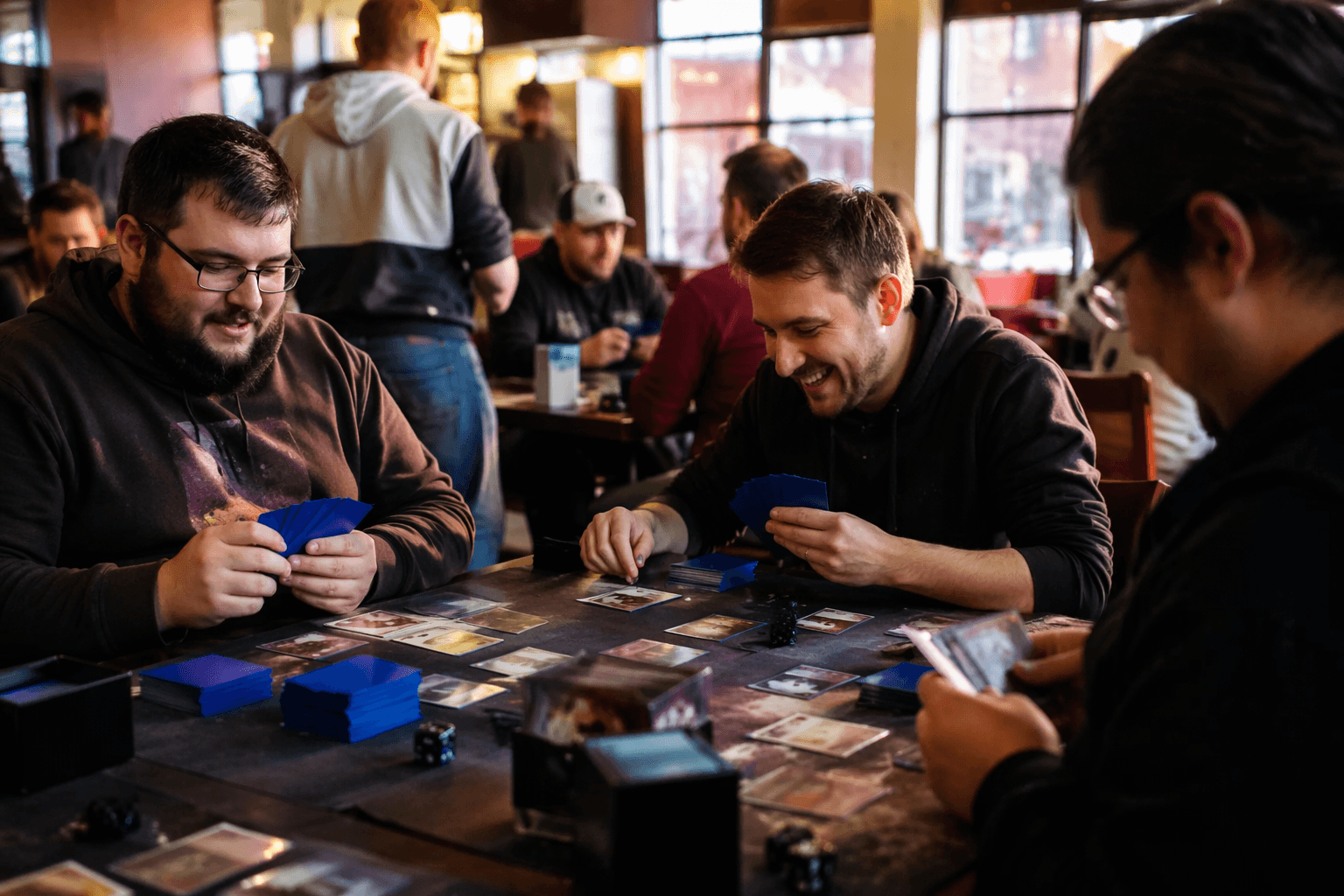
The sharpest lesson from this Commander etiquette checkup is not about Farewell, sweepers, or whether a board gets wiped clean. It is about the moment before the first land drop, when one player says “Bracket 2,” another hears “casual,” and the table quietly drifts into three different games at once. In the featured pod, Choco, Seeker of Paradise was presented as Bracket 2, Ertha Jo, Frontier Mentor as low-to-mid Bracket 3, and Farewell was the only Game Changer, yet the table still included a modified Blight Curse precon, Progenitus, and Winota, Joiner of Forces, a spread that clearly did not live in the same power band.
That is why this story lands as a rules-and-social-contract utility piece instead of a morality play about exile. Permanent exile is only miserable when it arrives in a game that never agreed on speed, pressure, or threat density. In Commander, the real skill is not merely surviving what hits the stack; it is making sure everyone at the table understands what kind of game is about to happen.
Rule Zero is still the real matchmaking system.
Wizards of the Coast introduced Commander Brackets in beta on February 11, 2025, explicitly as a replacement for the old power level 1 to 10 shorthand. The point was not to abolish conversation, but to give players a more useful language for finding the right pod, especially at stores and larger events. Wizards also said from the start that Rule Zero still applies and that no bracket system can stop a player from misrepresenting a deck’s power.
That matters because the official Commander philosophy frames the format as both a ruleset and a way of finding the right kind of game. The rules exist to help players find other players who want the same experience, and Rule Zero is built on group consensus rather than a unilateral label slapped on a deck box. The column’s whole point is that a self-report like “this is Bracket 2” only works if the rest of the table gets to ask what that actually means in practice.
The Bracket system is useful, but it is not a lie detector.
By April 22, 2025, Wizards’ own update said an official MagicCon: Chicago survey found that 87% of players who tried brackets found them helpful. That same update said about half of Commander games on Magic Online were already using brackets, and about 54% of games on major Discord servers using SpellBot were doing the same. By October 21, 2025, Wizards said brackets had been used for three MagicCons and nine months and called the system a success overall, even while acknowledging that intent remained the hard part to solve.
That distinction is the key to reading the featured game. Gavin Verhey’s October update included the blunt reminder that a deck can technically fit Bracket 2 and still play at a very high power level. That is not a contradiction; it is the entire warning label. If one player treats a precon as inherently safe and another treats any deck led by a known powerhouse commander as ready for a sharper night, the mismatch starts before mulligans even happen.
Game Changers are a guide, not a full diagnosis.
The article also sits inside the ongoing evolution of the Game Changers conversation. Wizards said its October 2025 Commander Summit in Renton, Washington brought the full Commander Format Panel together for three days of discussions, meetings, and in-person talks, with part of the goal being to reduce confusion around heuristics like early-game combos and how many tutors a deck should run. That fits the broader late-2024 shift, when Wizards took management of Commander after the Commander Rules Committee handed it over and built a new format structure around public input and clearer language.
EDHREC’s own Game Changers guidance makes the same point in practical terms: Bracket 1 and 2 decks generally avoid Game Changers, Bracket 3 decks generally run up to three Game Changers, and Brackets 4 and 5 are unrestricted. In the featured deck, Farewell was the only Game Changer, which is exactly why the story is more nuanced than a simple card-counting exercise. One headline card does not define the whole shell, and one Bracket label does not automatically describe how the deck actually pressures a table.
What to do before the shuffle: three checks that matter more than labels.
If you want to avoid the kind of pod that turns into a feel-bad, the fix is not a stricter exile policy. It is a better pregame conversation, built around how the deck plays rather than what a label says on the tin.
- State the shell, not just the bracket. If a deck is a precon modification, say what changed and how hard it pushes. A “modified Blight Curse precon” tells a very different story from a stock precon, and a deck built around Progenitus or Winota, Joiner of Forces tells the table to ask sharper questions about speed and pressure.
- Explain your danger turns. Tell the pod whether your deck is trying to develop, lock, recur, or end the game quickly. A Bracket 2 deck that can still present high power patterns is exactly why “I’m on Bracket 2” is not enough on its own.
- Ask what the table expects. If one player wants low-to-mid Bracket 3 and another wants a looser casual game, the gap is visible before anyone draws seven. The right answer is not to hope the mismatch smooths itself out; it is to renegotiate before the game starts.
Why this specific case matters to Commander right now.
This story also explains why brackets have spread so quickly since the beta launch. Wizards said Commander is now the largest format in Magic in its February 9, 2026 update, and that players want everything from highly thematic casual games to cEDH. That range is exactly why the new language exists, but also why the old habits still need to change. The format now has more tools than ever, yet the human part remains the hard part.
The real takeaway is that labels are only a starting point. Choco, Seeker of Paradise and Ertha Jo, Frontier Mentor were not the problem; the problem was a table that did not fully share what “casual,” “Bracket 2,” or “Bracket 3” meant in actual gameplay. In Commander, the strongest interaction is still the one that happens before the first spell resolves: the conversation that gets everyone on the same page.
This article was produced by Prism’s automated news system from verified source data, official records, and press releases, then run through automated quality and moderation checks before publishing. The system is built and supervised by the people who set the standards it runs under. Read our full AI policy.
Did this article answer your question?