EDHREC spotlights a nine-card Commander combo for a memorable win
EDHREC’s nine-card combo spotlight is all about spectacle, but the real lesson is knowing when a wild line is a finish and when it is just table theater.
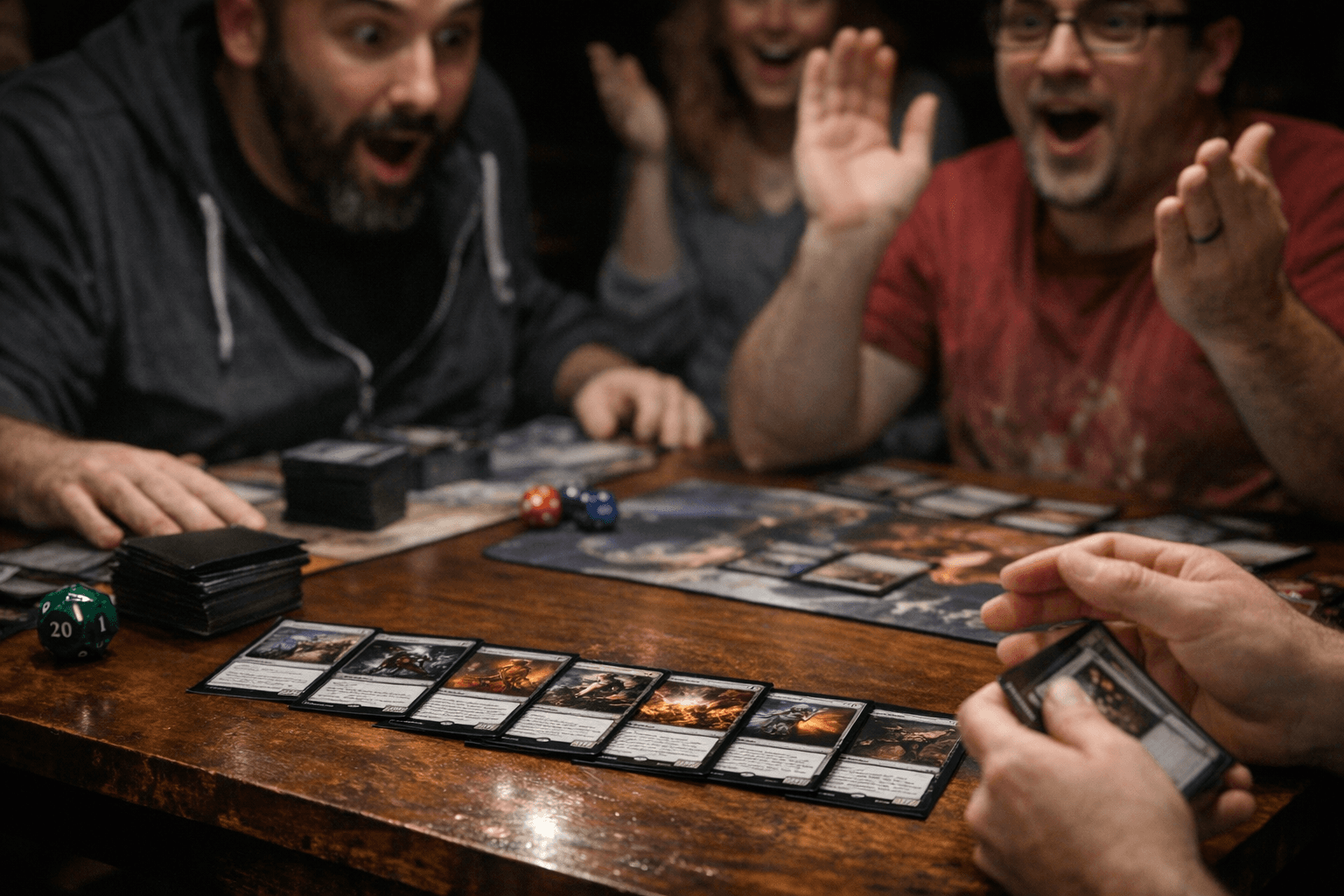
What EDHREC is really celebrating
EDHREC’s April 8 combo piece leans straight into Commander’s love of absurdity: “Wanna pull off a nine-card combo to end your Commander game memorably?” That is not the language of efficiency, and that is exactly why it works. The story taps the part of EDH that enjoys puzzle-solving, big turns, and the kind of win that gets retold long after the table is shuffled up.
The appeal is not that a nine-card line is the cleanest route to victory. It is that Commander makes room for lines that would be too clunky in most constructed formats, then turns them into a test of sequencing, timing, and nerve. In a format built around singleton deckbuilding and multiplayer chaos, the spectacle is part of the point.
Why a nine-card combo still matters
Commander is a free-for-all multiplayer format where players start at 40 life, and a player who takes 21 or more combat damage from the same commander loses the game. That alone shows how different the format is from the one-turn, one-opponent logic of other formats. Games can stretch, board states can get crowded, and weird interactions have time to breathe.
That is why a convoluted combo article can still be genuinely useful. Even a line that feels like a joke teaches you something real about redundancy, sequencing, and how to build around pressure points in a deck. If you can make a nine-card pile function, you probably understand your tutors, enablers, and backup pieces better than most decks that only ever aim for the obvious finish.
Table theater or practical finisher?
The best way to read a combo like this is to separate the stories from the sleeves. Some lines are pure table theater: fun to assemble once, great to describe after the game, and not worth warping a list around unless your pod is already built for that level of drama. Others are awkward on paper but still teach you how to piece together a real win condition.
A good rule of thumb is to ask three questions:
- Does the combo use cards that are already useful on their own?
- Can it survive removal, mana strain, and a multiplayer table that gets one full turn cycle to react?
- Does it reward your deck for playing naturally, or does it demand too many dead draws?
If the answer leans toward no, the line is probably a story first and a finisher second. If the answer leans toward yes, then the combo may be ugly, but it is also real.
How Combo Week changes the conversation
The timing matters because EDHREC’s Combo Week ran from April 8 to April 12, 2026, and the nine-card piece was part of that broader push. EDHREC also highlighted “The Top 20 Commanders With Two-Card Combos” during the same window, which makes the editorial point even clearer: the community is thinking about combo density, not just combo spectacle. That framing pushes players to compare the ridiculous with the reliable.
Wizards of the Coast has been doing the same kind of matchmaking work from another angle. Commander Brackets arrived as an optional matchmaking system in February 2025, then received an October 21, 2025 update and another on February 9, 2026. That matters because it reflects a live effort to help pods align expectations before a game starts, which is exactly where combo-heavy decks can create friction if the table did not sign up for them.
Why the rules conversation matters here
The Commander Rules Committee has long described the format through a social lens, and its guidance is updated roughly every three months when needed. That philosophy helps explain why a piece about a nine-card combo lands so well in EDH. Commander is not just about who can goldfish fastest. It is about whether the deck, the pod, and the game plan all line up in a way that feels good for everyone involved.
That is also why the bracket conversation and the combo conversation overlap so naturally. A deck built for a flashy, elaborate finish may be totally fine in one pod and wildly out of place in another. Commander keeps asking players to solve that mismatch before it turns into a bad game.
The practical benchmark for real combo decks
Commander Spellbook is the combo database players reach for when they want to compare a baroque line to something proven and efficient. It describes itself as the premier combo search engine for Commander and EDH, and its common results make the contrast obvious. Lines like Demonic Consultation plus Thassa’s Oracle, or Exquisite Blood plus Sanguine Bond, are compact, recognizable, and far easier to slot into a deck that wants to end games consistently.
That comparison is what gives the EDHREC feature its value. A nine-card combo can be a memorable one-off, but it also highlights how much cleaner the best-known finishers tend to be. If a deck wants a practical closer, the benchmark is not whether a combo is hilarious. It is whether it can show up under pressure and still end the game when it needs to.
What to take from the piece
EDHREC’s April 8 spotlight works because it understands the split inside Commander culture. Some players want the shortest path to victory; others want the most absurd one; plenty want both, depending on the pod. The nine-card combo framing gives those players a common language for asking the right question: is this line a real finisher, or just an unforgettable story?
In Commander, that distinction is everything. The best decks know how to do both, but the pods that play best are the ones that know which kind of combo is sitting across the table before the first spell is cast.
This article was produced by Prism’s automated news system from verified source data, official records, and press releases, then run through automated quality and moderation checks before publishing. The system is built and supervised by the people who set the standards it runs under. Read our full AI policy.
Did this article answer your question?