Fresh Hidden Gems Revive Muldrotha, the Gravetide Commander Deck
Muldrotha still has room to surprise the table. Insidious Roots and Irma show how underplayed permanents turn graveyard loops into mana, tokens, and pressure.
Why Muldrotha still rewards a rebuild
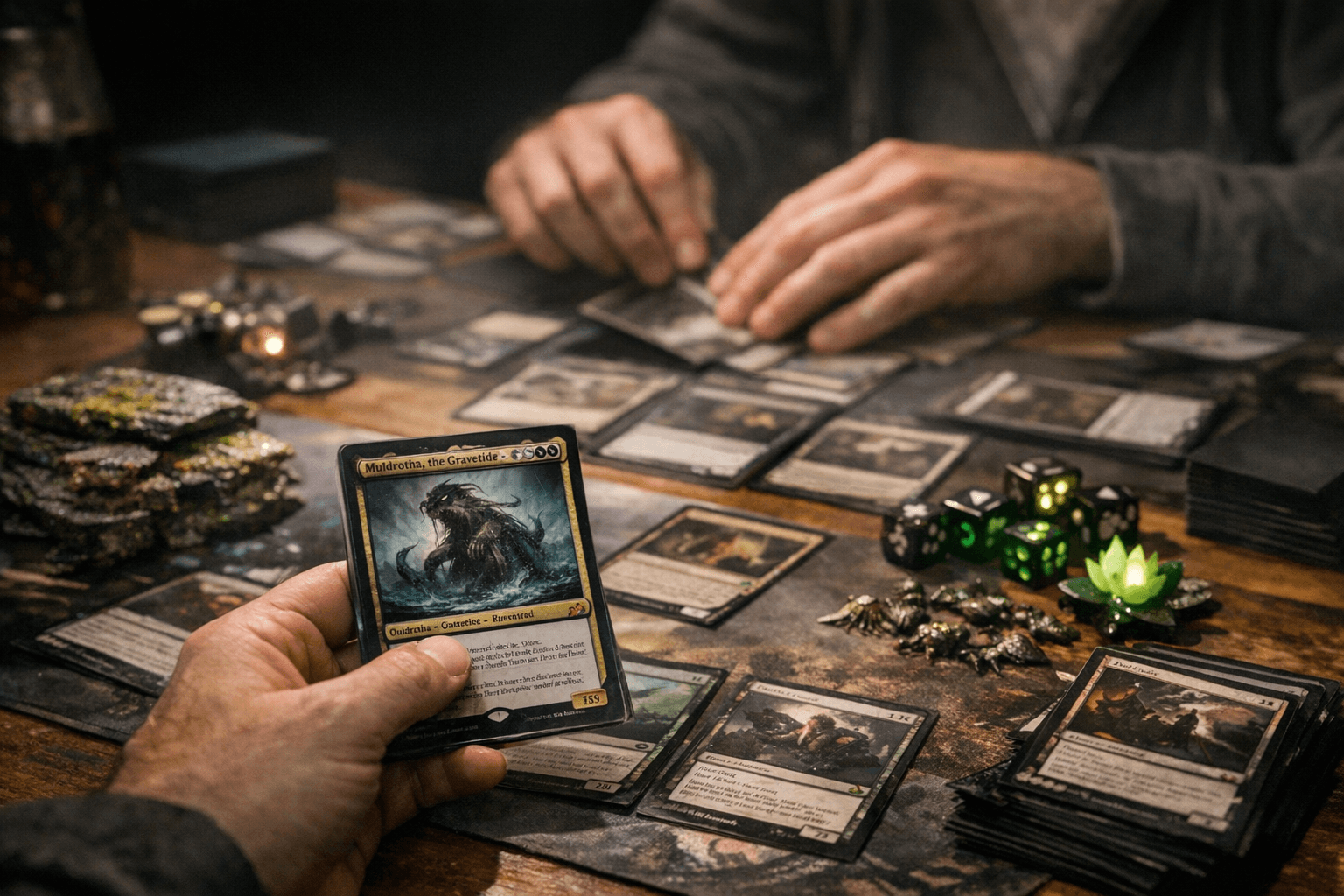
Muldrotha, the Gravetide is one of those commanders that never really leaves the conversation because the rules of Commander keep rewarding exactly what it does best. Decks are built as 99 cards plus the commander, they are singleton except for basic lands, multiplayer starts at 40 life, and every time you recast your commander from the command zone you pay two extra mana on top of the normal cost. That matters for a six-mana Sultai engine first printed in Dominaria in 2018, because the whole game plan is about making every graveyard card feel like a second hand instead of a dead draw.
What hidden gems means for this commander
EDHREC's Hidden Gems rule is simple and sharp: a hidden gem is a card that appears in 15 percent or fewer decks for that commander. That makes it a perfect lens for Muldrotha, because the commander already sits at rank #34 on EDHREC with 22,706 decks, is number 30 among commanders built in the last two years, and number three among Sultai commanders, so the shell is popular enough to feel familiar and stale enough to deserve new angles. The archetype tags tell the story too, with Sacrifice, Mill, Reanimator, and Graveyard all sitting at the center of the commander's identity.
The best upgrades solve the exact problems Muldrotha creates
Insidious Roots is the cleanest example of a Muldrotha card that looks modest until you actually play games with it. In Levi Perry's Hidden Gems piece, it lands at 12 percent, and its two halves line up beautifully with what Muldrotha wants to do anyway: your creature tokens can tap for mana, and every time one or more creatures leave your graveyard, you make a 0/1 Plant token that also grows your whole Plant army. That is why Roots beats the more obvious instinct to lean harder on Field of the Dead or Scute Swarm. Those cards are strong, but they ask you to keep feeding them land drops, while Insidious Roots rewards the exact loop Muldrotha already built to run, casting permanents from the graveyard over and over.
Irma, Part-Time Mutant is the kind of wild, low-percentage tech that keeps an old favorite from becoming a solved list. Perry calls out its 0.3 percent inclusion and points to the fun part immediately: at the start of combat, it can become one of your creatures while keeping its own name and stacking +1/+1 counters, which means it can function like a second Muldrotha that keeps getting bigger. The best part is the flexibility. One turn it can be Spore Frog, the next Doc Aurlock, Grizzled Genius, then Teval, the Balanced Scale, so the card is never just a clone and never just a beater. That makes it more useful than the usual generic copy creature, because it solves the table's current problem instead of asking you to wait for the perfect board state.
The hidden-gems mindset changes your permanent mix
The strongest Muldrotha lists are not just graveyard piles. They are permanent piles with a job description, and current tuned shells make that obvious by packing cards like Aftermath Analyst, Ripples of Undeath, Haywire Mite, Seal of Primordium, Seal of Removal, Wrenn and Realmbreaker, Tyvar, Jubilant Brawler, and Insidious Roots into the same machine. That mix does a lot of work at once: it gives you self-mill, removal, ramp, recursion targets, and repeatable interaction that Muldrotha can rebuy from the graveyard instead of relying on one-shot spells that vanish after a single use. In actual Commander games, that matters more than chasing the flashiest staple, because replayable permanents keep your deck moving after removal and keep your turns from collapsing into topdeck mode.
What makes this style of tuning so satisfying is that it keeps the commander's identity intact while changing how the deck feels from turn to turn. Muldrotha has always been about value, but the fresh version is not the one with the most obvious EDHREC hits. It is the version that turns a graveyard into mana, a token engine into inevitability, and a utility slot into a card you are happy to cast, sacrifice, and cast again. That is how an old Sultai legend stays dangerous without becoming predictable.
This article was produced by Prism’s automated news system from verified source data, official records, and press releases, then run through automated quality and moderation checks before publishing. The system is built and supervised by the people who set the standards it runs under. Read our full AI policy.
Did this article answer your question?