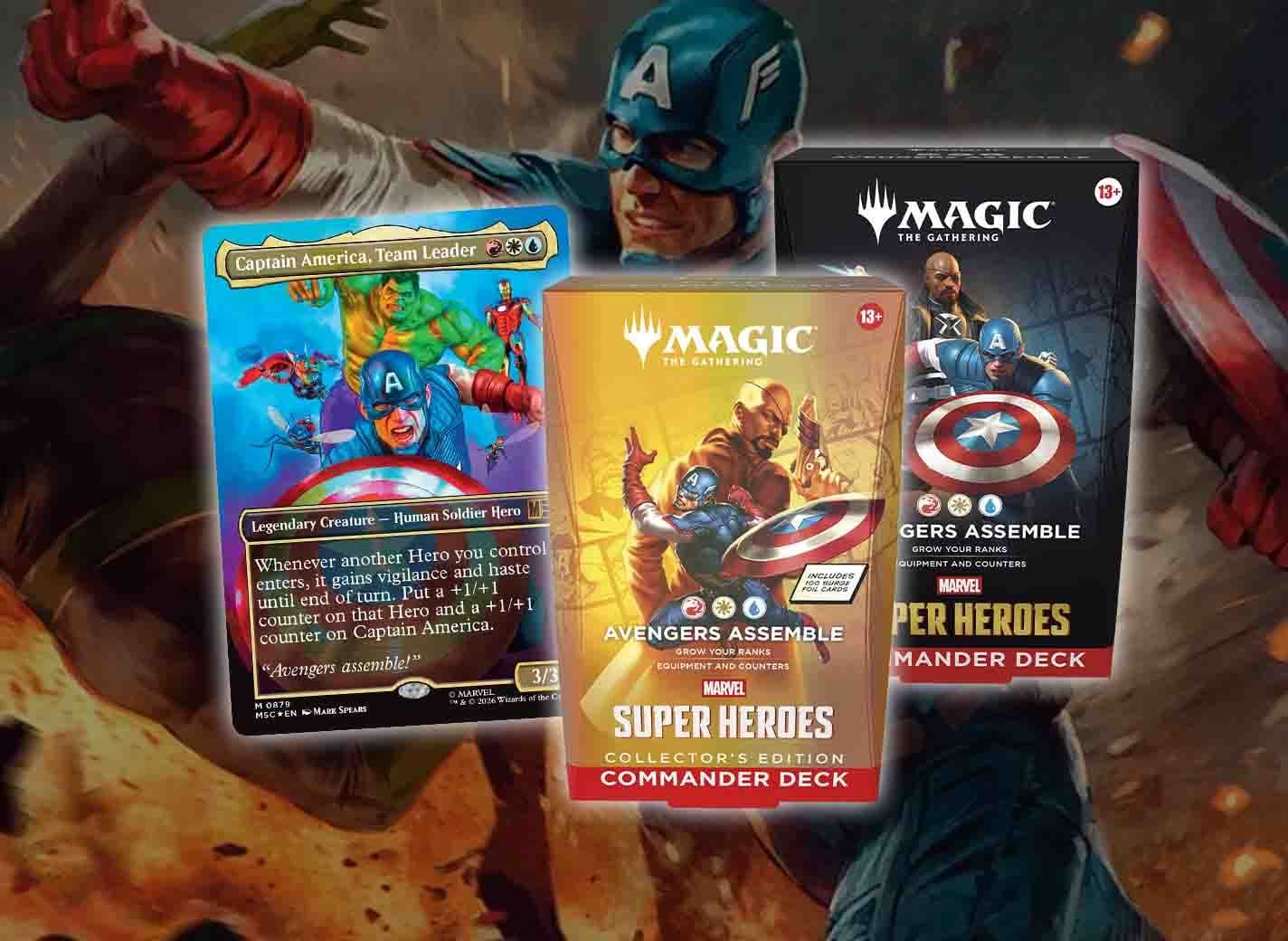
How to Pilot a Commander Precon and Start Winning Fast
A precon wins fastest when you treat it like a real game plan, not a pile of random cards. Learn the mulligan, the first turns, and the deck’s cleanest finish before you buy a single upgrade.

The biggest mistake new Commander precon buyers make is shuffling up a ready-made deck and treating it like a box of loose synergies. A Commander game already runs long enough, about 20 minutes per player by Wizards’ estimate, that one shaky opener can waste an entire pod if you never identify what the deck is trying to do.
Read the precon as a game plan
A Commander precon is built to be more than a budget pile of cards. Wizards has long described these products as “ready-to-play” 100-card decks, and recent product pages keep stressing that they are built around specific strategies and can be played immediately without deckbuilding. That is the right mindset for your first session: the deck is already telling you how it wants to win, and your job is to follow the script before you start rewriting it.
That is why the insert matters as much as the flashy commander on the box. Starter Commander Decks were sold as decks that let players “jump straight into a Commander battle with friends,” and they came with strategy advice, a summary of the rules, and a reference card for what to do on your turn. Bloomburrow Commander decks were also marketed as ready to play right out of the box, with three foil legendary creature cards, while Modern Horizons 3 Commander decks arrived the same way, with a ready-to-play 100-card deck and a strategy insert. The message is consistent: the first upgrade is understanding, not shopping.
Mulligans decide whether the deck feels smooth or clunky
If you want to start winning fast, your first real skill is deciding what to keep. In Commander, where every deck is 99 cards plus a commander, your opening hand should do two things immediately: get you into the game and point you toward the deck’s core engine. A hand with enough lands, the right colors, and a card that either ramps, draws, or advances the strategy is usually worth keeping; a hand full of expensive spells that only look powerful later is usually a trap.
This matters even more with precons because they are meant to function without tuning. You are not trying to assemble perfection on turn one. You are trying to avoid the most common rookie mistake, which is keeping a hand that technically has spells but no plan for the first three turns of a four-player game.
Sequence the first turns with the commander in mind
Once the hand is kept, play your first turns like you know what the deck is trying to accomplish. Most precons reward early development over flashy plays, so land drops and ramp pieces usually matter more than holding up every answer in your hand. If the deck’s commander is part of the engine, get it down when it will actually change the board, not when it merely looks cool to cast.
The table role is important here. Commander is a social format, but it is still a constructed format, and the default pace is not a duel where every card has to trade immediately. Wizards’ own description of the format as a typical four-player game means your early turns should be about building toward a stronger middle game than the other three players, not about spending resources just to feel active. If your deck has a draw engine, token maker, graveyard loop, or mana advantage piece, that card usually tells you when to press and when to hold back.
Learn the one win pattern that the deck already contains
Every precon has at least one cleanest path to victory, and finding it is the fastest way to stop the deck from feeling random. That win pattern is often simple: build a board, protect your commander, and convert momentum into damage or a payoff turn. In practice, that can mean a token deck swarming after a single payoff, a graveyard deck looping value until the table runs out of answers, or a commander-focused list turning one threat into lethal commander damage.
The point is not to memorize every line before game one. The point is to notice which cards make the deck look unfair when they are online together. Once you know that, your mulligans and early sequencing get much easier because you stop asking, “What should I do with this hand?” and start asking, “Does this hand get me to the deck’s best turn fast enough?”
Why precons are still the best entry point into Commander
Precons have been part of Commander almost from the start. Wizards first released Commander preconstructed decks in 2011 as the original Commander product, and that first wave included five 100-card decks. That history matters because it explains why the format still leans on precons as teaching tools, social entry points, and ready-made experiences for players who do not want to build from scratch.
The modern product line keeps reinforcing that role. Wizards’ recent Commander releases continue to center specific strategies and immediate playability, which is why a new deck can be the fastest route from purchase to your first real game. When a product is already bundled to work out of the box, the smartest move is to learn how it wins before you ever change a slot.
The current rules backdrop rewards simple, disciplined play
Commander is not a static format, and that is another reason precon pilots should learn the deck first. In September 2024, Wizards announced bans on Dockside Extortionist, Jeweled Lotus, Mana Crypt, and Nadu, Winged Wisdom, then later, on April 22, 2025, unbanned Gifts Ungiven, Sway of the Stars, Braids, Cabal Minion, Coalition Victory, and Panoptic Mirror. In October 2024, Wizards also announced the Commander Format Panel after receiving management of Commander from the Commander Rules Committee.
That changing backdrop makes clean fundamentals even more valuable. If you can identify your deck’s engine, keep the right opening hands, and sequence the first turns without panic, you will be ahead of a lot of tables before you ever touch an upgrade list. Commander rewards familiarity, and a precon gives you exactly that if you let it teach you first.
This article was produced by Prism’s automated news system from verified source data, official records, and press releases, then run through automated quality and moderation checks before publishing. The system is built and supervised by the people who set the standards it runs under. Read our full AI policy.
Did this article answer your question?