Myrkul Turns Creature Death Into Permanent Enchantment Value in Commander
Myrkul turns dying nontoken creatures into enchantment copies, and 1,556 tracked combos show how quickly that becomes a Commander engine, not just value.
The seven-mana God that rewrites death
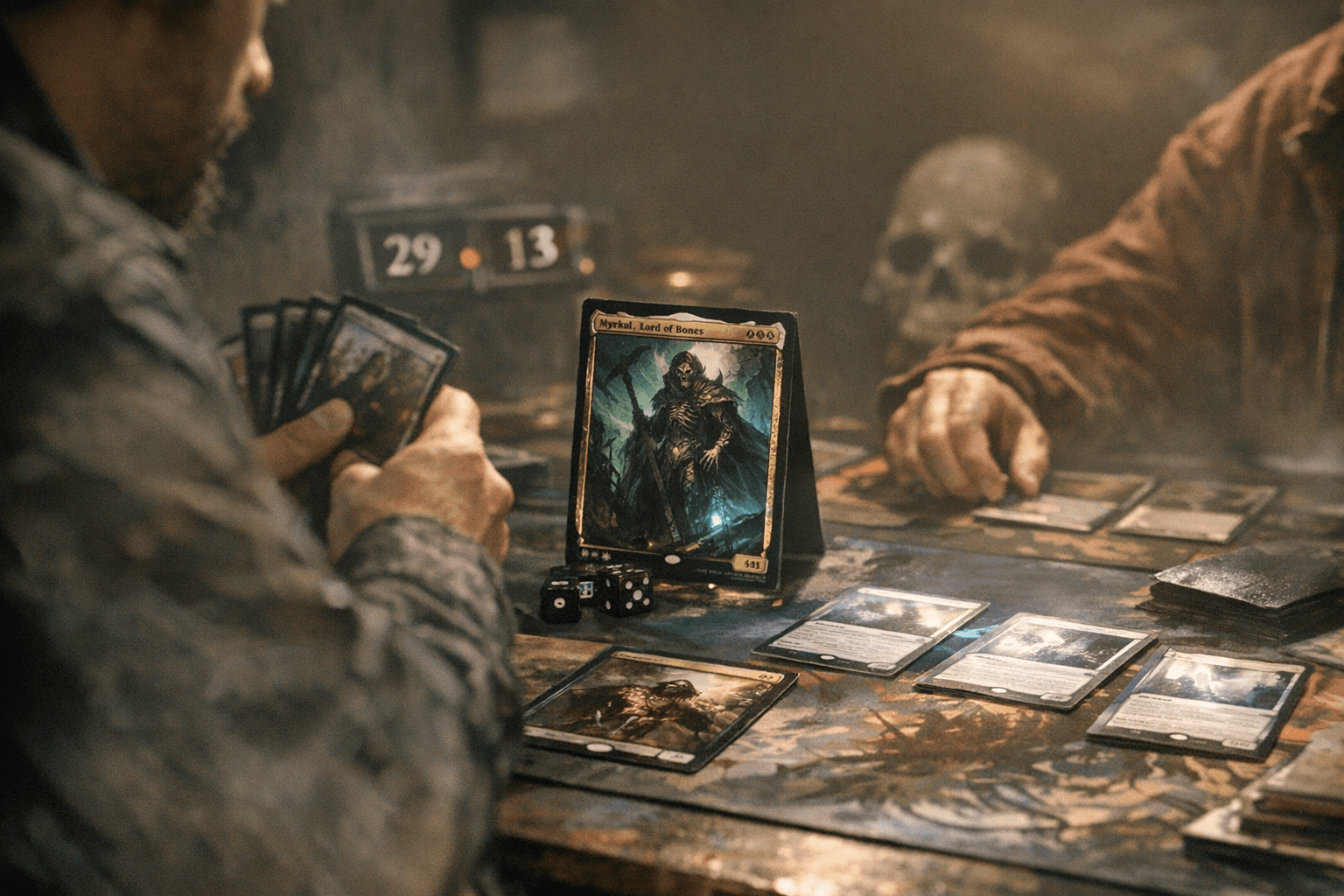
Myrkul, Lord of Bones does something Abzan decks usually only dream about: it makes death stick. At seven mana, the God is not cheap, but its text gives it a very unusual identity, because when your nontoken creatures die, you can exile them and create enchantment copies instead of leaving behind ordinary creature bodies.
That single replacement effect changes the feel of the whole deck. Sacrifice stops being a cost you pay once and forgets about, and starts becoming a resource you bank in a form that is much harder for most Commander tables to clean up. Historical deck guides from the set’s release called Myrkul an “interesting spin on an enchantment deck,” and that still captures the appeal: the commander turns creature loss into permanent board presence.
How to turn on the indestructible clause
Myrkul’s other wrinkle is the one that makes the card feel like a puzzle box. Wizards of the Coast’s Gatherer rulings and Scryfall’s rules notes make clear that if Myrkul is dealt lethal damage at the same time its controller’s life total is reduced to at or below half their starting total, it will be indestructible when state-based actions are checked and survive.
That matters in real Commander games because it rewards you for leaning into life loss instead of playing scared. In a normal 40-life pod, the halfway point is 20, so effects that push you down quickly can actually protect the commander rather than put you in danger. Myrkul wants you to treat that threshold as a switch you flip, not a warning sign you avoid.
The most direct way to get there is to use cards that pressure life totals while advancing your hand. Toxic Deluge, Underrealm Lich, Ebonblade Reaper, Fraying Omnipotence, Infernal Contract, Necropotence, and Peer into the Abyss all fit that plan because they either spend life for power or drag you toward the halfway mark fast enough that Myrkul becomes safer to keep on board. Torgaar pushes that idea even harder, because it can aggressively halve a player’s life total and turns into a strange, perfectly on-theme payoff when it is paired with Myrkul’s ability.
The most abusable enchantment conversions
The most dangerous part of Myrkul is not just that your creatures die into enchantments. It is that their useful text usually stays behind while the fragile body disappears, which means a lot of familiar removal patterns stop working the way opponents expect.
Devoted Druid is the clearest example of how absurd this can get, and EDHREC highlights it as one of Myrkul’s common combo partners for infinite green mana. Barrenton Medic is another standout, because EDHREC lists it as a common piece for a damage-prevention lock. Once your board starts turning into enchantments, these are no longer just creatures that happened to die. They become persistent board objects that can keep doing their jobs from a much safer permanent type.
The enchantress angle is just as punishing. EDHREC also points to Ondu Spiritdancer in draw and trigger loops, and Myrkul shells often get even more mileage when cards like Eidolon of Blossoms or Setessan Champion are in the mix. Every enchantment copy you create can become another trigger, another draw, or another piece of incremental advantage, which means the graveyard is effectively feeding a second engine instead of a landfill.
That is why Myrkul is so hard to box in. It is not pure recursion, because the creature is exiled rather than returned to the graveyard. It is a hybrid of sacrifice, enchantment payoffs, and soft combo lines, and that combination is exactly what makes the commander feel so much more dangerous than a straightforward reanimator deck.
Why this is an Abzan deck and not just another graveyard pile
Draftsim notes that Myrkul is the only legendary Abzan creature that directly references enchantments, and that uniqueness is a huge part of the card’s identity. Abzan has always had graveyard value, token-making, and attrition tools, but Myrkul pulls those themes together into one commander that cares about creatures dying and enchantments staying in play.
TCGplayer’s framing is the right one here: Myrkul really suits a mix of enchantments and self-sacrifice. That means the best builds are not trying to do one thing in isolation. They want sacrifice outlets, life-payment cards, and enchantment payoffs all in the same 99, so every dead creature becomes both a refund and a permanent upgrade.
This is also why old, neglected Abzan cards suddenly look better. The commander gives those forgotten pieces a job again: creatures that were fair in normal shells become better when their death leaves behind an enchantment, and enchantment payoffs that once felt too slow now feed on a steady stream of converted bodies. Myrkul does not ask Abzan to imitate another color pair. It asks Abzan to become a deck where death itself is the engine.
What the combo count says about the ceiling
The sheer number of lines available tells you how far Myrkul can be pushed. EDHREC lists 1,556 combos for Myrkul, Lord of Bones, which is a loud signal that this is not just a grindy value commander. It is a build-around that rewards knowing exactly which creature abilities become terrifying once they are turned into enchantments.
That ceiling is what makes Myrkul such a strong upgrade path for players sitting on old Abzan staples. If your binder already has sacrifice outlets, enchantress cards, life-payment spells, and a few forgotten creatures with strong static text or activated abilities, Myrkul lets all of them work together in a way that feels unfair without needing a single flashy new package. Commander Legends: Battle for Baldur’s Gate came out on June 10, 2022, but Myrkul still plays like a fresh answer to an old problem: how do you make dying creatures matter forever? In this shell, the answer is simple, and it is brutal.
This article was produced by Prism’s automated news system from verified source data, official records, and press releases, then run through automated quality and moderation checks before publishing. The system is built and supervised by the people who set the standards it runs under. Read our full AI policy.
Did this article answer your question?