Obosh budget deck doubles cheap damage into lethal commander pressure
Obosh can absolutely turn spare change into lethal pressure. The trick is leaning hard into odd-cost burn, ping, and group-slug cards, then letting the commander do the multiplying.

Obosh on a budget is a real Commander plan, not a gimmick
The question behind EDHREC’s Obosh budget feature is the right one for Commander players: can a damage-doubling commander actually burn out a whole table without a pricey list? The answer is yes, and the reason is simple, Obosh does the heavy lifting. When your commander already doubles damage from odd mana value sources, cheap spells stop looking small and start acting like finishers.
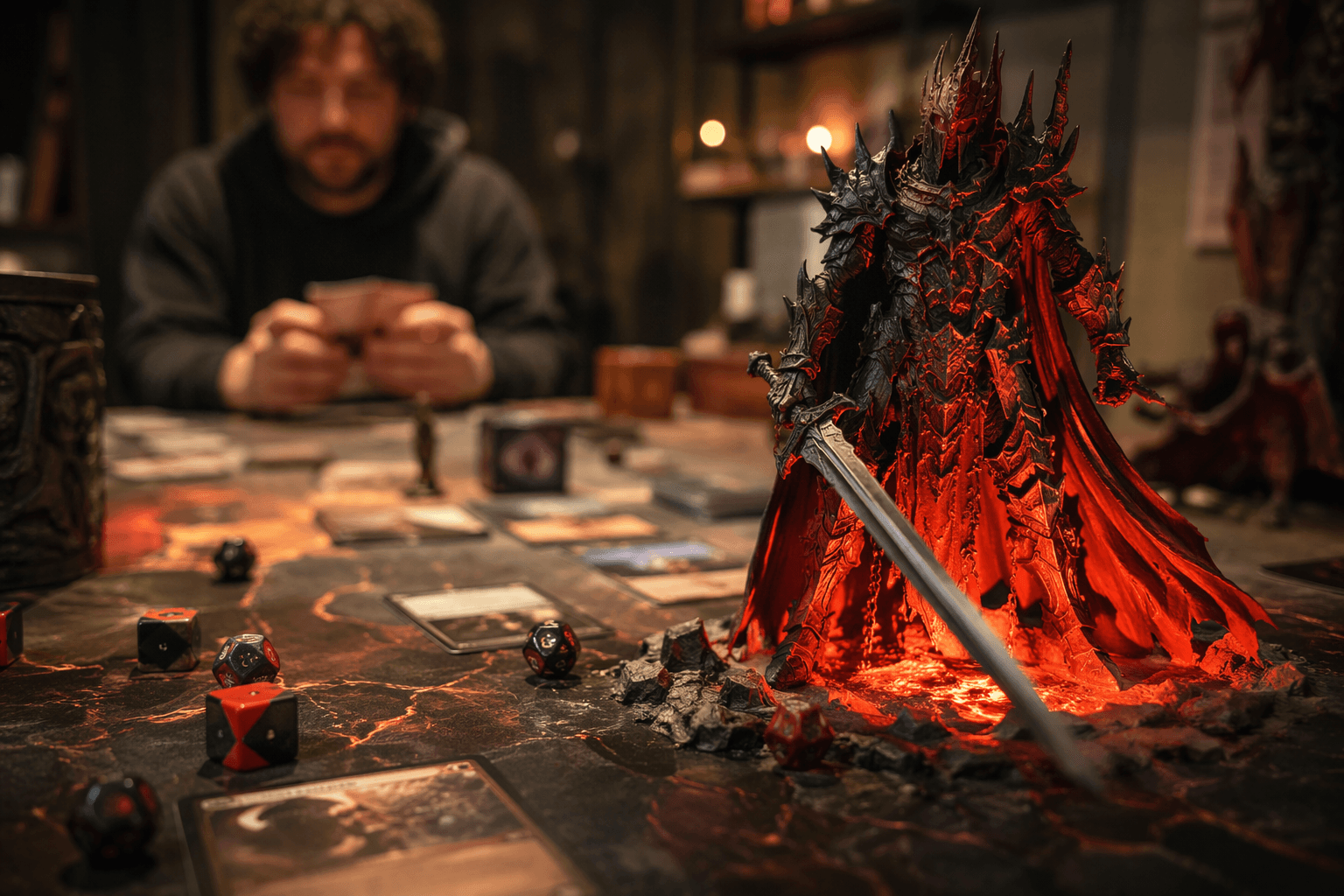
That is the appeal of Obosh, the Preypiercer, a Rakdos hellion that pushes you toward burn, ping, and incremental pressure. EDHREC currently lists Obosh at rank #1,150 with 1,722 decks, and the tag spread tells the story clearly: Burn, Dragon’s Approach, Group Slug, and Aggro are the dominant lanes. On the budget page, those same themes reappear in a smaller but very intentional pool of 166 decks, which makes the card feel less like a value engine and more like a weapon.
Why Obosh works so well with cheap damage
Obosh’s Oracle text is brutally efficient for budget Commander: if a source you control with an odd mana value would deal damage to a permanent or player, it deals double that damage instead. That one line changes the math on every burn spell, every ping effect, and every tiny chip shot that would normally be easy to ignore. A card that looks harmless on paper suddenly threatens to erase twice as much life total, and that pressure adds up fast across a multiplayer table.
The deckbuilding restriction is the price of admission. Obosh is a companion with the odd-mana-value requirement for your starting deck, so the list has to stay disciplined from the first card you slot in. That limitation is actually what makes the budget version attractive: you are rewarded for cutting expensive clutter and focusing on a clean curve of odd-costed damage sources that all point in the same direction.
The budget shell wants pressure, not prettiness
Arnaud Gompertz’s approach in the feature leans into big, theatrical plays rather than slow grindy wins, and that fits Obosh perfectly. Budget does not mean weakened here. It means you stop pretending you need a pile of premium staples and instead build around the commander’s multiplier with cheap cards that already do something useful on their own.
The best budget lists for Obosh should be built around three ideas:
- Burn spells that can go at players or creatures
- Repeatable ping and group-slug effects that keep damage flowing
- Odd mana value support cards that help the deck keep moving without breaking the companion rule
That kind of structure matters because Obosh does not need every card to be flashy. It needs enough sources of small damage that doubling them creates the same effect a more expensive deck would try to buy through raw card quality.
Dragon’s Approach and group slug give the deck real reach
EDHREC’s tagging is useful here because it shows where budget Obosh naturally lands. Dragon’s Approach is a particularly strong fit for a low-cost build because it turns a single card package into repeated table-wide pressure, and Obosh makes every damage instance count harder than it should. Group slug plays a similar role by turning the whole table into a damage race, which is exactly where a doubled-damage commander wants to be.
Burn and aggro do the rest of the work. In practice, that means your deck is not trying to out-value the pod over ten turns, it is trying to keep the life totals moving down every turn cycle until a few doubled hits become lethal. Obosh gives cheap effects a ceiling they normally would not reach, and that is why the commander is such a strong budget headline.
The companion rule change made this plan cleaner
There is also an important rules-history layer here. Wizards’ June 23, 2020 comprehensive rules update formalized the modern companion process, letting you pay {3} as a special action in your main phase with an empty stack to move a companion from outside the game into your hand. That matters because it made companion decks like Obosh much more practical after Ikoria.
Before that update, the companion mechanic carried more friction. Afterward, Obosh became easier to use as a reliable build-around rather than a clunky novelty, and that shift helped make odd-mana-value decks feel like real Commander archetypes instead of corner-case experiments.
How to scale the deck without losing the Obosh identity
The cleanest upgrade path is to keep the same core shape at every budget level and increase card quality, not complexity. At the lowest spend level, the deck should lean almost entirely on low-cost burn, ping effects, and odd-mana support pieces that keep the pressure constant. That version is already functional because Obosh itself is the multiplier.
From there, each upgrade step should improve the deck’s density of pressure and resilience:
1. Start with the cheapest odd-cost damage sources you can find, especially cards that hit every player or can be pointed flexibly.
2. Add more repeatable damage engines so the deck does not fold if one spell gets answered.
3. Replace the weakest support cards with stronger odd-cost payoffs that either scale damage or make your clock faster.
4. Keep the curve disciplined so Obosh stays online as often as possible and the companion restriction never becomes a burden.
The key is not to abandon the budget shell when you spend more. The whole point of Obosh is that the commander already supplies the dramatic multiplier, so the upgrades should improve consistency and ceiling, not replace the plan.
Why this kind of list overperforms for the money
Obosh is a good budget commander because the expensive part of the win condition is already built in. EDHREC’s May 27, 2026 feature captures that neatly by asking whether a commander with a damage-doubling engine can close a table on around a $1.11-per-card average, and the answer is yes when the deck stays focused. Cheap red-black damage sources do not need to be premium cards when every point of damage is suddenly worth twice as much.
That is the real draw of the archetype. Obosh gives you a straightforward game plan, a strong companion restriction that keeps the list honest, and a damage multiplier that makes low-cost spells feel like they belong in a much pricier deck. If you want a Rakdos Commander build that can hit hard without asking for a huge wallet, this is the kind of shell that proves budget and lethal pressure can sit at the same table.
This article was produced by Prism’s automated news system from verified source data, official records, and press releases, then run through automated quality and moderation checks before publishing. The system is built and supervised by the people who set the standards it runs under. Read our full AI policy.
Know something we missed? Have a correction or additional information?
Submit a Tip
