Overseas Commander Players Push 42 Lands for Faster Early Mana Consistency
Forty-two lands sounds extreme, but the math says it can quietly solve Commander’s biggest early-game problem.

42 lands is not a joke if your deck keeps missing its fourth land
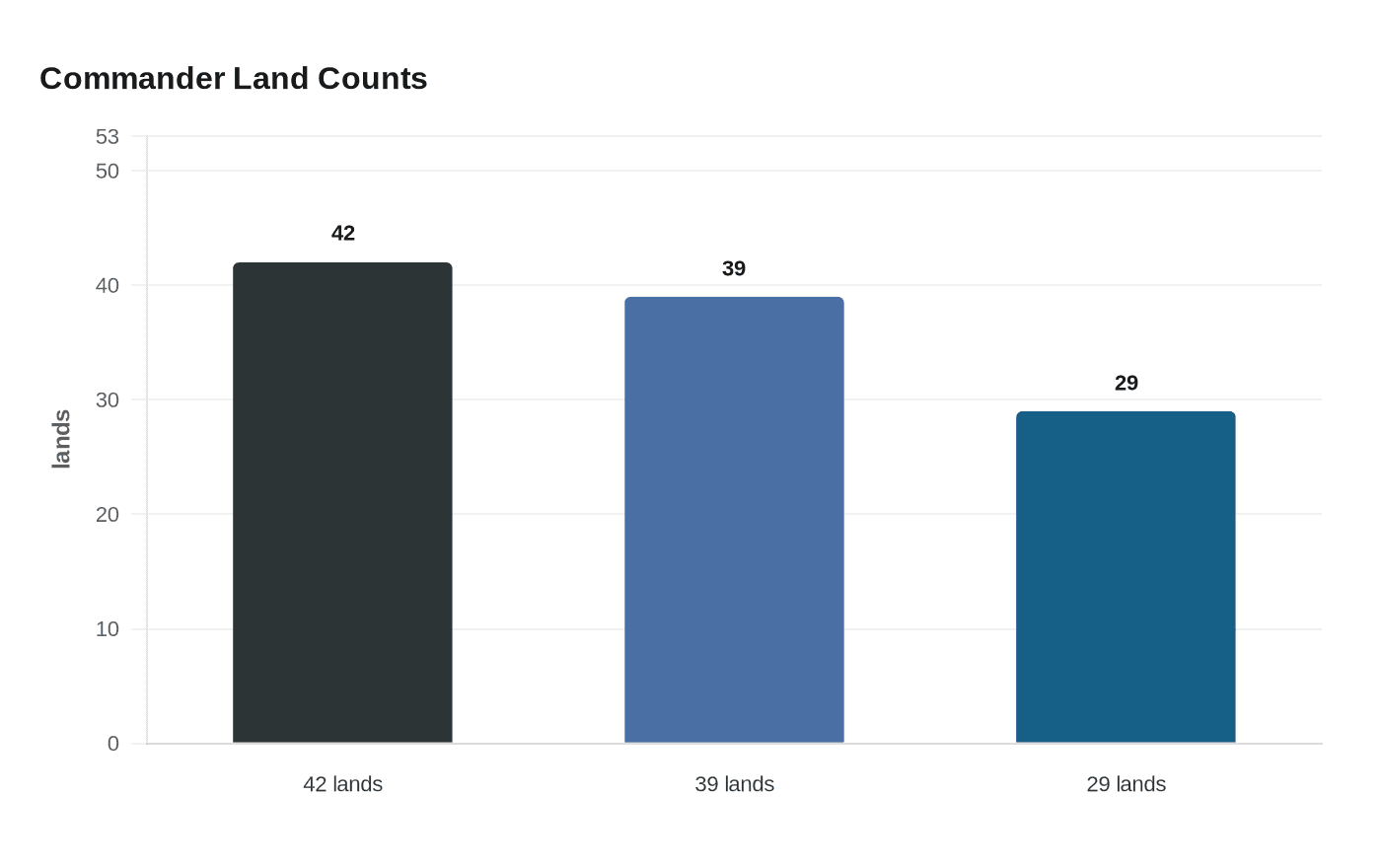
Overseas Commander builders are leaning into a number that makes plenty of players blink: 42 lands in a 100-card deck, which translates to a 70.4% chance of hitting four lands by turn four. That is not a cute deck-building flourish, it is a statement about how much early-game consistency matters in a format where stumbling on mana can decide the whole table’s pace.
Commander is built around 100-card singleton decks, with 99 cards plus 1 commander card, and it is generally played by four players. Wizards of the Coast frames the format as one that favors creativity and a slower pace than traditional constructed play, and that slower rhythm is exactly why land counts stay at the center of so many deck conversations. In a format that can reasonably run around 20 minutes per player, missing land drops early is often the difference between developing a board and spending turns catching up.
Why this debate keeps coming back
The appeal of 42 lands is simple: it pushes the odds of playing Magic instead of simply hoping to draw into it. If your deck wants to cast its commander on time, curve into setup pieces, and still hold up interaction, early mana access is not a luxury. It is the engine that lets the rest of the deck function.
That is also why the mana-base argument never stays settled for long. Commander is a format where ramp, color fixing, treasure generation, and land count all pull in different directions. A list that feels fine at one table can look wildly underbuilt at another, especially if the local meta is slower or if the deck is trying to do something mana-hungry every turn cycle.
How 42 compares to the usual benchmark
EDHREC’s current mana-base advice gives a useful reference point: 39 lands for a 100-card Commander deck. The reasoning is practical rather than flashy, aiming for two to three lands in the opening hand and enough reliability to keep developing through the first turns. Against that baseline, 42 is not a tiny tweak, it is a meaningful move upward.
The contrast gets sharper when you look at older deck-database averages. EDHREC previously found that the average deck in its database ran 29 lands and four mana rocks. That number reflects how much budget, strategy, and personal habit can distort what players consider “normal,” but it also shows why 42 lands shocks people. Compared with 29, 42 looks enormous. Compared with a deck that actually wants to function on curve every game, it can look a lot more sensible.
The math is the real story
This conversation is not just table talk. EDHREC has already used probability-based analysis, including the hypergeometric distribution, to model early-game mana access in Commander. One example examined a deck built around 38 untapped lands and 61 filler cards, using the math to show how replacing a card changes the odds of available mana. The point is not that one exact number solves every deck, but that early land access can be measured instead of guessed.
That is what makes the 42-land claim feel less like an outlier and more like a stress test of Commander assumptions. If a deck’s first four turns matter a lot, then a higher land count is not overbuilding so much as acknowledging the cost of missing land drops. The format has always rewarded players who plan their first few turns with discipline, even when the average table is more casual than competitive.
When 42 lands makes sense
A 42-land shell starts to look smart when the deck is asking a lot from its mana. High-curve commanders, expensive multicolor spells, landfall payoffs, and decks that need to cast their commander on time all benefit from extra consistency. Budget lists also get a real boost here, because not every mana base can lean on premium duals, fetches, or a deep suite of fast rocks.
- Your commander is central to the game plan and expensive to recast.
- Your curve starts high and your deck wants to make land drops more than turbo-ramp.
- Your fixing is budget-conscious and you are relying on basics and tapped lands.
- Your playgroup runs longer games where extra lands convert into more stable midgame turns.
In practice, 42 lands can be the right answer when:
For those decks, the extra lands are not dead cardboard. They are insurance against the most common Commander failure state: having spells in hand and no clean way to deploy them.
When 42 goes too far
There are also plenty of decks where 42 lands would be excessive. Fast green ramp lists, treasure-heavy shells, artifact engines, land-recursion builds, and lower-curve commander decks often generate more mana than they actually need from lands alone. In those cases, too many lands can crowd out the interaction, setup, or payoff pieces the deck needs to close games.
That is where the old average of 29 lands and four mana rocks becomes a cautionary tale rather than a template. Some lists can absolutely support a lower land count because their ramp package is doing the heavy lifting. Others cut lands too far and then spend every game hoping their rocks survive long enough to matter. The difference is not theory, it is whether your deck can reliably function when the table starts applying pressure.
What number you should actually run
For most Commander decks, 39 lands remains the clean baseline because it matches a broad, practical view of what a 100-card deck needs to start on time. If your list is curve-efficient and packed with ramp, you may be comfortable shaving below that. If your commander is expensive, your colors are stretched, or your budget mana base is doing a lot of work, going above it is often the safer call.
- 36 to 38 lands: low curve, strong ramp, or mana from nonland sources.
- 39 to 40 lands: balanced midrange builds that want steady early development.
- 41 to 42 lands: higher-curve decks, commander-centric plans, or budget manabases that need extra reliability.
A useful rule of thumb looks like this:
That is the real lesson behind the 42-land discussion. Commander is not underbuilding or overbuilding as a universal rule, it is a format where the right number depends on how badly your deck needs its first four turns to go right. For many lists, 39 is still the best all-around answer, but 42 is a perfectly defensible choice when the deck’s plan is more important than squeezing in one more spell.
This article was produced by Prism’s automated news system from verified source data, official records, and press releases, then run through automated quality and moderation checks before publishing. The system is built and supervised by the people who set the standards it runs under. Read our full AI policy.
Did this article answer your question?