Smaug the Magnificent, Treasure Hoarding Dragon Opens New Commander Builds
Smaug the Magnificent is already posting real Commander numbers, and the card’s Treasure engine gives red decks a genuine plan instead of just another flashy dragon.
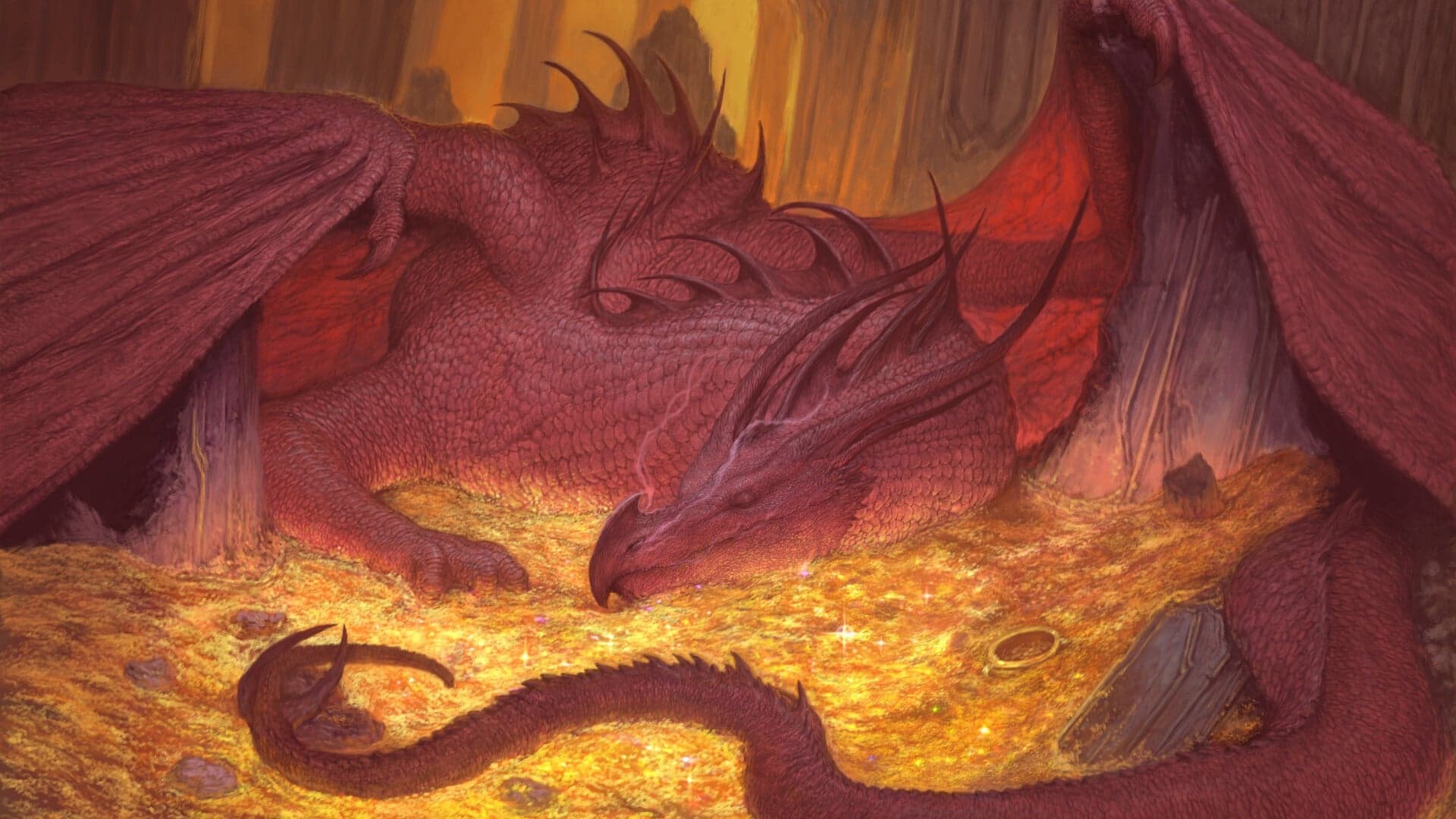
Smaug is more than a flavor trophy
Smaug the Magnificent is the kind of commander that can tempt a brewer for all the wrong reasons, because the dragon is irresistible even before the rules text matters. The better question is the only one that counts in Commander: does this card actually do enough work? With 503 decks already logged and a displayed price of $69.40, Smaug is not being treated like a novelty. It is showing up as a real build-around, tagged for Tokens, Artifacts, Burn, and Treasure, which tells you exactly where the deck wants to live.
That matters because red Treasure commanders are common enough that a new one has to offer a sharper angle than the usual ramp-and-burn shell. Smaug’s appeal is that it promises more than just mana production. It offers a board presence that grows on its own, a clock that gets nastier the longer it survives, and a game plan that can convert a pile of shiny tokens into actual pressure.
Why the card functions at the table
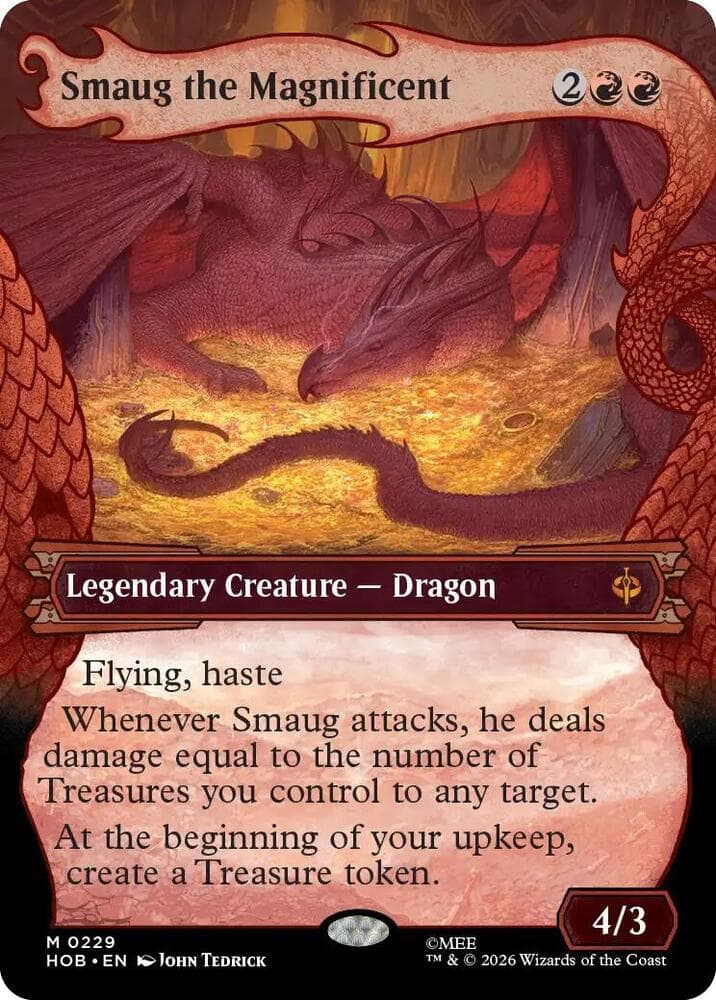
Smaug the Magnificent costs {2}{R}{R} and comes in as a 4/3 Dragon with flying and haste. Those numbers already make it a credible attacker, but the real engine starts on the upkeep, when it creates a Treasure token automatically. That means Smaug does not need help to begin snowballing. If it survives even a single turn cycle, it starts compounding resources before you spend a spell to support it.
The attack trigger is what turns the dragon from a value piece into a threat. Whenever Smaug attacks, it deals damage equal to the number of Treasures you control to any target. That is a flexible piece of reach, because it can clear blockers, pressure planeswalkers, or simply aim at a player’s life total. In practice, the card asks you to do one thing very well: build a Treasure count fast enough that each attack feels like a fireball strapped to a flying body.
The core engine is mana plus conversion
Smaug works when your deck treats Treasures as more than disposable rocks. The best shells convert token generation into mana, then turn that mana into either more Treasure production, a protected board, or a decisive swing. That is why the card’s natural homes are artifact synergies, sacrifice payoffs, and big-mana finishers. Every Treasure should either accelerate you, amplify another card, or raise the damage on Smaug’s attack trigger.

The play pattern is simple but powerful. You land Smaug, keep it alive, and use the Treasure each upkeep to make your next turn more explosive than the last. The deck gets much better when it can create extra Treasures beyond the baseline, because that turns the attack trigger from incremental burn into real table control. The difference between a cute dragon and a serious commander is whether the pile of tokens starts buying you tempo, removal, and win pressure all at once.
The right build paths give Smaug a job
Smaug can support several plans, and that flexibility is part of why it is interesting. A value-oriented build can lean into steady Treasure production and use the extra mana to keep replaying threats or casting efficient interaction. A combo-leaning list can treat the Treasures as a resource loop, using artifact synergies and sacrifice outlets to assemble a decisive line. A battlecruiser version can simply stockpile mana, drop oversized finishers, and let Smaug’s attack trigger soften up the table before the haymakers land.
What all three versions share is the same requirement: the deck has to respect the Treasure count. If you are not increasing the number of Treasures quickly, Smaug becomes a fair four-mana Dragon instead of a commander that shapes the game. The card rewards sequencing, because the best turns are the ones where the upkeep Treasure, the attack trigger, and the rest of your mana engine all feed each other in the same round.
Traps that make the deck worse
The biggest mistake is treating Smaug like a generic red Dragon commander and loading the deck with payoffs that do not advance the Treasure plan. Red already has plenty of ways to burn things and attack in the air, but Smaug asks for something more specific. If the list is only a pile of splashy creatures and one-off damage spells, you miss the point of the card and undercut the reason to play it.
Another trap is building around flavor instead of function. Smaug is a story card with enormous character appeal, especially as part of Magic: The Gathering | The Hobbit, but the commander succeeds only when the shell makes the Treasure engine matter. The best support cards are the ones that increase Treasure production, reward artifact count, or turn disposable mana into a decisive board state. A deck that does not lean into those jobs leaves too much power on the table.
Protection matters too. Because the attack trigger scales with Treasures, and because the upkeep Treasure starts compounding only if Smaug stays around, removal aimed at the commander can slow the whole plan dramatically. A credible Smaug deck has to assume the dragon will be answered and still keep its engine humming through those interruptions.
Smaug’s history makes the new version more interesting
Magic has already explored Smaug as a Treasure dragon before. In The Lord of the Rings: Tales of Middle-earth, the character appeared as a token Dragon that created fourteen Treasure tokens when it died, which made the connection between Smaug and hoarded wealth feel immediate. Scryfall lists that set’s release on June 23, 2023, while Wizards’ set details place the release on October 19, 2023. Either way, the earlier version established the same identity the new commander expands on: Smaug is a dragon defined by resources, not just combat stats.
The new printing makes that relationship much more explicit. Instead of waiting for death to cash in, Smaug starts building value on its own, then turns each combat step into a damage event keyed to the number of Treasures you control. That is a much cleaner Commander package, and it explains why players are already looking at it as more than a collectible headliner.
Why the release makes the deck matter now
Magic: The Gathering | The Hobbit is scheduled for worldwide release on August 14, 2026, and Wizards of the Coast describes Smaug the Magnificent as the Headliner Gleaming Gold card for the set. The company has also said 2026 will include seven Magic sets, which puts extra attention on the marquee Universes Beyond releases. The Hobbit is tied to Bilbo’s journey to the Lonely Mountain and Erebor, so Smaug arrives with the full weight of Middle-earth storytelling behind it.
That collectible spotlight only raises the stakes for Commander builders. A card can be a chase item and still fail at the table, but Smaug has the kind of text that gives it real playability. The dragon’s job is clear, the engine is clean, and the payoff is immediate. For players who want red to do more than point burn spells and hope, Smaug offers a Treasure plan with enough teeth to matter.
This article was produced by Prism’s automated news system from verified source data, official records, and press releases, then run through automated quality and moderation checks before publishing. The system is built and supervised by the people who set the standards it runs under. Read our full AI policy.
Did this article answer your question?